
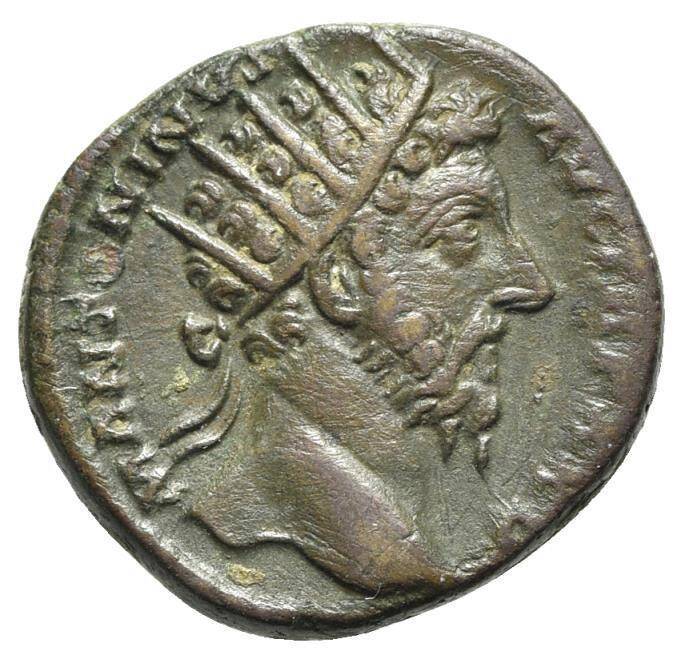
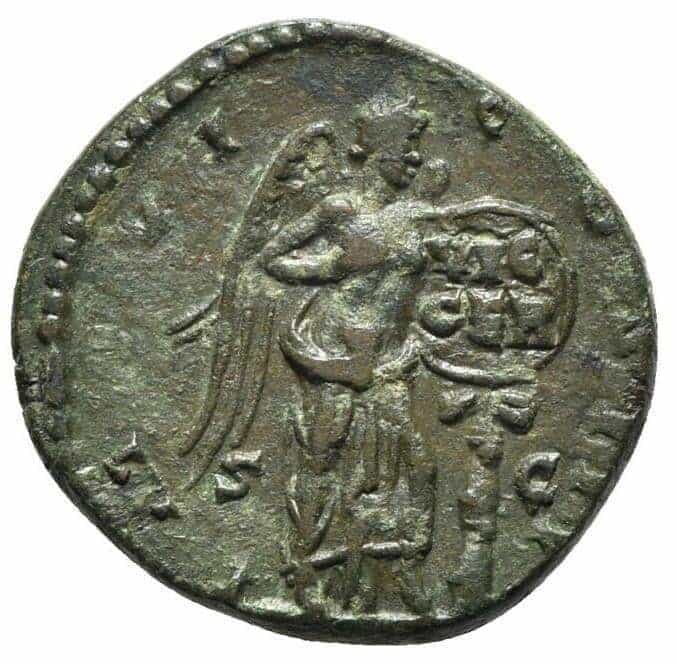
The Marcus Aurelius Dupondius (RIC III 1002) is a striking piece of military propaganda from the “Golden Age” of the Roman Empire. Minted between AD 170 and 171, it marks a period of extreme crisis and hard-won triumph for the philosopher-emperor.
While Marcus Aurelius is best remembered today for his Meditations, this coin captures him in his other, more grounded role: the weary but resolute commander-in-chief of the Roman legions.
1. The Historical Context: The Germanic Wars
By AD 170, the Roman Empire was facing one of its greatest existential threats. The Marcomannic Wars were raging along the Danube frontier. Germanic tribes (the Marcomanni and Quadi) had crossed the Alps and actually besieged the Italian city of Aquileia—the first time “barbarians” had set foot on Italian soil in nearly 300 years.
This coin was struck as Marcus Aurelius was personally leading the counter-offensive. It served a dual purpose: to pay the troops stationed on the freezing Danube and to reassure the citizens of Rome that the “Victory of the Emperor” (Victoria Augusti) was inevitable.
2. The Reverse: Victory Advancing
The reverse features Victory (Victoria), the personification of success in war, advancing left. She typically holds a wreath (to crown the victor) and a palm branch (the symbol of peace through conquest).
- The Legend:
VICT AVG COS III S C.- VICT AVG: Victoria Augusti (The Victory of the Emperor).
- COS III: This dates the coin specifically to his third consulship.
- S C: Senatus Consulto, confirming the Senate’s official decree for the issuance of this base-metal coin.
- The Message: This wasn’t just a generic image. In AD 171, it celebrated specific Roman successes in pushing the tribes back across the river. It was a “news bulletin” in metal.
3. The Obverse: The Philosopher-King
The obverse shows the mature, bearded head of Marcus Aurelius.
- The Radiate Crown: As a Dupondius, Marcus is depicted wearing a radiate (spiked) crown. This was the universal symbol that distinguished the Dupondius from the slightly smaller, laurel-headed As.
- The Portrait Style: Unlike the youthful, smooth-faced portraits of his early reign, RIC 1002 shows the “War Years” Marcus. His hair and beard are thick and deeply carved, reflecting the popular “Antonine” style, but his expression is often portrayed as stern and thoughtful.
4. Technical Details
- Metal: Orichalcum (a golden-colored brass alloy). When first minted, this coin would have shimmered like gold, making the image of Victory even more radiant.
- RIC III 1002: Cataloged in Roman Imperial Coinage, Volume III (covering the Antonines).
- Mint: Rome.
