
If you are searching for a coin that represents the “Passing of a Golden Age,” the Marcus Aurelius “Consecratio” Denarius (RIC III 664) is a masterclass in somber, transcendental propaganda. Struck in AD 180 by his son Commodus, this silver piece marks the moment the Roman world bid farewell to the last of the “Five Good Emperors” and watched him ascend to the stars.
At Numiscurio, we often say that a coin’s “soul” is found in its ability to bridge the gap between the earthly duties of a ruler and the divine eternity of a god.
1. The Historical Context: The Death of the Philosopher King
Marcus Aurelius didn’t die in a palace in Rome; he died in a military camp in Vindobona (modern-day Vienna) while defending the Empire’s borders. He was the Stoic Emperor who spent his life writing Meditations while leading weary legions against Germanic tribes.
When he passed in March of 180, the Roman world felt a shift in the wind. This coin was minted as part of his apotheosis—the official ceremony where the Senate declared that Marcus had become a god (Divus). It was a final tribute to a man who had guided Rome through plagues and wars with a calm, philosophical hand.
Because this was a commemorative issue struck during a time of transition, finding a RIC 664 in “Choice VF” or better—where the feathers of the eagle and the weary dignity of the portrait are preserved—is like holding a funeral oration in your hand.
2. The Reverse: The Eagle of Ascension
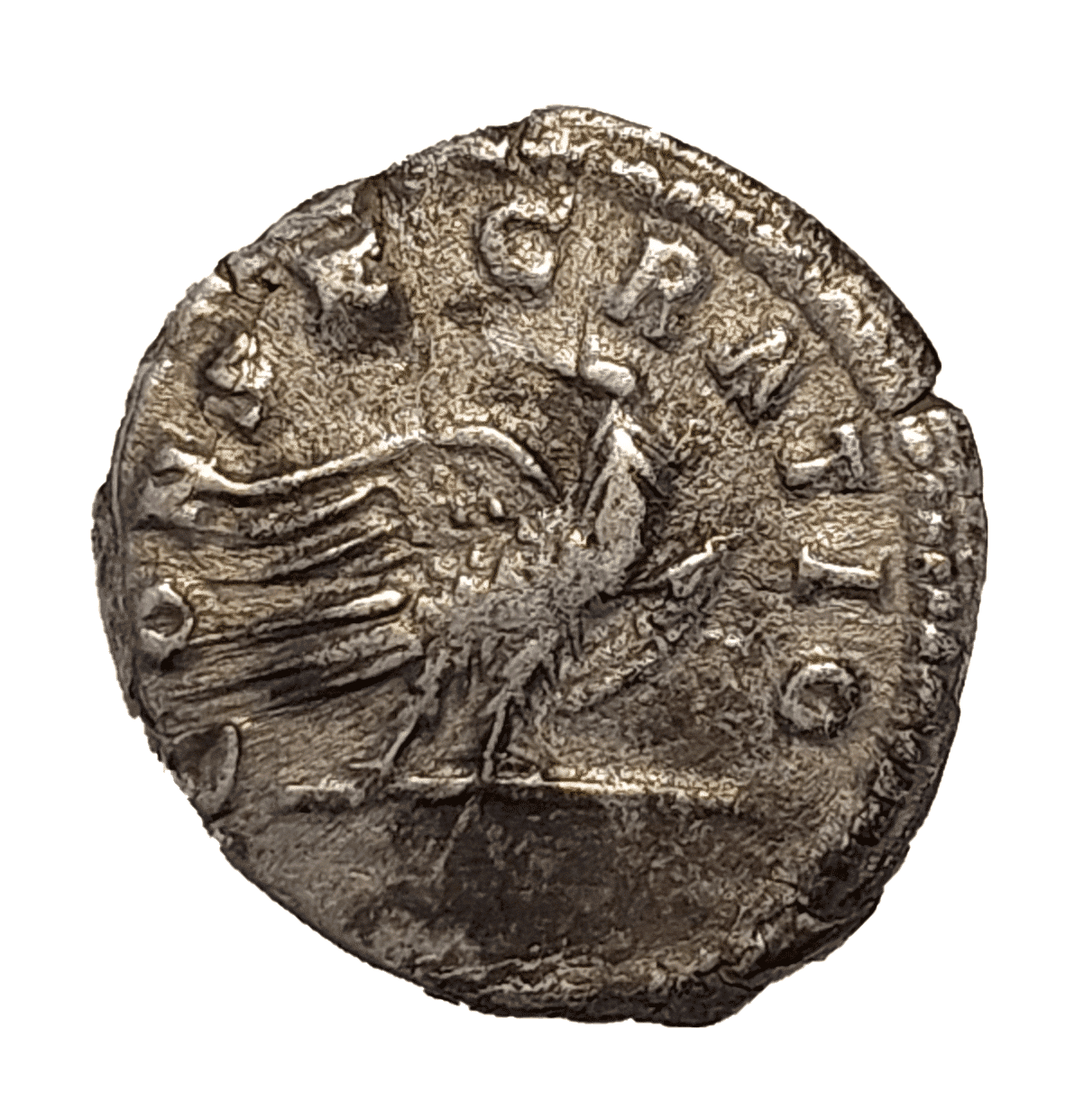
The reverse features an Eagle (Aquila) standing right, its head turned back to the left, often perched on a thunderbolt or a globe.
- The Vehicle of the Soul: In Roman tradition, during the funeral pyre of an Emperor, a live eagle was released from the flames. It was believed the bird carried the Emperor’s soul to the heavens to join the gods. This image is the literal snapshot of that belief.
- The Stoic Flight: For Marcus, who wrote extensively about the transitory nature of life and the “view from above,” the eagle is a fitting symbol. It represents the soul finally being freed from the “heavy vessel” of the body.
- The Legend: CONSECRATIO. This single word tells the viewer that Marcus is no longer just a man; he has been “consecrated” as a deity.
3. The Obverse: The Deified Portrait
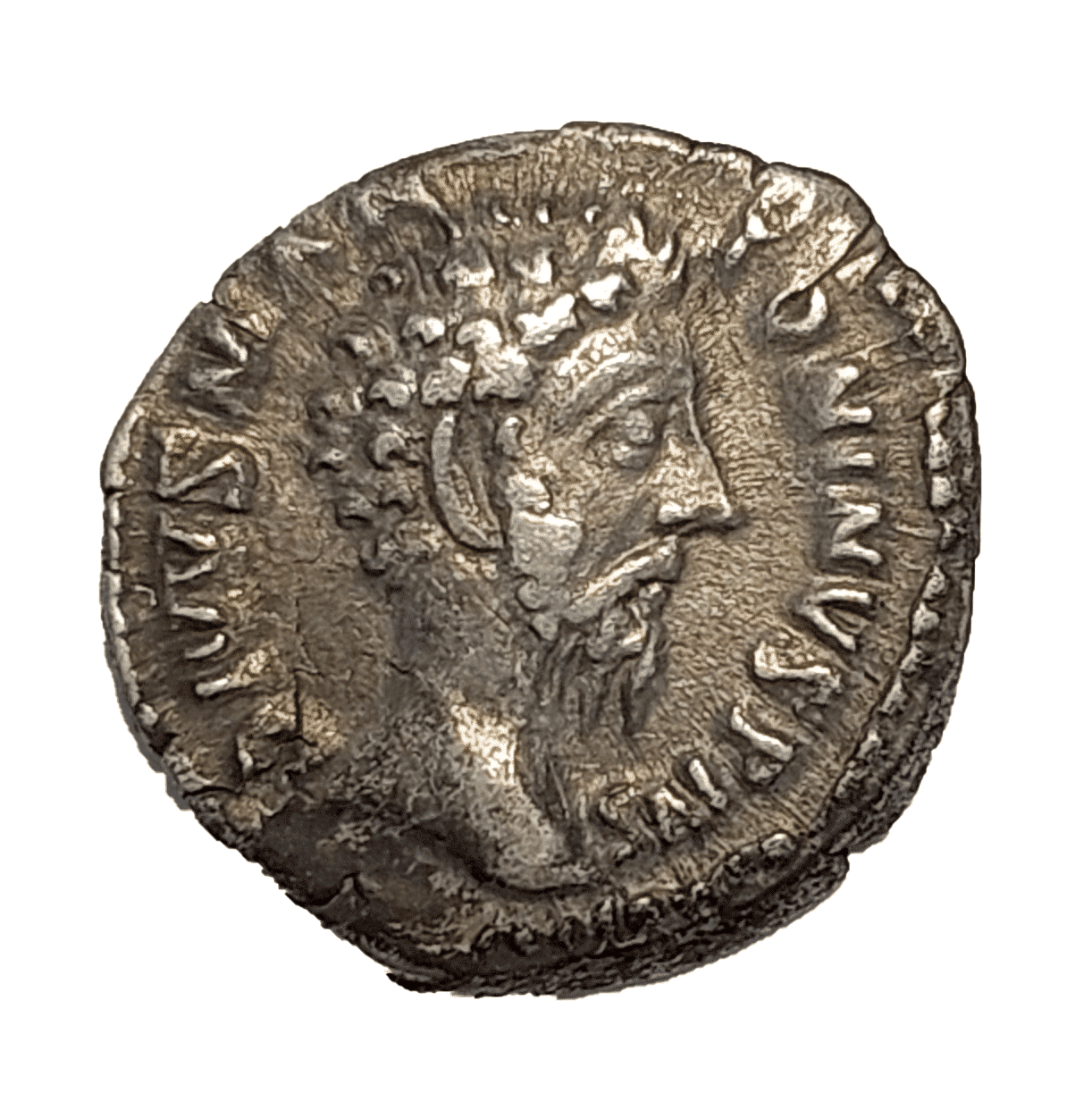
The obverse features the bare-headed, bearded bust of Marcus Aurelius, facing right.
- Posthumous Realism: Note the “bare head” (no laurel wreath). In Roman numismatics, a bare head on a posthumous coin signifies that the Emperor has passed away. The beard is thick and curly, the hallmark of the philosopher, but the eyes often appear heavy—a nod to the decades of burden he carried for Rome.
- The Divine Name: The legend changes from his living titles to include the word DIVVS.
- The Legend: DIVVS M ANTONINVS PIVS. (The Divine Marcus Antoninus Pius).
4. Technical Details: The Transition of Silver
- RIC III 664: Cataloged in the Roman Imperial Coinage, Volume III, which covers the era of the Antonines.
- The Mint: Struck in Rome. This was a high-priority issue designed to stabilize the public’s confidence during the succession of Commodus.
- Silver Quality: While the silver standard began to dip slightly under Marcus due to the costs of the Marcomannic Wars, these Consecratio issues were struck on high-quality flans with exceptional artistic care, honoring the memory of the “Greatest of Emperors.”
