
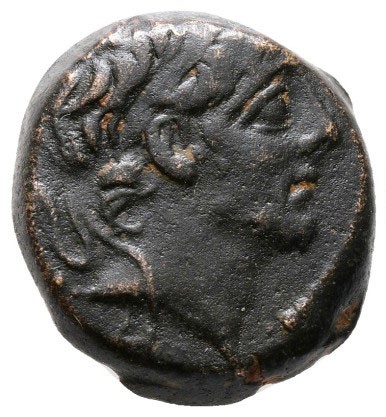

The Antiochos IX “Thunderbolt” Dichalkon (HGC 9, 1248) is a rugged, defiant bronze from the twilight of the Seleucid Empire. Struck between 114–95 BC at the royal mint of Antioch, this coin represents a period of “Game of Thrones” style dynastic warfare that would eventually leave the empire vulnerable to the rising power of Rome.
1. The Historical Context: The War of the Brothers
Antiochos IX, surnamed Kyzikenos (after the city of Kyzikos where he was raised), spent nearly his entire reign in a brutal civil war against his half-brother, Antiochos VIII Grypos. The two brothers tore the remains of the Seleucid realm apart, trading the capital of Antioch back and forth like a trophy.
This coin was struck during one of the periods when Antiochos IX held the “Golden City.” By minting these bronzes, he was paying his mercenaries and signaling to the citizens of Antioch that a “true” Seleucid was back on the throne. The title he chose, Philopator (“Father-loving”), was a piece of political theater intended to prove his legitimacy over his brother.
2. The Obverse: The Bearded King
The obverse features the Diademed and Bearded Head of Antiochos IX, facing right.
- The Royal Beard: In the Seleucid world, a beard was a significant choice. While many kings preferred the clean-shaven look of Alexander the Great, Antiochos IX often depicted himself with a thick, curly beard. This may have been a nod to his time spent in the East or a way to distinguish his rugged, “soldierly” appearance from his brother Grypos.
- The High Relief: Notice the deep, expressive engraving of the eye and the brow. The Antioch mint, even in its declining years, maintained a standard of Hellenistic realism that captured the stress and determination of a king at war.
3. The Reverse: The Weapon of Zeus
The reverse features a Winged Thunderbolt, the primary weapon of Zeus.
- Divine Mandate: The thunderbolt was a traditional Seleucid symbol, linking the dynasty back to the power of the gods. By adding wings to the thunderbolt, the imagery emphasizes the speed and inescapable nature of the King’s justice.
- The Legend: BAΣIΛEΩΣ ANTIOXOY ΦIΛOΠATOΡOΣ (Basileos Antiochou Philopatoros) — “Of King Antiochos, the Father-loving.”
- The Denomination: This is a Dichalkon (a “double copper”), a small but essential unit of currency for the daily transactions of the markets in the capital.
4. Technical Details: The Antioch Strike
- HGC 9, 1248: Cataloged in the Handbook of Greek Coinage, the definitive modern guide for Seleucid issues.
- The Mint: Antioch. As the administrative heart of Syria, the city remained a prize worth fighting for until the very end.
- The Patina: These Syrian bronzes often develop a beautiful, “desert” sandy patina or a deep, dark “ebony” tone.
- The Collector’s “Tell”: Look for the detail in the individual feathers of the thunderbolt’s wings. Finding a specimen where the beard of the king is not worn flat and the “Φ” (Phi) in Philopator is clear is the mark of a well-preserved piece of late Hellenistic history.
