
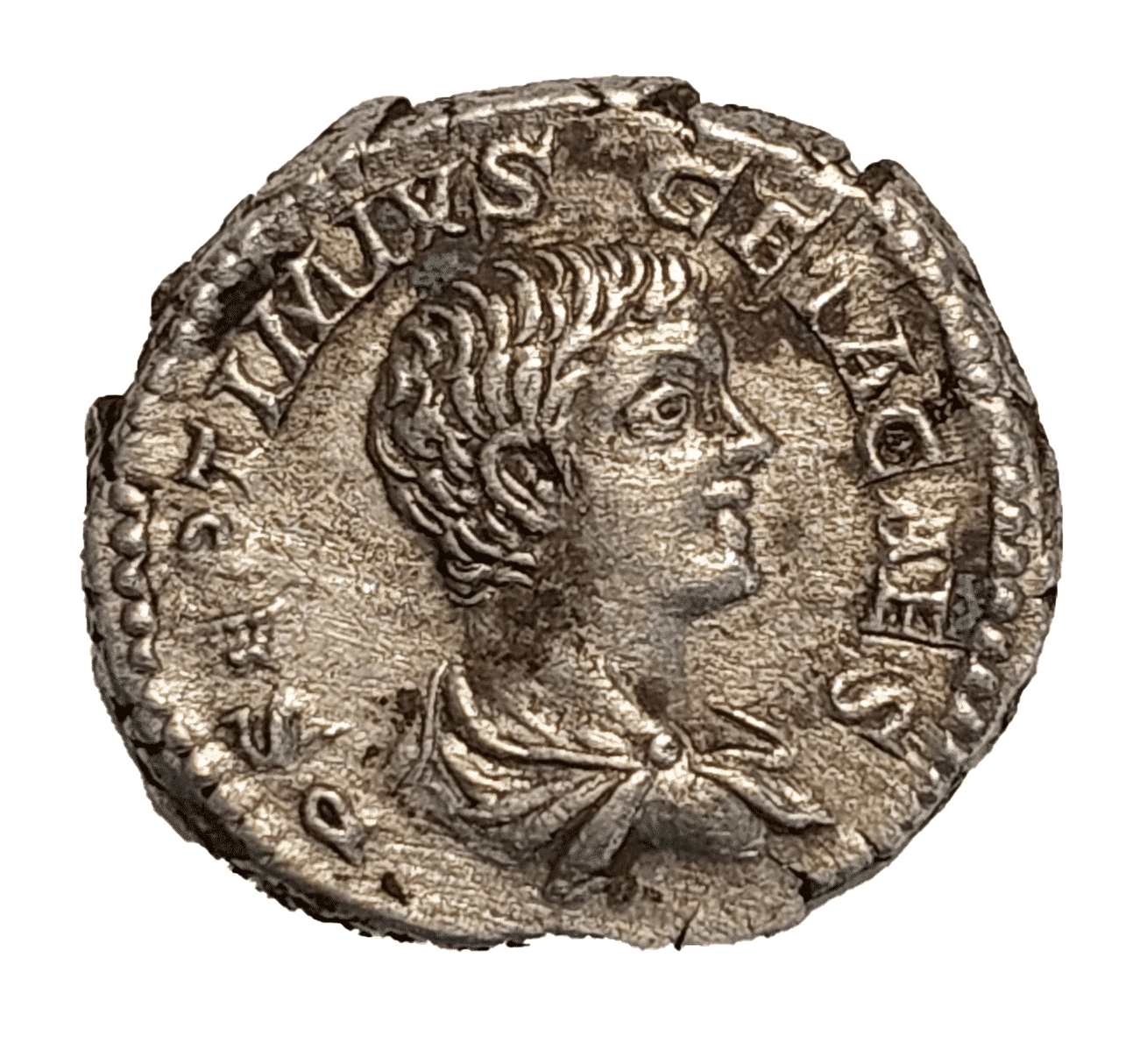
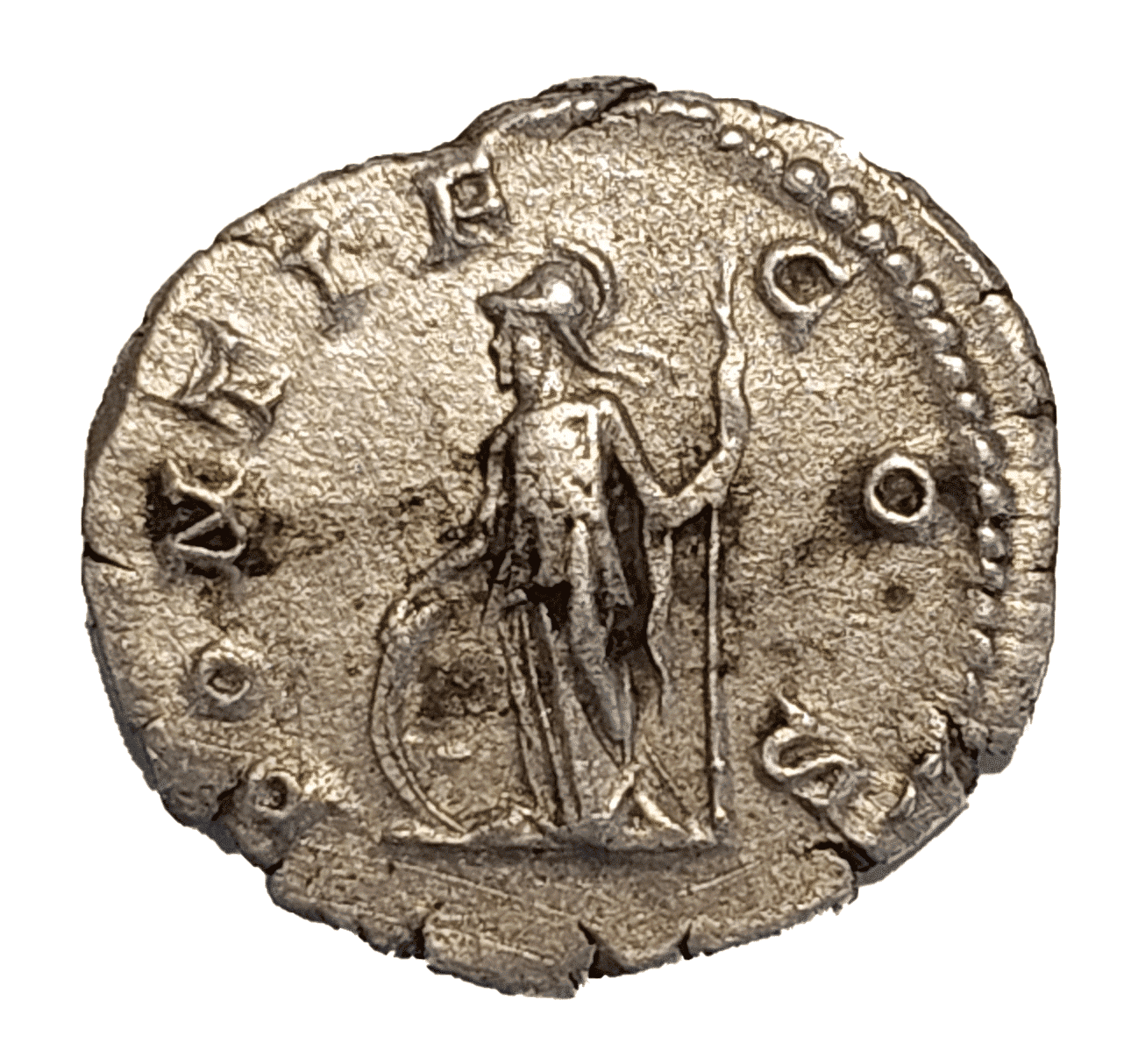
The Geta “Minerva” Denarius (RIC IV 34b) serves as a poignant silver window into the fragile childhood of an Emperor whose life would end in one of Rome’s most infamous family tragedies. Struck in AD 205, this coin captures Geta as a young Caesar, shielded by the goddess of wisdom during the deceptive “golden years” of the Severan dynasty.
At Numiscurio, we often say that a coin’s “soul” is found in the quiet irony of its imagery—here, a young boy invokes the goddess of strategic war, unaware that his greatest enemy was sleeping in the room next to him.
1. The Historical Context: The Shadow of Caracalla
By AD 205, the Roman Empire was under the firm, militaristic grip of Septimius Severus. To ensure a smooth succession, Severus raised both of his sons to imperial rank: the elder, Caracalla, as Augustus, and the younger, Geta, as Caesar. This coin was minted to celebrate Geta’s first consulship (COS), marking his formal entry into the high-stakes world of Roman administration.
While this denarius projects an image of a unified, pious family, the reality was a brewing storm of hatred. Geta and Caracalla reportedly despised each other from childhood, even dividing the imperial palace with barricades later in life. This coin represents the “public face” of a prince who was being groomed for a power he would only hold briefly before being murdered in his mother’s arms by his own brother.
2. The Reverse: Minerva the Guardian
The reverse features Minerva, helmeted and draped, standing left. She leans on a round shield and holds a vertical spear.
- The Goddess of Strategy: For a young Caesar, Minerva was the perfect patroness. She represented the “civilized” side of war—wisdom, craft, and defensive strategy—rather than the raw, bloodthirsty fury of Mars.
- The Shield of State: The way Minerva leans on her shield suggests a state of “Watchful Peace.” It told the Roman people that while the young prince was still learning the arts of governance, the gods were standing guard over his future.
- The Legend: PONTIF COS. This identifies Geta’s religious and political rank: Pontifex (Priest) and Consul. It was a way of legitimizing a teenager’s authority in the eyes of the traditional Roman Senate.
3. The Obverse: The Innocent Caesar
The obverse features the bare-headed and draped bust of Geta, facing right.
- The Bare Head: In Roman numismatics, the “bare head” (without a laurel wreath) was the standard way to denote a Caesar—an heir apparent who had not yet reached the full rank of Augustus.
- The Youthful Portrait: Notice the soft, rounded features and the lack of a beard. This is the face of Geta before the stress of the co-rule and the rivalry with Caracalla hardened his features. It is one of the most “human” portraits of the Severan era.
- The Legend: P SEPTIMIVS GETA CAES. (Publius Septimius Geta Caesar).
4. Technical Details: The Severan Silver Standard
- RIC IV 34b: Cataloged in the fourth volume of Roman Imperial Coinage, covering the complex era of the Severan family.
- The Mint: Struck in Rome. The central mint was operating at peak capacity during this time, producing denarii with a very consistent, distinctive style.
- The Damnatio Memoriae: Geta’s coins are of particular interest to collectors because, after his murder in AD 211, Caracalla ordered a Damnatio Memoriae (Erasure of Memory). While many inscriptions and statues were destroyed, the millions of coins in circulation, like this one, survived as the only true evidence that Geta ever existed.
