
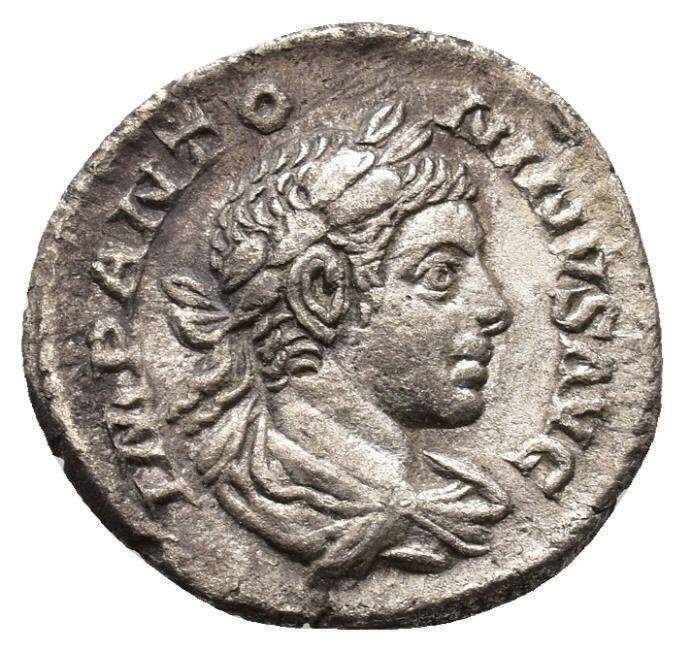
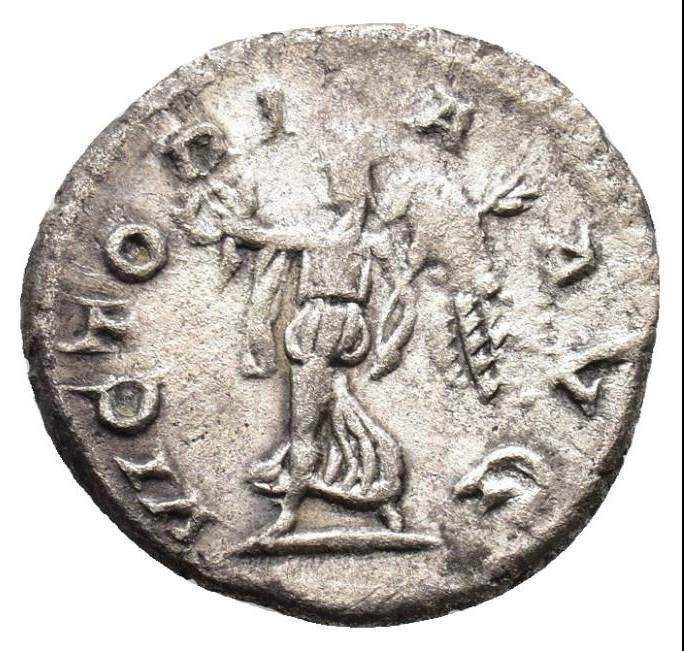
If you are looking for a coin that captures the absolute “Chaos and Cosmos” of the 3rd Century, the Elagabalus Denarius (RIC 162) is a shimmering, silver piece of a religious revolution. Struck around AD 120–122, this coin represents the moment a teenage priest-emperor tried to turn Rome’s traditional pantheon upside down.
1. The Historical Context: The Boy from the Sun
Born Varius Avitus Bassianus, the 14-year-old Elagabalus was a hereditary high priest of the Syrian sun god, Elagabal. When he was swept to power in AD 218 after the assassination of Macrinus, he didn’t just move to Rome; he brought his god with him in the form of a massive, sacred black meteorite.
This coin was minted during the height of his “Easternizing” mission. Elagabalus famously offended the Roman Senate by dancing around the sacred stone, marrying a Vestal Virgin, and placing his Syrian sun god at the head of the Roman gods—even above Jupiter. This RIC 162 was the silver used to pay the legions who were increasingly bewildered and disgusted by their new “Sun King.”
2. The Reverse: Victory the Enabler
The reverse features Victory (Victoria) advancing left, holding a wreath and a palm branch.
- The Propaganda of Survival: In AD 120, Elagabalus was celebrating his victory over Macrinus and the consolidation of his power. By placing Victory on the reverse, the mint was reminding the world that despite his “strange” religious habits, he was still the legitimate, victorious heir of the Severan dynasty.
- The Legend:
VICTORIA AVG. It is a classic, conservative Roman reverse designed to mask a very unconventional reign. It whispered to the public: “Everything is fine; the Empire is still winning.”
3. The Obverse: The Horned Priest?
The obverse features the laureate and draped bust of Elagabalus.
- The “Horn” of Power: On many specimens of Elagabalus’s coinage (including some variants of RIC 162), you can see a small, strange protrusion on his forehead. Scholars believe this is a “horn”—not a biological one, but a symbol of his status as a high priest, likely a piece of a bull’s penis or a specialized crown. It is one of the most unique and debated features in all of Roman numismatics.+1
- The Legend:
IMP ANTONINVS PIVS AVG. He took the name “Antoninus” to link himself to the popular Marcus Aurelius and his supposed father, Caracalla. It was the ultimate 3rd-century “rebranding” strategy.
4. Technical Details: The Severan Silver Peak
- RIC 162: Cataloged in Roman Imperial Coinage, Volume IV, Part II.
- Silver Purity: Under Elagabalus, the denarius was still relatively stable (around 45–50% silver), though the weights could be erratic. The Rome mint was still producing sharp, high-relief portraits that captured his youthful, often delicate features.
- The “Syrian” Flair: You can often see a slightly different artistic “feel” in these coins compared to the grittier soldier-emperors—a softness in the drapery and hair that reflected the influence of the Eastern courts.
