
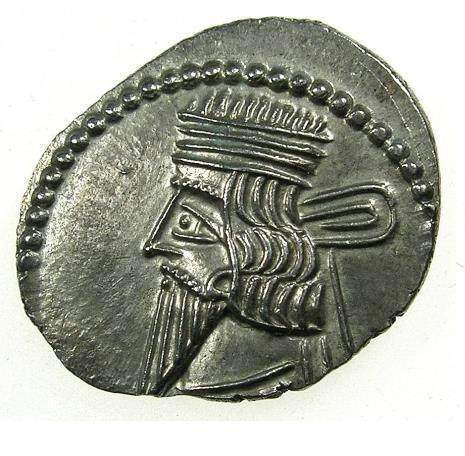
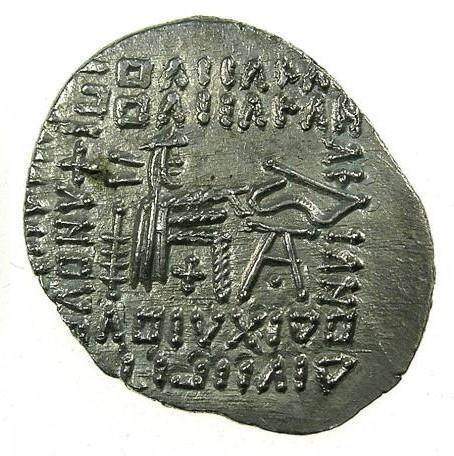
The Vologases III “Silk Road Sovereign” Drachm (Sellwood 78.2) is a stunning silver artifact from the Parthian Empire, struck between AD 105–147. This coin represents a fascinating era of “Great Power” politics, where the Parthian Arsacids stood as the formidable middleman between the Roman Empire in the West and the Han Dynasty in the East.
At Numiscurio, we often say that a Parthian drachm is a “cultural bridge”; while the portrait is distinctly Persian, the Greek inscriptions on the reverse remind us of the enduring legacy of Alexander the Great’s conquests in the region.
1. The Historical Context: The Long Reign of Vologases III
Vologases III (sometimes identified in older catalogs as Pacorus II) ruled during a tumultuous but prosperous century. His reign was defined by his fierce rivalry with the Roman Emperor Trajan, who famously invaded Mesopotamia and captured the Parthian capital of Ctesiphon in AD 116.
However, Vologases was a survivor. He outlasted Trajan’s invasion and spent the rest of his long reign consolidating power from his secondary capitals like Ekbatana. This coin was the “currency of the Silk Road,” used by merchants trading spices, silk, and incense. It was a symbol of Parthian stability in a world that was constantly at war.
2. The Obverse: The Royal Profile
The obverse features the bust of the King, facing left. He is depicted with a long, pointed beard—the hallmark of Parthian nobility—and wears a double-banded diadem with three pendent ends fluttering behind his head.
- The Torque and Earring: These were not merely decorations; they were the “crown jewels” of the Arsacid dynasty. The torque (neck ring) was a symbol of high status throughout the Iranian world, marking the King as the “King of Kings.”
- The High-Relief Portrait: Parthian engravers at the Ekbatana mint were famous for their “linear” style. Notice how the hair and beard are rendered in neat, rhythmic rows, giving the King a stylized, almost eternal appearance.
3. The Reverse: The Archer of the Steppes
The reverse features the classic Parthian image of the Enthroned Archer (the dynasty’s founder, Arsaces I) sitting on a high-backed throne, holding a bow.
- The Steppe Heritage: Even centuries after the Parthians had settled into palace life, they kept the archer on their coins to honor their nomadic “Parni” roots. The bow was the weapon that allowed them to defeat Roman legions (most famously at the Battle of Carrhae).
- The Greek Legend: The inscription is a stylized, often “blundered” version of Greek, reading: BASILEOS BASILEON ARSAKOU EUERGETOU DIKAIOU EPIPHANOUS PHILHELLENOS (King of Kings, Arsaces, the Benefactor, the Just, the Illustrious, Friend of the Greeks).
- The Ekbatana Monogram: Beneath the archer’s bow is a specific monogram identifying the mint as Ekbatana (modern Hamadan, Iran), one of the ancient world’s most prestigious minting centers.
4. Technical Details: The Silver of the East
- Sellwood 78.2: Cataloged in David Sellwood’s An Introduction to the Coinage of Parthia, the “Bible” for Parthian collectors.
- The Mint: Ekbatana. This was the primary summer capital of the Parthian kings, located high in the Zagros Mountains. The silver from this mint is noted for its high purity and consistent weight.
- The “Toned” Surface: Many Parthian drachms from this period have a beautiful, iridescent “cabinet toning.” Finding a specimen where the pendent ends of the diadem or the individual links of the torque are still sharp is a sign of a premier Eastern collection.
