
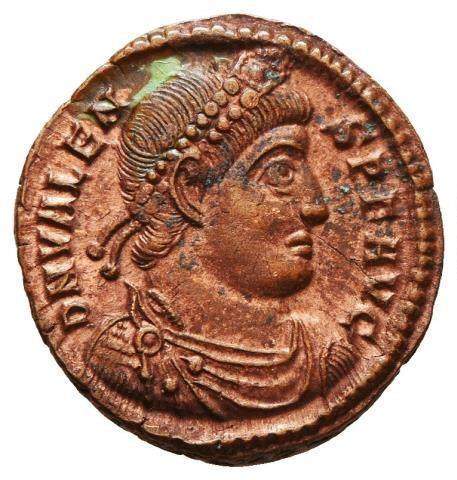
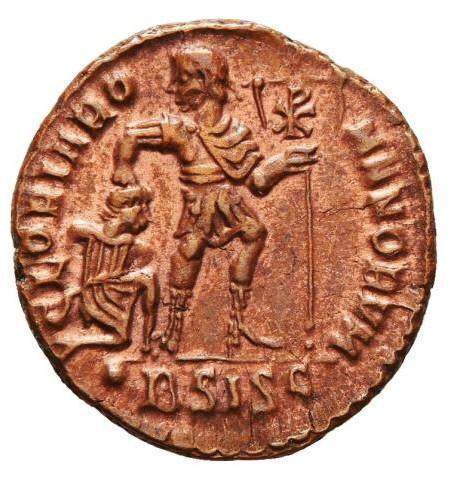
If you are searching for a coin that represents the “Iron Fist of the Frontier” during Rome’s twilight, the Valentinian I “Captive” Follis (RIC IX Siscia 5a) is a masterclass in raw, unapologetic military propaganda. Struck between AD 364–367, this bronze piece marks the moment a soldier-emperor stepped onto the stage to halt the collapse of the Western Empire.
1. The Historical Context: The Watchdog of the Danube
Valentinian I was the ultimate “Soldier-Emperor.” Rising through the ranks of the Pannonian units, he was a gritty, no-nonsense commander who had no patience for the polished elites of Rome. When he took the throne, the Empire was being hammered by Germanic tribes on the Rhine and Danube.
Valentinian’s solution? He turned the entire frontier into a construction site, building the most sophisticated chain of forts the world had ever seen. He was famously short-tempered (rumored to have kept two man-eating pet bears), and this coin reflects that aggressive energy. By AD 364, the year this type began circulating, Valentinian was sending a message to the barbarian world: Rome is not hiding behind her walls; she is coming for you.
Because these bronze coins circulated heavily among the frontier legions, they are often found with a dark, “desert” or “river” patina. Finding a RIC 5a in EF condition—where you can see the individual links of the Emperor’s mail or the terrified expression of the captive—is a true collector’s prize.
2. The Reverse: The Triumph Over the “Other”
The reverse features the Emperor walking right, draped in military attire, dragging a captive by the hair and holding the Labarum (the Christian military standard).
- The Symbol of Dominance: This wasn’t a metaphor. After decades of Germanic incursions, the sight of the Emperor physically dragging a “barbarian” reminded the Roman citizens that the borders were secure.
- The Christian Standard: Notice the XP (Chi-Rho) on the banner. This signals the fusion of the Roman war machine with the new state religion. It told the people that God and the Legions were on the same side.
- The Legend: GLORIA ROMANORUM. A bold claim of “The Glory of the Romans” at a time when that glory was under constant siege.
3. The Obverse: The Pannonian Powerhouse
The obverse features the pearl-diademed, draped, and cuirassed bust of Valentinian I, facing right.
- Late Roman Stylization: Unlike the “warts and all” realism of Vespasian, Valentinian’s portrait is focused on authority. The large, wide eyes are typical of the 4th century, representing an Emperor who is “ever-watchful” over his people.
- The Legend: DN VALENTINI-ANVS PF AVG. This stands for Dominus Noster (Our Lord) Valentinian, Pius Felix Augustus (Pious, Happy Emperor).
4. Technical Details: The Siscia Workshop
- RIC IX Siscia 5a: Cataloged in the Roman Imperial Coinage, Volume IX, which covers the late Flavian and Valentinianic periods.
- The Mint: Struck in Siscia (modern-day Sisak, Croatia). This was one of the most important military mints in the Empire, located right on the doorstep of the Danubian frontier to ensure the soldiers were paid on time.
- The AE3 Standard: This coin represents the “AE3” denomination, a common bronze follis used for daily transactions. Despite the economic pressures of the 4th century, the Siscia mint was known for its sharp strikes and heavy, durable planchets.
