
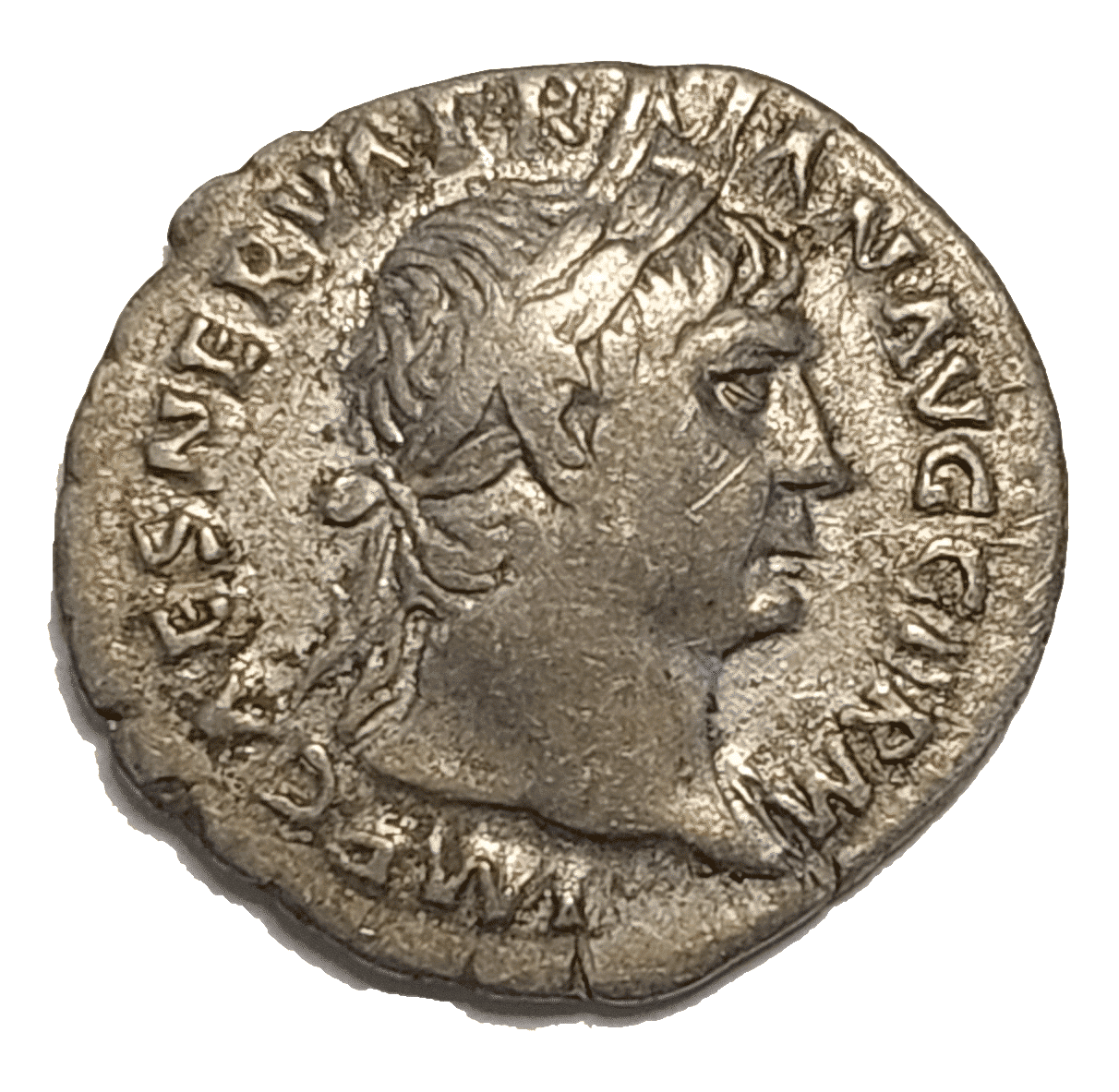
Holding the Trajan “Victory on Prow” Denarius (RIC II 59) is like gripping a silver fragment of Rome’s “Optimis” era, the moment the Empire reached its absolute peak of confidence and power. Struck in AD 101–102, this coin was minted as Trajan, the first non-Italian Emperor, was preparing to dismantle the Dacian threat and reshape the Roman world through sheer military genius.
At Numiscurio, we often say that a coin’s “soul” is found in its ability to bridge the gap between a gritty military encampment on the Danube and the high marble halls of the Roman Senate.
1. The Historical Context: The Rise of the Best Prince
Trajan didn’t just inherit the throne; he was chosen for it because he was the Empire’s greatest living general. By AD 101, the year this coin was struck, Trajan was already a legend. He was the Germanicus (Conqueror of the Germans), but his eyes were now fixed on the gold-rich mountains of Dacia (modern-day Romania).
This denarius was the “victory press release” for his early successes. It told a nervous Roman public that their new Emperor wasn’t just an administrator, he was a conqueror who commanded both the land and the rivers. The coin circulated just as the massive Roman war machine was crossing the Danube on a bridge of boats to begin the First Dacian War.
Because Trajan’s coinage was minted during a period of immense imperial wealth, the artistry is often exceptional. Finding a RIC 59 where the “prow” of the ship is clearly defined—showing the transition from a naval vessel to a stylized serpent—is a significant achievement for any collector of the High Empire.
2. The Reverse: Victory on the Prow
The reverse features Victory (Victoria), draped, standing right on a ship’s prow, holding a wreath and a palm branch.
- The Naval Connection: While Trajan is famous for his land battles, the “Prow” (often described as a rostrum) symbolizes Rome’s total mastery of the waterways—likely a reference to the Roman fleet’s dominance on the Rhine and the Danube, which was essential for logistics in the Dacian Wars.
- The Serpent Motif: In some variations of this die, the prow is highly stylized, looking almost like a serpent. This artistic flourish connects the Roman navy to the ancient tradition of “guardian” sea creatures, signaling that the gods themselves steered the Emperor’s ships.
- The Legend: P M TR P COS IIII P P. This string of titles allows us to date the coin precisely to AD 102. It marks his fourth consulship (COS IIII) and his role as Pontifex Maximus (High Priest).
3. The Obverse: The Stoic Conqueror
The obverse features the laureate bust of Trajan, facing right, with his shoulders slightly draped.
- The Face of Authority: Trajan’s portraiture is a masterclass in “High Realism.” Unlike the chaotic soldier-emperors of the later centuries, Trajan is depicted with a calm, stoic, and dignified expression. He has the “bowl” haircut that became his signature—a look that signaled a return to the disciplined values of the early Empire.
- The German Titles: The legend includes GERM (Germanicus), a title he earned for his victories on the Rhine before becoming Emperor. It served as a reminder that he was a proven winner before he even stepped foot in Rome.
- The Legend: IMP CAES NERVA TRAIAN AVG GERM. (Emperor Caesar Nerva Trajan Augustus Germanicus).
4. Technical Details: The Rome Mint Excellence
- RIC II 59: Cataloged in the Roman Imperial Coinage, Volume II, which covers the era of the “Five Good Emperors.”
- The Mint: Struck in Rome. The central mint was operating at a fever pitch during this time, producing some of the highest-purity silver denarii in history. Trajan famously recalled and melted down older, worn coins to replace them with high-quality issues like this one.
- The Silver Standard: This represents the “Gold Standard” of Roman silver. Trajan’s coins are prized for their heavy weight and high-relief striking, reflecting an Empire that was flush with the spoils of war and the tribute of conquered nations.
