
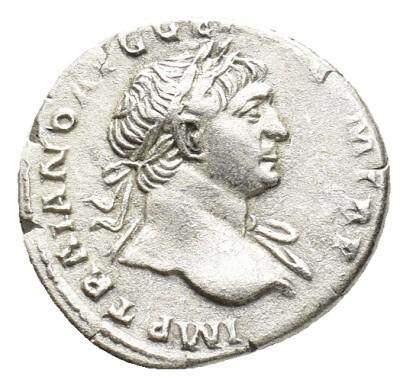
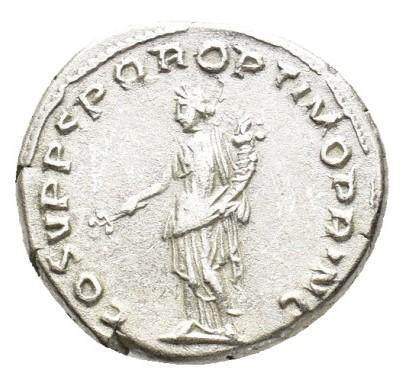
The Trajan “Felicitas” Denarius (RIC II 121) serves as a striking silver window into the absolute zenith of the Roman Empire. Struck between AD 103–111, this coin was minted during the “Golden Age” of Trajan’s reign—a period when the treasury was overflowing with Dacian gold and the Roman people genuinely believed they were living under the Optimus Princeps (the Best of Princes).
1. The Historical Context: The Spoils of Dacia
By AD 106, Trajan had achieved the impossible: he had utterly crushed the Dacian Kingdom, captured the legendary hoard of King Decebalus, and transformed the wild lands across the Danube into a Roman province. The influx of wealth was staggering—ancient sources claim Trajan brought back over 160 tons of gold and 300 tons of silver.
This denarius was the vehicle used to distribute that wealth. It wasn’t just money; it was a victory lap. By featuring Felicitas (the personification of Good Fortune and Happiness), Trajan was telling every citizen from Britain to Syria that the wars were over and the era of “National Happiness” had begun. It is the visual record of an Empire that felt invincible.
2. The Reverse: Felicitas and the Tools of Prosperity
The reverse features Felicitas, draped and standing left, holding a caduceus and a cornucopia.
- The Caduceus: The winged staff of Mercury represented commerce, negotiation, and peace. Its presence here signaled that the roads were safe and trade was flourishing under Trajan’s protection.
- The Horn of Plenty: The cornucopia in her left hand promised that the Roman belly would remain full. It represented the “Annona” (the grain supply) and the general abundance brought about by Trajan’s public works and conquests.
- The Legend: COS V P P S P Q R OPTIMO PRINC. This is a powerhouse of titles. It marks his fifth consulship and, most importantly, the title OPTIMO PRINC (To the Best of Princes)—a title the Senate gave him because they finally had an Emperor they didn’t fear.
3. The Obverse: The Conqueror’s Profile
The obverse features the laureate and draped bust of Trajan, facing right.
- The Heroic Realism: Notice the “military” haircut and the firm, square jaw. Trajan’s portraits avoid the excessive vanity of Nero or the paranoia of Domitian. He looks like a seasoned general who is just as comfortable in a legionary tent as he is in the Forum.
- The Dacian Honor: The legend includes DAC (Dacicus), the title he earned for conquering the Dacians. It was his proudest achievement, and he made sure it appeared on nearly every coin he struck during this decade.
- The Legend: IMP TRAIANO AVG GER DAC P M TR P.
4. Technical Details: The “Dacian Gold” Standard
- RIC II 121: Cataloged in the second volume of Roman Imperial Coinage, representing the height of High Imperial art.
- The Mint: Struck in Rome. Trajan used his new wealth to recall and melt down older, lighter coins, replacing them with high-purity silver issues like this one. Because of this, his denarii often have a “bright,” high-quality look that has survived nearly 2,000 years.
- The Strike: Trajan’s dies from the COS V period are known for their deep, crisp engraving. Finding a specimen where the individual segments of the caduceus are visible is a mandatory target for any collector of the “Five Good Emperors.”
