
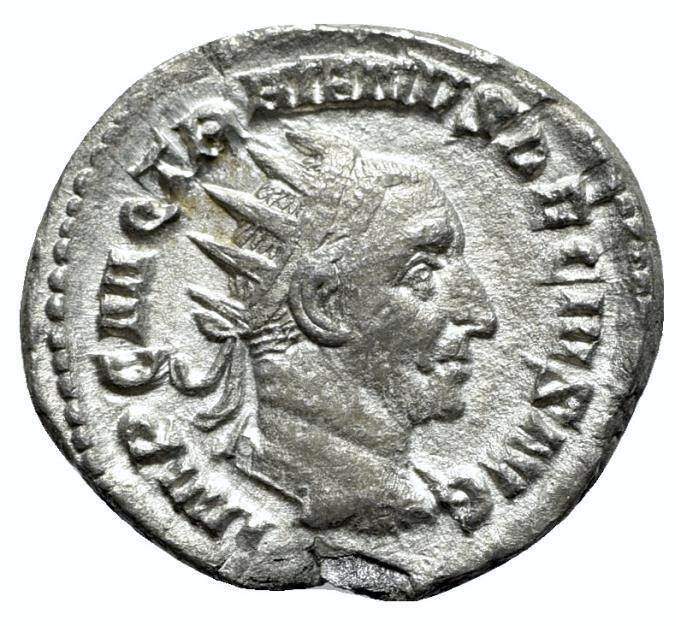
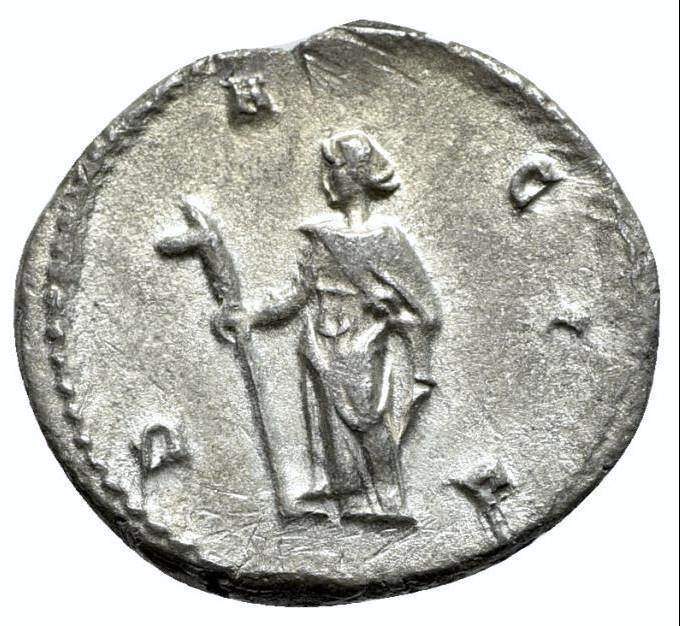
If you are searching for a coin that represents the “Last Stand of the Danube,” the Trajan Decius “Dacia” Antoninianus (RIC IV 12b) is a masterclass in defiant, regional propaganda. Struck between AD 249–251, this silver-washed radiate marks the moment a conservative general tried to drag Rome back to its glory days while the Goths were literally at the gates.
At Numiscurio, we often say that a coin’s “soul” is found in its ability to personify a province that was both the Empire’s strongest shield and its greatest burden.
1. The Historical Context: The Restorer of Rome
Trajan Decius was the “Old School” Emperor. A senator from the Balkans, he rose to power by defeating the previous emperor, Philip the Arab, in a civil war. Decius believed Rome’s troubles—plague, inflation, and invasion—were caused by a lack of traditional piety.
His reign was a frantic attempt at a “Gilded Age” revival. He was the first emperor to launch a systematic, empire-wide persecution of Christians to appease the old gods. This coin, RIC 12b, was struck to honor Dacia (modern-day Romania), his home region and the vital buffer zone against the Germanic tribes. Ironically, Decius would eventually become the first Roman Emperor to fall in battle against those very tribes at Abritus in AD 251.
Because the mid-3rd century was a period of rapid debasement, finding a RIC 12b with a strong silver “shimmer” and a sharp strike—where the dragon-headed staff of Dacia is clearly visible—is a significant find for any serious collector of the Crisis period.
2. The Reverse: The Personification of Dacia
The reverse features Dacia standing left, wearing a long robe (stola) and holding a staff topped with the head of an ass or a dragon—the Draco.
- The Military Standard: The staff held by Dacia is often debated, but many scholars see it as the Draco, the traditional Dacian battle standard. It’s a bold inclusion; it signaled that the fierce warriors of Dacia were now fully integrated into the Roman war machine.
- The Shield of the North: By putting Dacia on his coinage, Decius was reassuring the Roman people that the northern frontier was secure. It was a “border security” advertisement meant to project confidence while the Goths were crossing the Danube.
- The Legend: DACIA. Simple, direct, and powerful. It’s a geographical claim of ownership during a time when that ownership was being violently contested.
3. The Obverse: The Stoic Senator
The obverse features the radiate, draped, and cuirassed bust of Trajan Decius, facing right.
- The Face of Gravity: Notice the deep lines around his mouth and the furrowed brow. Decius intentionally chose a portrait style that looked older and more “Republican.” He wanted to look like the legendary heroes of Rome’s past—hard, disciplined, and traditional.
- The Name: He added “Trajan” to his name (as seen in the legend) to link himself to the Emperor Trajan, the original conqueror of Dacia and Rome’s greatest military expansionist.
- The Legend: IMP C M Q TRAIANVS DECIVS AVG.
4. Technical Details: The Rome Mint Output
- RIC IV 12b: Cataloged in the Roman Imperial Coinage, Volume IV, Part 3.
- The Mint: Struck in Rome. Unlike many of his successors who had to rely on field mints, Decius maintained a high-quality production in the capital to emphasize his legitimacy.
- The Silver Standard: While the “Crisis” was beginning to eat away at the currency, Decius’s Antoniniani from the Rome mint are known for being relatively “heavy” compared to the thin, copper-looking coins of just ten years later. This was “pre-collapse” silver.
