
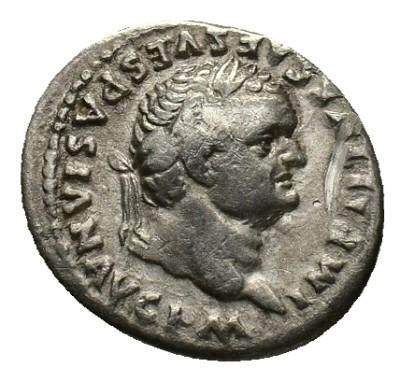
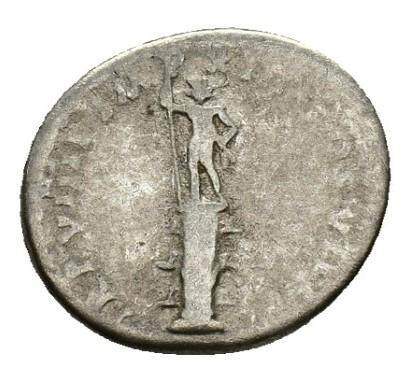
The Titus “Rostral Column” Denarius (RIC II 16a) serves as a striking silver window into the dawn of a new, post-civil war era. Struck in AD 79, shortly after Titus ascended to the throne, this coin is a masterclass in Flavian branding—a visual victory lap that used the “Golden Age” imagery of the past to cement the legitimacy of a brand-new dynasty.
1. The Historical Context: The Son of the Conqueror
When Titus took the throne in June of AD 79, he was following in the footsteps of his formidable father, Vespasian. The Flavians had saved Rome from the chaos of the “Year of the Four Emperors,” but they were still seen as “new money” by the old aristocracy. To combat this, Titus used his coinage to link himself to the greatest naval victories and the divine light of the sun.
This denarius was minted during a year of extreme highs and lows—it was the same year that saw the eruption of Mount Vesuvius. Amidst such natural disasters, the image of a steady, divinely favored Emperor on a triumphal column was a vital piece of psychological warfare designed to keep the Roman public calm and loyal.
2. The Reverse: The Columna Rostrata
The reverse features a radiate male figure (often identified as a statue of Titus himself or possibly Apollo/Sol) standing atop a rostral column, holding a vertical spear and a parazonium (a ceremonial triangular dagger).
- The Rostra: The “rostra” were the prows of captured enemy ships attached to the column. This was a direct reference to the naval victories of the Flavian house and a callback to the famous column of Octavian (Augustus) after the Battle of Actium.
- The Radiate Crown: The spikes of light emanating from the figure’s head symbolize divine favor and the “Sun-King” status of the Emperor. It suggested that Titus was the bringer of light to a dark, post-war world.
- The Parazonium: This was a weapon of high-ranking commanders, symbolizing his supreme authority over the legions and the fleets.
- The Legend: TR P VIIII IMP XV COS VII P P. This string of titles acts as a date stamp, placing the coin firmly in the first months of his reign.
3. The Obverse: The “Delight of Mankind”
The obverse features the laureate head of Titus, facing right.
- The Flavian Profile: Titus shared the rugged, powerful features of his father, Vespasian—the strong jaw and the broad forehead—but his portraits often have a slightly softer, more “approachable” quality. Ancient historians called him the “Delight of Mankind,” and his coinage reflects this carefully curated image of a benevolent yet powerful ruler.
- The Full Titles: The legend IMP TITVS CAES VESPASIAN AVG P M identifies him as the Imperator, the Augustus, and the Pontifex Maximus (High Priest), claiming total control over the military, the state, and the gods.
4. Technical Details: The High Relief of AD 79
- RIC II.1 16: Cataloged in the revised first part of the second volume of Roman Imperial Coinage.
- The Mint: Struck in Rome. The artistry of the Titus era is known for its high-relief, medallic quality. The engravers at the Rome mint were at the top of their game, capturing the individual prows on the column with microscopic detail.
- The Rarity: While Flavian silver is well-known, finding a “Rostral Column” denarius with a sharp, clear radiate crown is a challenge. Because this type was struck so early in his brief two-year reign, high-grade specimens are a cornerstone for any specialized collection of the 12 Caesars.
