
The Severus Alexander “Eternal Rome” Sestertius (RIC IV 602) is a massive, storied bronze issued between AD 231–235. This coin represents the “Indian Summer” of the Pax Romana—a final, dignified attempt by a young, scholarly Emperor to restore the traditional virtues of the Roman state before the world descended into the chaos of the Third Century Crisis.
At Numiscurio, we often say that a sestertius is more than a coin; it is a bronze canvas. To hold a specimen of this size is to feel the literal weight of the Imperial administration in the palm of your hand.
1. The Historical Context: The Last of the Severans
Severus Alexander came to the throne at just 13 years old, following the scandalous and eccentric reign of his cousin Elagabalus. Guided by his formidable mother, Julia Mamaea, Alexander’s reign was defined by a “Return to Normalcy.” He respected the Senate, lowered taxes, and surrounded himself with jurists like Ulpian.
This coin was minted during the latter half of his reign. The ROMAE AETERNAE (Eternal Rome) theme was a powerful piece of psychological warfare. As Persian threats grew in the East and Germanic tribes stirred on the Rhine, the mint issued these heavy bronzes to reassure a nervous public that the city of Rome was divinely protected and would endure forever.
2. The Reverse: Roma the Victorious
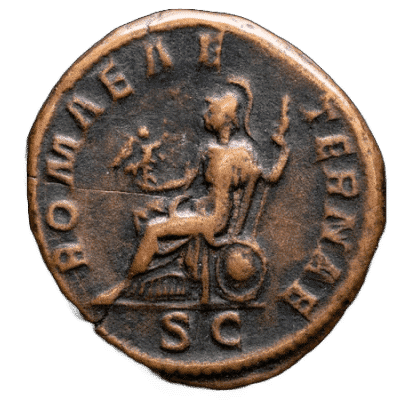
The reverse features Roma, the personification of the city itself, seated left on a military shield. She is helmeted and draped, holding Victory in her right hand and a scepter in her left.
- The Shield of Defense: By depicting Roma seated on a shield rather than a throne, the coin emphasizes that Rome’s peace is bought through military strength.
- The Scepter of Law: While Victory represents the army, the scepter represents the Lex Romana (Roman Law), which Alexander worked tirelessly to reform and uphold.
- The S C Mark: The large S C (Senatus Consulto) stands as a testament to Alexander’s cooperation with the Senate. Unlike the “Soldier-Emperors” who followed, Alexander ruled “by decree of the Senate.”
3. The Obverse: The Gentle Emperor
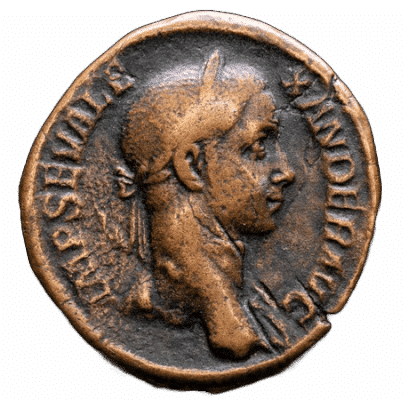
The obverse features the laureate and draped bust of Severus Alexander, facing right.
- The Portraiture of Peace: Notice the features of Alexander; unlike the grizzled, bearded portraits of the later 3rd century, he is often depicted with a youthful, clean-shaven, and almost intellectual expression. This was intentional—he wanted to be seen as a “Philosopher-King” in the vein of Marcus Aurelius.
- The Drape over the Shoulder: The detail of the drapery over the left shoulder adds a touch of “Civitas” (citizenship) to his military laurel, signaling his role as both a general and a chief magistrate.
- The Legend: IMP SEV ALEXANDER AVG.
4. Technical Details: The Bronze Giant
- RIC IV 602: Cataloged in the fourth volume of Roman Imperial Coinage, covering the end of the Severan Dynasty.
- The Mint: Struck in Rome. The Rome mint reached a high level of artistic consistency under Alexander, with well-centered strikes and elegant, legible lettering.
- The “Orichalcum” Luster: Sestertii were made of orichalcum, a golden-toned brass alloy. Over 1,800 years, these coins often develop a deep “Tiber” green or a rich, chocolate-brown patina. Finding a specimen where the feathers of Victory or the individual links on Roma’s helmet are still sharp is the hallmark of a premier mid-3rd-century collection.
