
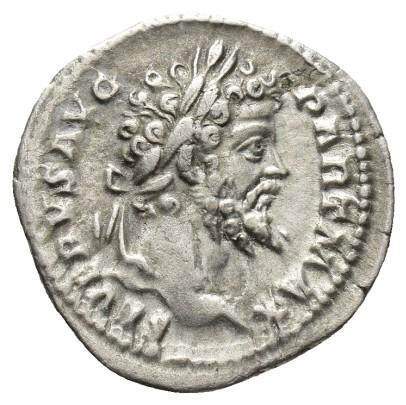
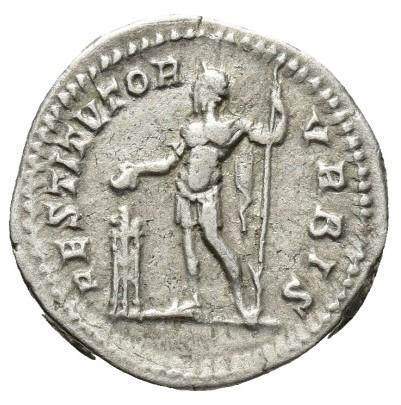
The Septimius Severus “Restorer of the City” Denarius (RIC IV 168a) is a fascinating silver manifesto struck in AD 201. This coin isn’t just a piece of currency; it is a political “reset button.” It marks the moment the African-born Emperor returned to Rome after years of bloody civil war and eastern conquest, declaring to a nervous Senate and a weary public that the chaos was over and the rebuilding had begun.
1. The Historical Context: From Warlord to Restorer
By AD 201, Septimius Severus had spent nearly a decade on the move. He had crushed his rivals, Pescennius Niger and Clodius Albinus, and had just finished a brutal, successful campaign against the Parthian Empire. However, his reputation in Rome was that of a “Soldier-Emperor” who had waded through Roman blood to reach the throne.
The legend RESTITVTORI VRBIS (To the Restorer of the City) was a calculated piece of propaganda. It signaled that Severus was moving away from the “Destroyer” phase of his reign and into the “Builder” phase. He used the spoils of his eastern wars to fund a massive architectural program in Rome, repairing the Pantheon, building the Septizodium, and restoring the Roman Forum to its former glory.
2. The Reverse: The Pious Commander
The reverse features Septimius Severus himself, in full military attire, standing left. He is performing a sacrifice using a patera (sacrificial bowl) over a lighted tripod, while holding a spear in his left hand.
- The Military Sacrifice: This image is a perfect “Severan” blend. By wearing his armor while sacrificing, he reminds the viewer that he is the Commander-in-Chief (Imperator), but by performing the religious rite, he claims the role of Pontifex Maximus (High Priest).
- The Spear of Order: The spear is held point-down or vertically, symbolizing that the fighting has ended and the weapon is now a staff of authority and protection.
- The Legend: RESTITVTORI VRBIS.
3. The Obverse: The Conqueror of the East
The obverse features the laureate head of Septimius Severus, facing right.
- The “Parthicus Maximus” Title: The legend SEVERVS AVG PART MAX (Severus Augustus Parthicus Maximus) is a direct reference to his total victory over the Parthian Empire in AD 198. It was his “calling card”—a reminder that the wealth used to restore Rome came from the conquered treasures of the East.
- The Serapis Curls: Look closely at the forehead; you can see the distinctive corkscrew curls that identify Severus with the Egyptian god Serapis. It was his signature look, blending his North African heritage with the divine authority of the Pharaohs.
- The Mature Beard: The thick, split beard—the “Severan beard”—became the gold standard for Imperial masculinity for the next several decades.
4. Technical Details: The Post-Civil War Strike
- RIC IV 168a: Cataloged in the fourth volume of Roman Imperial Coinage, the primary reference for the Severan dynasty.
- The Mint: Struck in Rome. The central mint during this period was operating at a high level of artistic detail to celebrate the Emperor’s homecoming.
- The Silver Quality: While Severus did slightly debase the silver content to pay his legions, the AD 201 issues still maintain a solid, bright luster.
- The Collector’s “Tell”: Look for the detail in the flame of the tripod and the individual fingers holding the patera. Finding a specimen where the “PART MAX” legend is crisp and well-centered is a major highlight for any collector of the “African Emperor.”
