
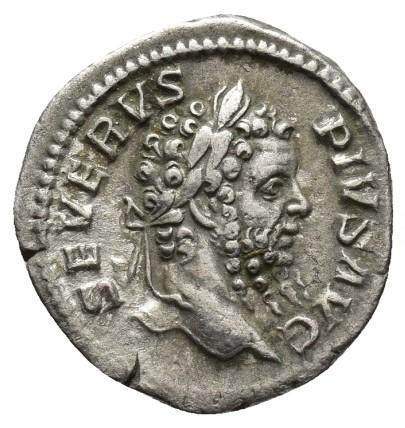
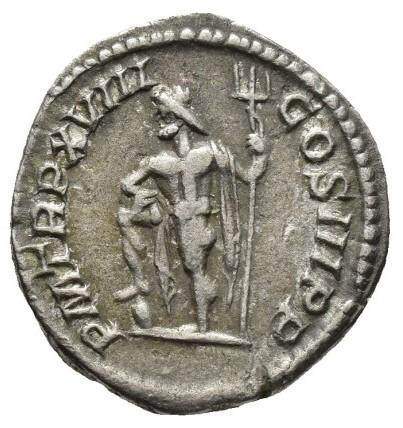
The Septimius Severus “Neptune the Conqueror” Denarius (RIC IV 228) is a striking silver relic from the final years of one of Rome’s most formidable military dynasties. Struck in AD 209, this coin is not just a piece of currency; it is a portable victory bulletin. It marks the moment the “African Emperor” turned his gaze toward the cold, fog-shrouded edges of the world: the province of Britannia.
At Numiscurio, we often say that a denarius is a window into the Emperor’s itinerary. This specific issue captures the raw power of a ruler who, even in old age and failing health, chose to lead his legions into the Caledonian wilderness to settle the British question once and for all.
1. The Historical Context: The British Expedition
By AD 209, Septimius Severus had been on the throne for sixteen years. He had crushed his rivals in civil wars and humbled the Parthians in the East. However, the northern frontier of Britain remained a thorn in the Empire’s side. Severus traveled to the island with his sons, Caracalla and Geta, launching a massive invasion into what is now Scotland.
The choice of Neptune for this reverse was a deliberate piece of naval propaganda. To invade the North, Severus had to repair Hadrian’s Wall and mobilize the Classis Britannica (the British Fleet). By invoking the God of the Sea, Severus was claiming divine mastery over the dangerous waters of the Oceanus, signaling to the Roman public that even the sea itself bowed to his command.
2. The Reverse: Neptune and the Global Footprint
The reverse features Neptune, naked except for a cloak draped over his left shoulder, standing left. He holds his iconic trident and, most significantly, rests his right foot on a globe.
- The Globe of Command: The globe under Neptune’s foot is a powerful visual metaphor. It represents the oikoumene (the civilized world). By placing the sea god’s foot upon it, the mint was suggesting that the Roman Empire now encompassed everything the oceans touched.
- The Trident of Power: The trident represents the tri-fold power over the seas, earthquakes, and horses—all elements vital to a successful maritime invasion.
- The Legend: P M TR P XVII COS III P P. This string of titles dates the coin precisely to AD 209 (his 17th year of Tribunician Power and 3rd Consulship).
3. The Obverse: The African Lion
The obverse features the laureate head of Septimius Severus, facing right.
- The “Serapis” Curls: Notice the distinctive corkscrew curls hanging over his forehead. This was a deliberate stylistic choice linking Severus to the Egyptian god Serapis, emphasizing his Eastern and African roots and his role as a provider for the Empire.
- The Mature Portrait: By AD 209, Severus’s portraits had become deeply weathered and majestic. The thick, split beard—often referred to as the “Severan beard”—became the standard of masculinity and authority for the next generation of Romans.
- The Legend: SEVERVS PIVS AVG. The title Pius was adopted to emphasize his “duty” to the state and his claim of being the “rightful” successor to the Antonine dynasty.
4. Technical Details: The Late Severan Strike
- RIC IV 228: Cataloged in the fourth volume of Roman Imperial Coinage, covering the transition from the High Empire to the military autocracy.
- The Mint: Struck in Rome. Despite the Emperor being in Britain, the central mint continued to produce high-quality silver to fund the northern campaign.
- The Metal: While the silver purity of the denarius began a slow decline under Severus, the AD 209 issues still maintain a respectable weight and a bright, “honest” luster.
- The Collector’s “Tell”: Look for the detail in the musculature of Neptune. A sharp strike will show the god’s athletic physique and the individual tines of the trident. Finding a specimen with a clear, round globe under the foot is the mark of a well-centered and highly desirable Severan piece.
