
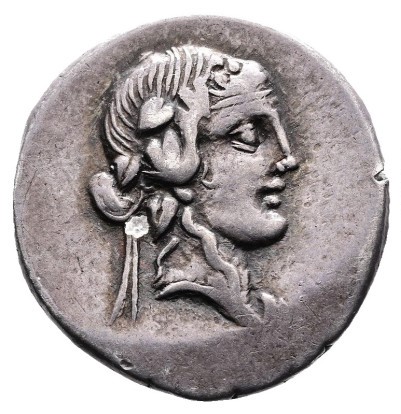
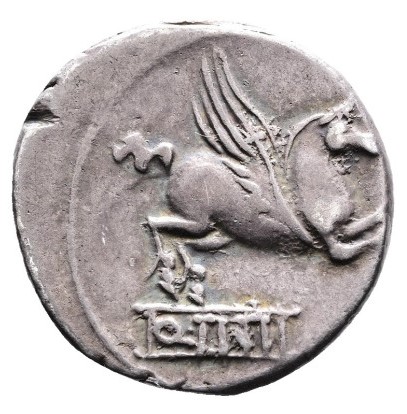
The Q. Titius Denarius (Crawford 341/2), struck in 90 BC, is a masterpiece of Late Republican symbolism. While the previous issue (341/1) featured a more archaic, bearded deity, this specific variant presents a youthful, Hellenistic aesthetic that reflected Rome’s growing fascination with Greek culture and the cult of Dionysus.
1. The Historical Context: Crisis and Currency
The year 90 BC was one of the darkest in the history of the Roman Republic. The Social War was at its peak; Rome’s Italian allies had risen in a sophisticated, coordinated revolt. To fund the massive legions required to hold the Italian peninsula, the Roman mint operated at a frantic pace.
Quintus Titius, the moneyer, was tasked with producing vast quantities of silver denarii. In such times, the choice of imagery wasn’t just artistic—it was a message of national identity and divine protection. By using Bacchus and Pegasus, Titius was invoking deities associated with liberation, vitality, and swift victory.
2. The Obverse: The Youthful Bacchus
The obverse features the head of Bacchus (the Roman equivalent of Dionysus), looking right. He is depicted as a handsome youth, wearing a wreath of ivy leaves.+1
- The Symbolism: Bacchus was the god of wine, theater, and religious ecstasy, but in a military context, he represented Liber (Freedom). To the Roman soldier, Bacchus was a “bringer of liberty”—a potent message when fighting a war against former allies who were demanding their own version of political freedom.
- The Style: The “youthful” portrait marks a shift away from the grimmer, bearded Roman gods toward a more refined, Greek-influenced style that was becoming fashionable among the Roman elite.
3. The Reverse: Pegasus on the Tablet
The reverse is iconic and identical across the Titius series: Pegasus (the winged horse) springing right from a rectangular tablet.
- The Tablet: The tablet is inscribed with the moneyer’s name: Q·TITI. This “label” style was a relatively new innovation at the Rome mint, giving the coin a modern, organized appearance.
- The Winged Horse: Pegasus was a symbol of speed and divine aid. In 90 BC, the Roman cavalry was under immense pressure. The image of a winged horse promised that the gods would provide the swiftness needed to outmaneuver the Italian rebels.
- The Linear Border: The entire scene is enclosed in a tight linear border, a hallmark of the high-quality dies produced by the Rome mint during this era.
4. Technical Details
- Metal: High-purity Silver (Denarius).
- Crawford 341/2: This is the standard reference from Michael Crawford’s Roman Republican Coinage.
- Rarity: While common as a type, finding specimens with well-centered “ivy wreaths” on Bacchus’s head is a challenge for collectors.
