
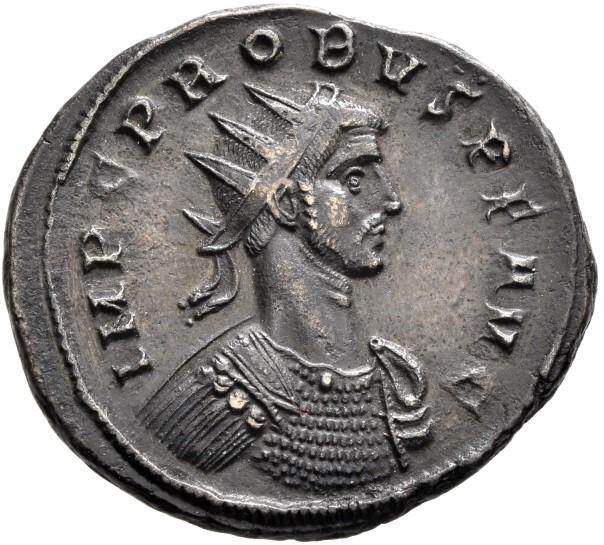
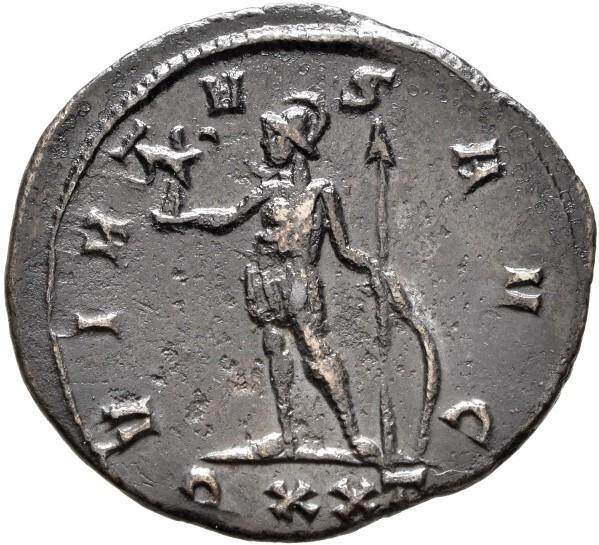
The Probus “Virtue of the Emperor” Antoninianus (RIC V 436) is a striking silver-washed window into the “Restoration of the World.” Struck between AD 276–282 in Ticinum (modern Pavia, Italy), this coin represents the sheer, unyielding military grit of the third-century soldier-emperors. Probus was a man who famously believed that if he could just finish enough wars, the Roman soldier would never be needed again—a dream he pursued with iron and blood.
At Numiscurio, we often say that a coin’s “soul” is found in the restless energy of its era; to hold a Probus “Virtus” is to hold the paycheck of the legions who spent their lives rebuilding the crumbling walls of the West.
1. The Historical Context: The Great Builder-General
Probus was the successor to the legendary Aurelian, and he shared his predecessor’s relentless drive. His reign was a non-stop whirlwind of activity: he cleared the Germans from Gaul, crushed usurpers in the East, and famously put his soldiers to work planting vineyards and digging canals when they weren’t fighting.
This coin was minted at Ticinum, a vital strategic mint in Northern Italy that supported the defense of the Alpine passes. By featuring Virtus (the personification of military courage), Probus was making a direct appeal to his troops. He was one of them—a “Barracks Emperor” who led from the front and demanded the same tireless “virtue” from every man in the ranks.
2. The Reverse: Virtus and the Prize of Victory
The reverse features Virtus, the goddess of bravery and military strength, standing front with her head turned left. She holds Victory on a globe in her right hand, while her left rests on a spear and a grounded shield.
- The Armed Peace: Virtus is not in the middle of a combat charge; she is standing firm. This represents the “Peace through Strength” that Probus sought to establish.
- Victory on a Globe: The small figure of Victory standing on a globe is a powerful symbol of Universal Rule. It told the Roman public that the Emperor’s courage had secured the entire known world.
- The Legend: VIRTVS AVG. This translates to “The Virtue of the Augustus.” It was a reminder that the safety of the Empire was inextricably linked to the personal character and military skill of Probus himself.
3. The Obverse: The Iron-Willed Augustus
The obverse features the radiate and cuirassed bust of Probus, facing right.
- The Soldier’s Profile: Probus’s portraits are some of the most distinctive of the 3rd century. Notice the short-cropped “military” haircut and the rugged, determined jawline. He is depicted in a cuirass (armor), emphasizing that even in the halls of power, he remained a commander-in-chief.
- The Pious and Happy Titles: The legend IMP C PROBVS P F AVG (Imperator Caesar Probus Pius Felix Augustus) sought to project a sense of traditional Roman legitimacy and divine favor (Felix).
- The Legend: IMP C PROBVS P F AVG.
4. Technical Details: The Ticinum Excellence
- RIC V 437: Cataloged in the fifth volume of Roman Imperial Coinage, which documents the recovery of the Empire under the Illyrian emperors.
- The Mint: Struck in Ticinum. The Ticinum mint was famous for its high-quality engraving during this period. You can often see incredible detail in the folds of Virtus’s drapery and the individual “pteryges” (leather tabs) on the Emperor’s armor.
- The Silvering: Probus’s Antoniniani were among the last to retain a decent silver wash before the reforms of the next decade. Finding a specimen from Ticinum where the original “bright” silver surface still catches the light is a highlight for any specialist of the Gallic or Italian mints.
