
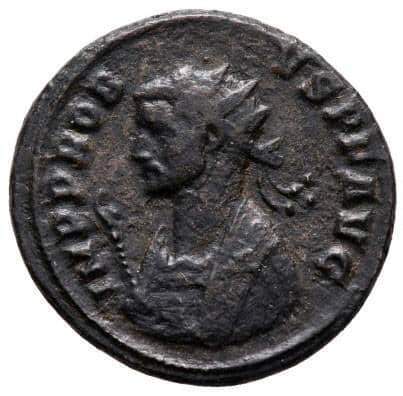
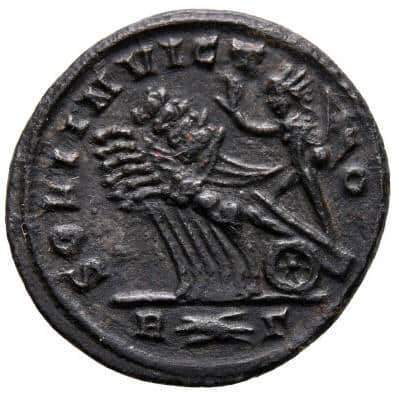
If you are searching for a coin that represents the “Unconquered General” at the height of his power, the Probus “Quadriga” Antoninianus (RIC V.2 203) is a masterclass in aggressive, triumphant propaganda. Struck around AD 277–280, this silvered radiate marks the moment a brilliant soldier-emperor swept across the Roman world, clearing out invaders and rebels alike to pull the Empire back from the brink.
At Numiscurio, we often say that a coin’s “soul” is found in its ability to transform a ruler into a literal force of nature, charging forward to reclaim Rome’s destiny.
1. The Historical Context: The Restorer of the World
Probus was the ultimate “Crisis Emperor.” A man of immense energy and discipline, he spent his six-year reign almost entirely on horseback. When he took the throne in AD 276, the borders were leaking everywhere—Germans in Gaul, Vandals in Illyricum, and usurpers in the East.
Probus didn’t just defeat them; he put them to work. Famously, he used his soldiers to plant vineyards across Gaul and Pannonia during peacetime (a move that eventually led to his assassination by grumbling troops). This coin, RIC 203, was minted as part of his massive military buildup. It wasn’t just money; it was a victory lap in metal. By AD 277, the year this type began circulating in Rome, Probus was signaling that the era of retreating was over.
Because Probus maintained a very high standard of production for his coinage, finding a RIC 203 with its original silvering intact—where you can see the individual reins of the horses and the determination in the Emperor’s eyes—is a cornerstone for any 3rd-century collection.
2. The Reverse: The Imperial Charge
The reverse features the Emperor in a spreading Quadriga (four-horse chariot), facing front or slightly left, holding a scepter and raising his hand in a gesture of peace and power.
- The Frontal View: Unlike the side-profile chariots of earlier eras, the “spreading” quadriga of Probus feels like it’s charging directly at the viewer. It’s an immersive piece of art designed to make the Roman citizen feel the momentum of the Imperial restoration.
- The Sol Connection: This imagery deliberately mimics the Chariot of the Sun (Sol Invictus). By adopting this pose, Probus was identifying himself as the earthly representative of the Unconquered Sun, the light that drives away the darkness of the barbarian invasions.
- The Legend: SOLI INVICTO. A direct dedication to the “Unconquered Sun,” confirming that the Emperor and the Sun God were racing toward victory together.
3. The Obverse: The Helmeted Warrior
The obverse features the radiate, helmeted, and cuirassed bust of Probus, facing left, usually holding a spear and shield.
- The Martial Portrait: This is one of the most iconic “Soldier-Emperor” busts in history. Probus is depicted ready for battle. The spear over his shoulder and the detailed shield (often decorated with scenes of triumph) tell you exactly who he was: a general first, a politician second.
- The Radiate Crown: The sun-spikes of the crown blend seamlessly with his military helmet, reinforcing the theme of divine military strength.
- The Legend: IMP PROBVS P F AVG. (Emperor Probus, Pious Happy Augustus).
4. Technical Details: The Rome Mint Excellence
- RIC V.2 203: Cataloged in the second part of Roman Imperial Coinage, Volume V, which covers the later Soldier-Emperors.
- The Mint: Struck in Rome. The Rome mint under Probus produced some of the finest dies of the 3rd century. You can often find a mint mark in the exergue like R-Star-Gamma, indicating the specific workshop (officina).
- The Silvering: Probus was known for trying to maintain the quality of the Antoninianus. These coins were struck in bronze but dipped in a silver wash (billon). If your coin shows a bright, white-metal surface, you are looking at the original finish that a Roman legionary would have seen.
