
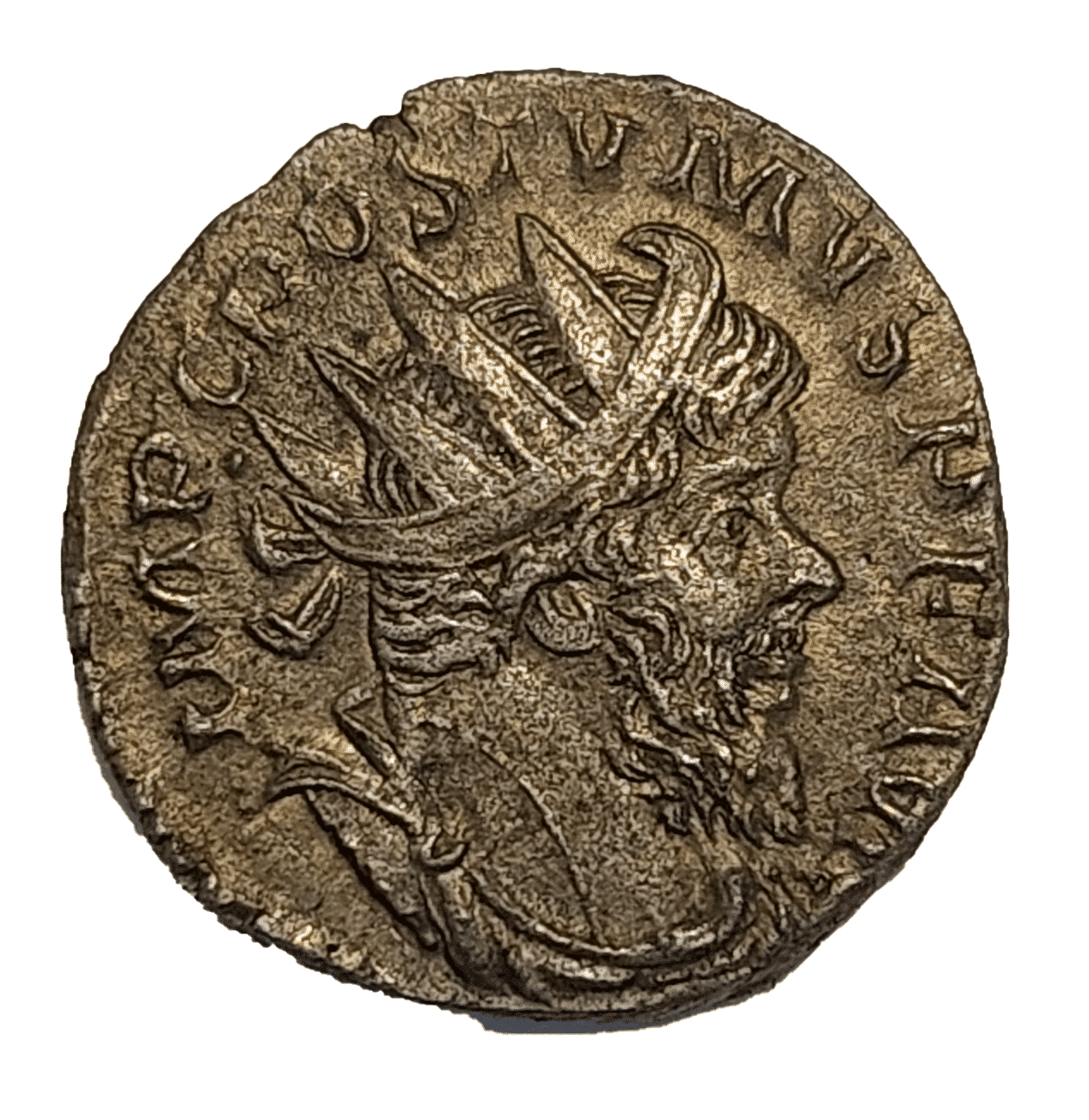
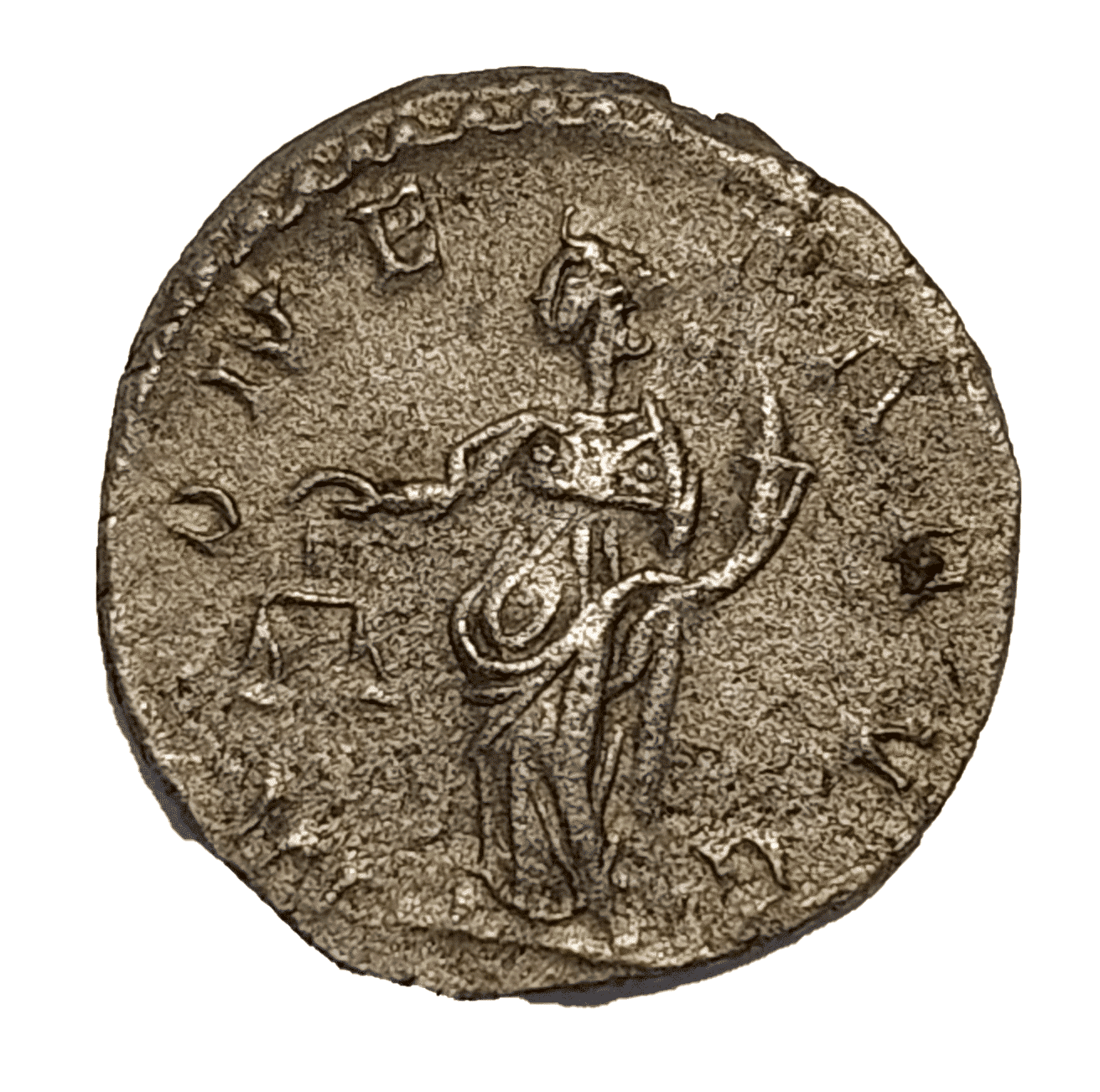
The Postumus “Moneta” Antoninianus (RIC V 75) serves as a striking silver-washed window into one of the most successful “breakaway” states in Roman history. Struck between AD 260–269, this piece was minted in Colonia Agrippinensis (modern-day Cologne, Germany) to prove a singular, defiant point: that the Gallic Empire was more stable, more honest, and more “Roman” than Rome itself.
At Numiscurio, we often say that a coin’s “soul” is found in its ability to act as a declaration of independence, using the language of currency to claim a right to rule.
1. The Historical Context: The Architect of the Gallic Empire
Postumus was a man of the frontier. When the central Roman Empire began to collapse under the weight of Persian invasions and internal strife, Postumus—then a governor in Gaul—took matters into his own hands. He didn’t just rebel; he carved out a sophisticated, fully functioning state including Gaul, Britannia, and Hispania.
This coin was the cornerstone of his survival. While the “official” Emperors in Rome were frantically debasing their currency until it looked like mere lead, Postumus kept his silver quality remarkably high. By invoking Moneta Aug (The Mint of the Emperor), he was telling the soldiers and merchants of the West that their money was safe, their pay was real, and their leader was a man of his word.
Because Postumus operated a world-class mint in Cologne, his coins are famous for their heavy weight and artistic excellence. Finding a RIC 75 where the “scales” of Moneta are perfectly balanced and the silver wash still catches the light is a testament to the brief “Golden Age” of the Gallic Empire.
2. The Reverse: Moneta, the Goddess of the Mint
The reverse features Moneta, draped and standing left, holding a pair of scales and a cornucopia (horn of plenty).
- The Balance of Honesty: The scales represent the “fair weight” of the Gallic mint. Postumus used this imagery to mock the crumbling economy of Rome. It was a visual promise that under his rule, a coin was worth exactly what it claimed to be.
- The Horn of Plenty: The cornucopia signals that a stable currency leads to a prosperous land. It was a powerful message for a population weary of the chaos of the mid-3rd century.
- The Legend: MONETA AVG. This identifies the personification of the mint as being under the direct protection and authority of the Augustus.
3. The Obverse: The Magnificent Beard
The obverse features the radiate, draped (and often cuirassed) bust of Postumus, facing right.
- The Gallic Realism: Postumus is easily recognized by one of the most magnificent beards in numismatic history. His portraits are exceptionally high-relief, depicting a mature, powerful man who looks more like the legendary Hercules than a desperate usurper.
- The Radiate Crown: The sun-rays identify this as an Antoninianus. Postumus ensured these crowns were struck sharply, reinforcing his connection to the divine light of Sol.
- The Legend: IMP C POSTVMVS P F AVG. (Emperor Caesar Postumus, Pious Happy Augustus).
4. Technical Details: The Cologne (Colonia) Workshop
- RIC V 75: Cataloged in the Roman Imperial Coinage, Volume V, Part 2.
- The Mint: Struck in Colonia Agrippinensis (Cologne). This was Postumus’s capital and home to some of the most skilled die-engravers of the century. The “Cologne style” is prized by collectors for its bold, expressive portraiture.
- The Silver Quality: Unlike the “official” Roman coins of this period, which were turning into dark, copper-looking slugs, the Gallic Antoniniani of Postumus often retain a beautiful “billon” (silver-copper alloy) appearance or a thick, original silver wash.
