
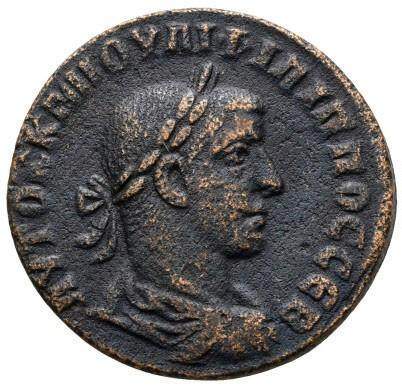
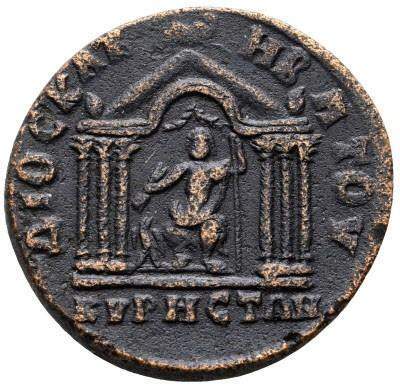
The Philip II “Temple of Zeus Kataibates” Bronze (RPC VIII 58851) is a magnificent architectural specimen from the Roman East, struck between AD 247–249. Minted in Cyrrhus (Cyrrhestica, in modern-day Syria), this coin serves as a “virtual tour” of a lost religious site and a testament to the brief, tragic reign of the boy-emperor who was caught in the gears of the Third Century Crisis.
1. The Historical Context: The Last of the Syrian Dynasty
Philip II was the son of Philip the Arab, an emperor who hailed from the Roman province of Arabia. By the time this coin was struck, the young Philip had been elevated from “Caesar” to full “Augustus,” co-ruling with his father. This was a “PR blitz” in the Eastern provinces, designed to show that the dynasty was stable and that the future of the Empire was secure in the hands of the next generation.
Cyrrhus was a vital military and religious hub on the road to the Euphrates. As the headquarters of the Legio IV Scythica, the city was a bastion of Roman power in Syria. By placing the local temple on the coinage, the mint was reminding the soldiers and citizens that the gods of the East were firmly on the side of the House of Philip.
2. The Reverse: The House of the Thunderer
The reverse features a hexastyle temple (six columns) enclosing Zeus Kataibates seated left. He holds a scepter and a thunderbolt, with an eagle at his feet. Above the temple, a bull (or possibly a ram) leaps to the right.
- Zeus Kataibates: The title Kataibates means “The Descender”—referring to Zeus descending in the form of a lightning bolt. It was a cult specifically dedicated to the spot where lightning had struck, marking it as sacred and untouchable.
- The Curtains of Mystery: Notice the “garlands” or “curtains” draped above the columns. These represent the actual decorations used in the temple during festivals, giving us a rare glimpse into the “set dressing” of ancient worship.
- The Leaping Bull: The bull above the pediment is a classic Syrian religious symbol, often associated with the storm gods of the region (like Hadad), blending local Semitic traditions with the Greek image of Zeus.
- The Legend: ΔΙΟC ΚΑΤEΒΑΤΟΥ ΚΥΡΗCΤΩΝ (Of Zeus Kataibates of the Cyrrhestians).
3. The Obverse: The Rear-View Portrait
The obverse features the laureate, draped, and cuirassed bust of Philip II, facing right and seen from the rear.
- The “Heroic” Perspective: The “seen from the rear” (heroic) perspective was a favorite of the 3rd-century mints. It emphasizes the Emperor’s physical presence and his military armor, portraying the young Philip not just as a child, but as a seasoned commander ready to defend the Syrian frontier.
- The Imperial Titles: The Greek legend ΑΥΤΟΚ Κ Μ ΙΟΥΛΙ ΦΙΛΙΠΠΟC CEΒ is the Eastern equivalent of the Latin Imperator Caesar Marcus Iulius Philippus Augustus.
- The Adolescent Face: On these late-reign issues, the portrait shows Philip II maturing, moving away from the soft features of his early “Caesar” years toward a more regal, stern expression.
4. Technical Details: The Syrian Strike
- RPC VIII 58851: Cataloged in the Roman Provincial Coinage project, which documents the rich diversity of local mints.
- The Mint: Struck in Cyrrhus. The city was famous for its large, heavy bronzes that functioned as the primary currency for the massive Roman military presence in the region.
- The Patina: Syrian bronzes are legendary for their “desert patina”—a vibrant, sandy-orange or deep-red earthen crust that often highlights the architectural details of the temple. Finding a specimen where the individual columns and the thunderbolt in Zeus’s hand are still crisp is a mandatory acquisition for any architectural or Syrian specialist.
