
If you’ve ever wanted to hold a “ticket” to the most expensive birthday party in human history, the Philip I “Arab” Elephant Antoninianus (RIC IV 58) is a masterclass in grand, celebratory propaganda. Struck in AD 248, this silver radiate marks the absolute high point of the Roman calendar: the 1,000th Anniversary (Ludi Saeculares) of the founding of Rome.
At Numiscurio, we often say that a coin’s “soul” is found in its ability to take a wild, exotic beast and turn it into a symbol of a city that refused to fall.
1. The Historical Context: The Millennial Emperor
Philip the Arab was an unlikely candidate to lead Rome’s thousandth birthday. A Praetorian Prefect from a remote province in modern-day Syria, he took the throne under murky circumstances during a disastrous Persian campaign. Yet, in AD 248, he found himself hosting the most lavish festival in antiquity.
To celebrate Rome’s first millennium, Philip transformed the city into a continuous stage of games, races, and hunts. This coin was minted specifically to commemorate the Saeculum Novum (A New Age). While the Empire was actually facing bankruptcy and barbarian incursions, this coin told a different story: a tale of a Rome so powerful it could command the monsters of the deep desert to march through the Colosseum.
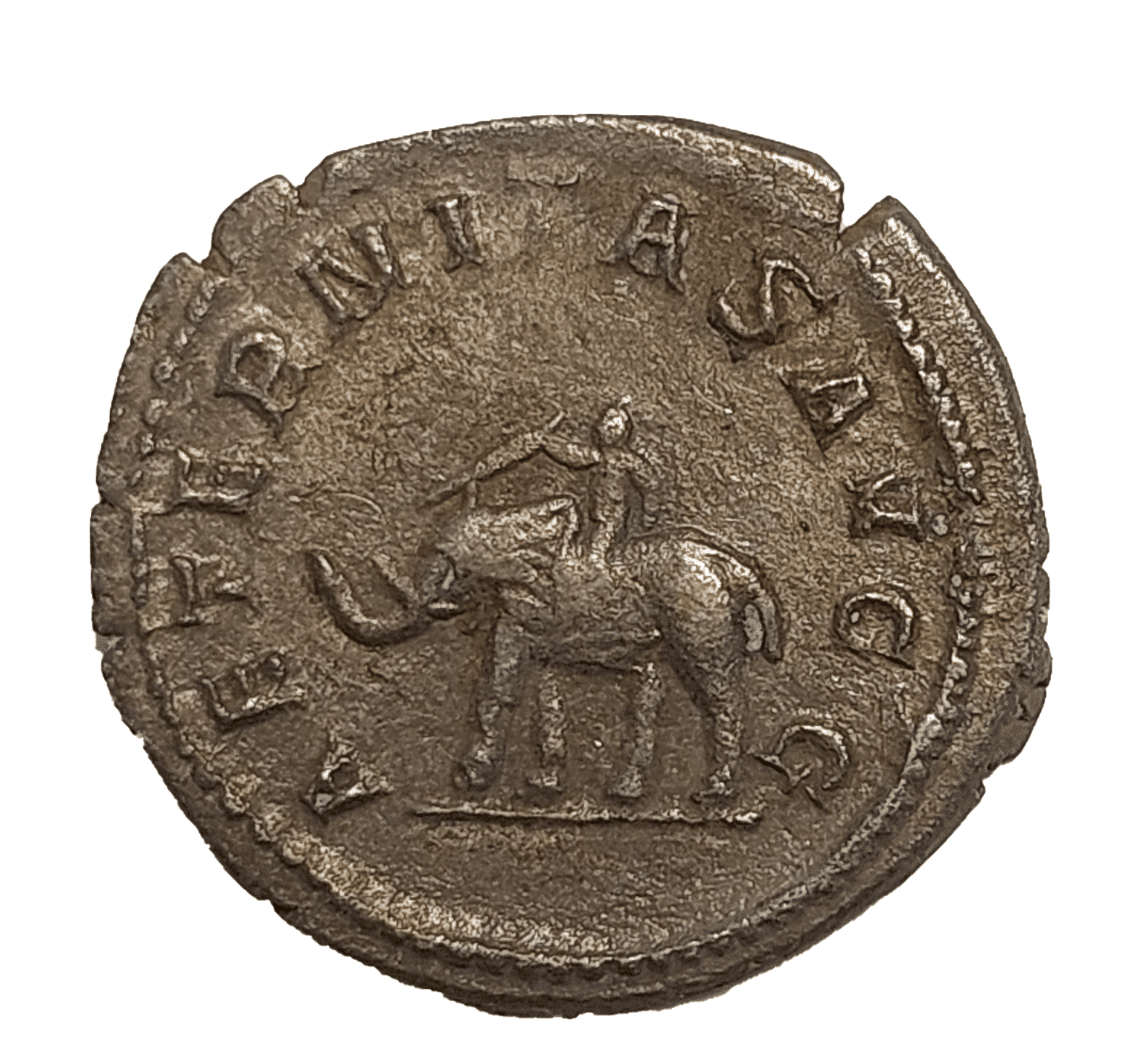
Because these were struck as “souvenirs” of the great games, they were produced in large numbers, yet finding a RIC 58 with a sharp strike—where you can see the “wrinkles” on the elephant’s skin and the driver (mahout) perched on its back—is a mandatory acquisition for any historian of the 3rd Century.
2. The Reverse: The Beast of the Games
The reverse features an Elephant, walking left, driven by a mahout (trainer) holding a small goad.
- The Colosseum Stars: During the 1,000th-anniversary games, Philip emptied the imperial menageries. Ancient records claim that 32 elephants, along with hippos, tigers, and lions, were paraded through the streets. This coin is a literal snapshot of that spectacle.
- The Symbol of Longevity: The elephant was chosen not just for its size, but for its legendary lifespan. In the Roman mind, the elephant symbolized Aeternitas (Eternity). By putting an elephant on the coin, Philip was promising that Rome would live for another thousand years.
- The Legend: AETERNITAS AVGG. This translates to “The Eternity of the Emperors,” linking the long life of the elephant to the survival of Philip’s dynasty.
3. The Obverse: The Radiant Outsider
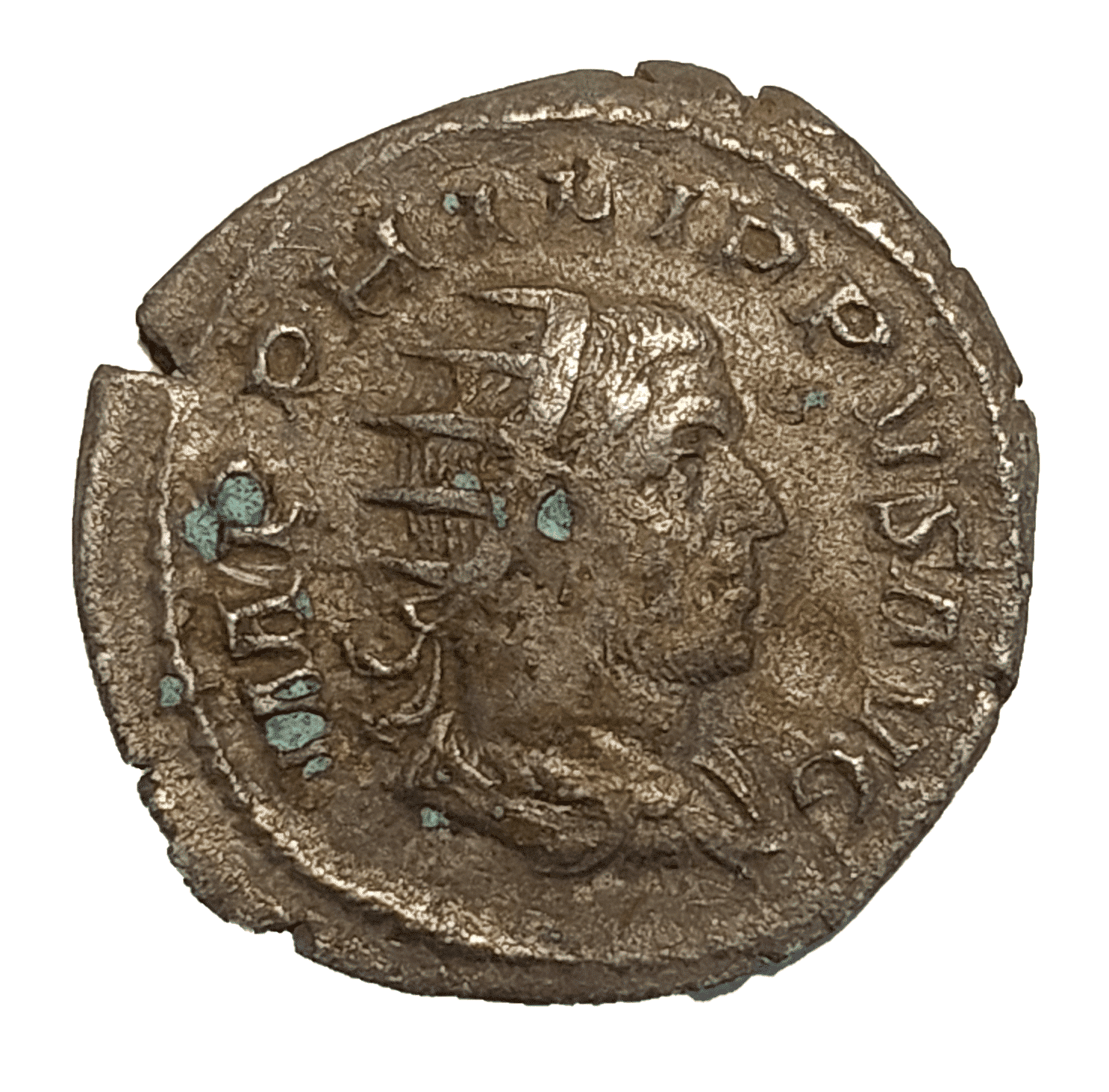
The obverse features the radiate, draped, and cuirassed bust of Philip I, facing right.
- The Pensive Portrait: Notice the heavy features and the short-cropped “military” beard. Philip’s portraiture often carries a sense of gravity, perhaps reflecting the immense pressure of holding an empire together during the “Crisis of the Third Century.”
- The Radiate Crown: As a double-denarius (Antoninianus), the crown of sun-spikes identifies the coin’s value and Philip’s status as the sun-blessed protector of the state.
- The Legend: IMP PHILIPPVS AVG.
4. Technical Details: The Rome Mint Souvenir
- RIC IV 58: Cataloged in the Roman Imperial Coinage, Volume IV, Part 3, which covers the mid-3rd century.
- The Mint: Struck in Rome. These coins were the “official merchandise” of the secular games. The quality of the Rome mint remained surprisingly high during this festival year to impress the crowds visiting the capital.
- The Silver Purity: While the Empire was struggling, Philip ensured that the “Millennial” coins looked prestigious. They often have a high-quality silver appearance compared to the much darker, debased coins that followed just a few years later.
