
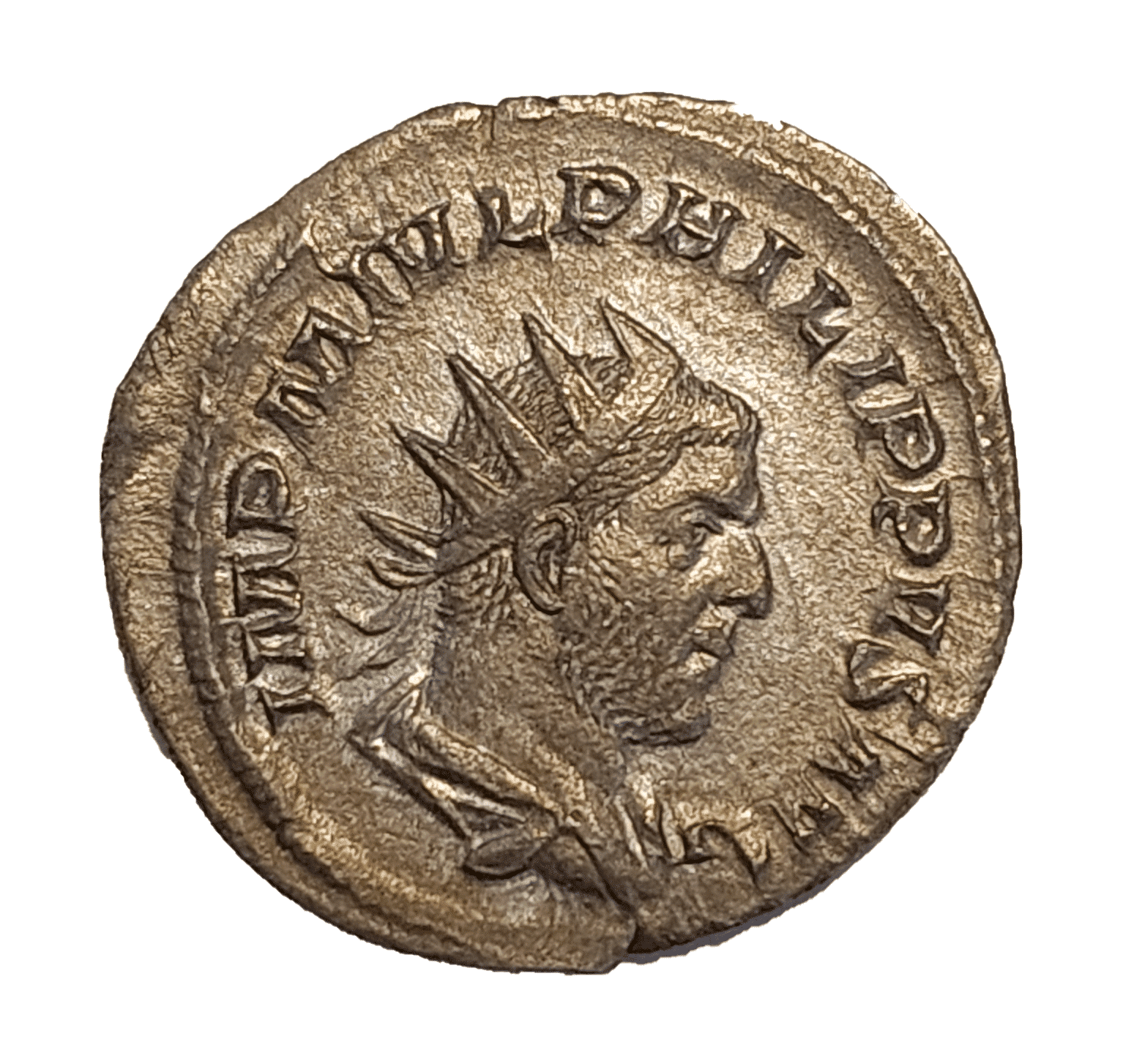
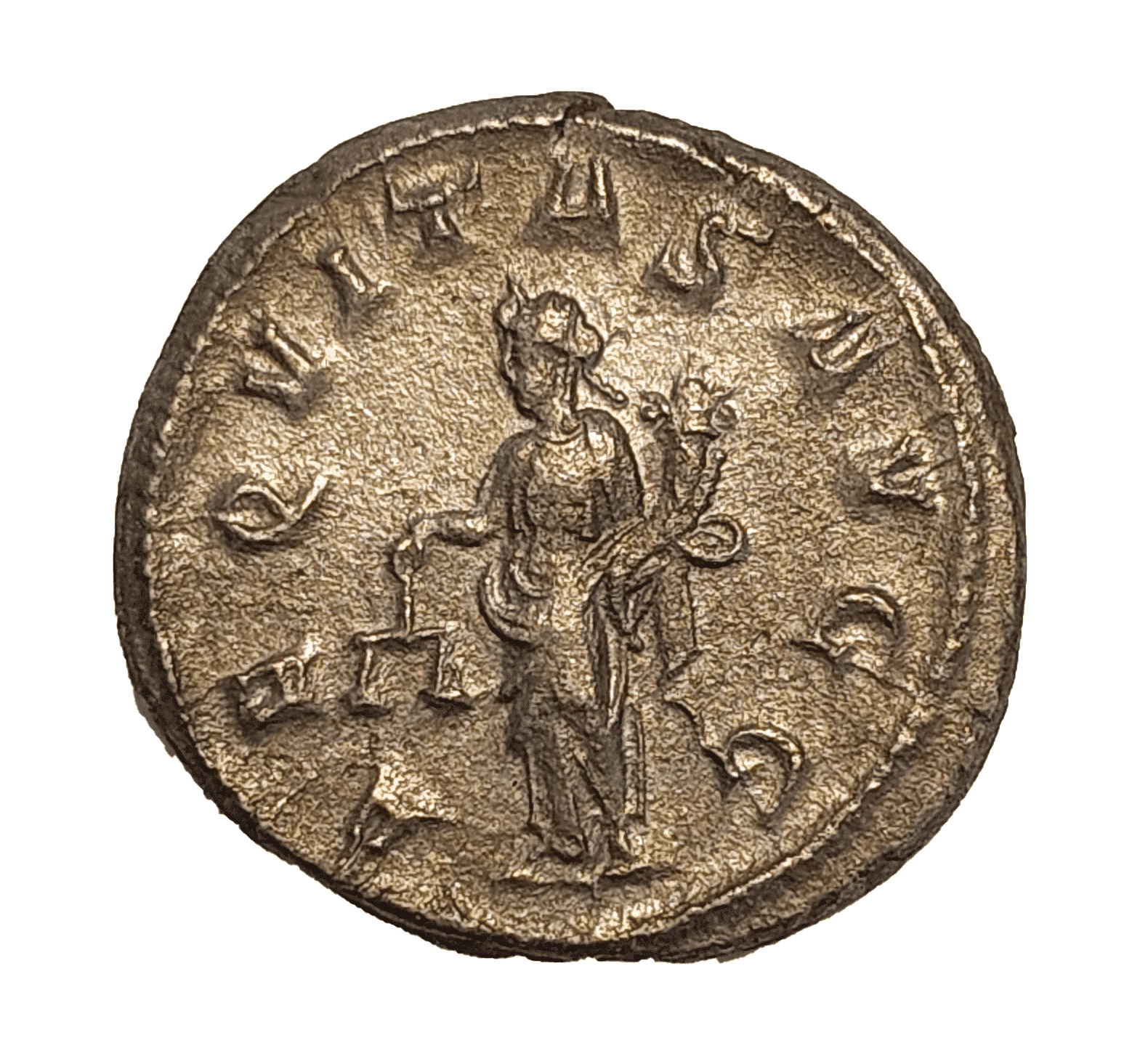
Holding the Philip I “Arab” Aequitas Antoninianus (RIC IV 57b) is like gripping a piece of a high-stakes financial gamble from the mid-3rd century. Struck around AD 244–247, this silver radiate was Philip’s attempt to project an image of absolute stability and “fair deal” governance to a Roman world that was starting to feel the tremors of economic collapse.
1. The Historical Context: The Auditor of the Empire
Philip the Arab didn’t just have to prove he was a capable general; he had to prove he was a master accountant. After the murky death of his predecessor, Gordian III, Philip was forced to negotiate a massive, humiliatingly expensive peace treaty with the Sassanid Persians. To pay off the Persian King Shapur I—and still fund the upcoming 1,000th-anniversary party of Rome—he needed the tax system to run like clockwork.
This coin was the face of that fiscal policy. By invoking Aequitas (the goddess of Equity and Fairness), Philip was sending a message to the merchants and the legions: The scales are balanced, the taxman is fair, and the Emperor is a just steward of your wealth.
Because these were the “workhorse” coins of the mid-240s, they saw heavy circulation but were minted with surprising care. Finding a RIC 57b with a sharp strike—where you can see the individual pellets on the scales—is a perfect way to represent the “calm before the storm” that would eventually lead to the Great Inflation of the 260s.
2. The Reverse: The Lady of the Scales
The reverse features Aequitas standing left, holding a pair of scales and a cornucopia (horn of plenty).
- The Balance of Trade: The scales represented the exactness of the Roman mint. It was a visual promise that the government wouldn’t cheat the people through debasement—an ironic claim, given that the silver content was already slowly drifting downward.
- The Horn of Plenty: In her other hand, she holds the cornucopia, suggesting that fairness and honest weight lead directly to a prosperous Empire.
- The Legend: AEQVITAS AVGG. The “GG” denotes the Augusti (plural), referring to Philip I and his young son, Philip II, who shared the throne.
3. The Obverse: The Stoic Administrator
The obverse features the radiate, draped, and cuirassed bust of Philip I, facing right.
- The Realist Portrait: Notice the rugged, heavy-set features and the short-cropped “military” beard. Philip’s portraiture eschews the youthful idealism of the emperors who came before him, opting instead for the look of a seasoned official who had spent years in the imperial bureaucracy.
- The Radiate Crown: The crown of sun-rays identifies this as an Antoninianus (a double-denarius). By this time, the coin was the primary unit of the Roman economy.
- The Legend: IMP PHILIPPVS AVG.
4. Technical Details: The Rome Mint Precision
- RIC IV 57b: Cataloged in the Roman Imperial Coinage, Volume IV, Part 3.
- The Mint: Struck in Rome. During these early years, the Rome mint was operating with impressive efficiency, producing coins with high relief and consistent weights to reassure the public of the currency’s value.
- The Silvering: Philip’s early issues still maintained a respectable silver-washed appearance. These coins have a much “brighter” feel than the dark, copper-heavy pieces minted just a decade later under Gallienus.
