
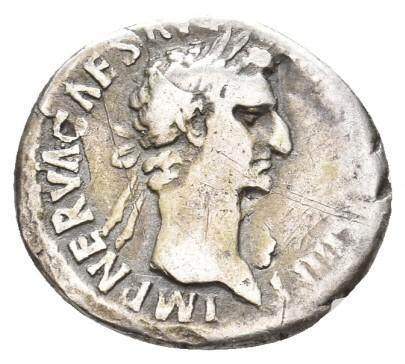
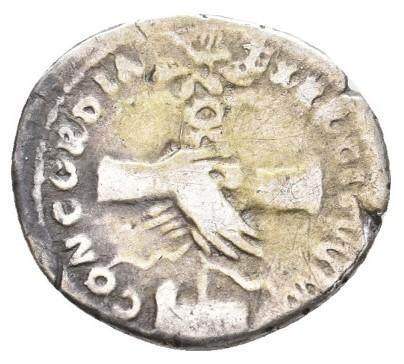
The Nerva “Concord of the Armies” Denarius (RIC II 26) serves as a striking silver window into a moment of extreme political delicacy. Struck in AD 97, this coin represents a desperate, high-stakes diplomatic maneuver—a “plea for peace” from an elderly Emperor who found himself trapped between a vengeful Senate and a mutinous Praetorian Guard.
At Numiscurio, we often say that a coin’s “soul” is found in those moments when the metal is used to bribe, soothe, or unify a crumbling military alliance.
1. The Historical Context: The Emperor Under Siege
Nerva’s reign was born from the blood of Domitian, the last Flavian. While the Senate rejoiced at Nerva’s appointment, the Roman military—the muscle of the Empire—was furious. They had loved Domitian for the pay raises he provided, and by AD 97, the Praetorian Guard was openly revolting, demanding the heads of Nerva’s advisors.
This denarius was minted during his third consulship (COS III) at the height of this crisis. It was a piece of urgent propaganda: by issuing coins that celebrated the “Concord of the Armies,” Nerva was trying to manifest a unity that didn’t actually exist. It was a visual olive branch to the legions, reminding them that the strength of Rome rested on their loyalty to the Emperor, not their desire for revenge.
2. The Reverse: The Hands of Power
The reverse features clasped hands holding an aquila (the legionary eagle) set upon a prow (the front of a ship).
- The Clasped Hands: This is the ancient symbol of Concordia—the sacred agreement between two parties. In this context, it represents the handshake between the Emperor and his soldiers.
- The Eagle and the Prow: By including both the aquila (symbolizing the land armies) and the prow (symbolizing the navy), Nerva was appealing to every branch of the Roman military. He was telling them that the entire defense of the Mediterranean world depended on their “concord.”
- The Legend: CONCORDIA EXERCITVVM. A bold, direct title that translates to “The Harmony of the Armies.”
3. The Obverse: The Wise Caretaker
The obverse features the laureate head of Nerva, facing right.
- The Senatorial Profile: Nerva’s portraits are defined by their unflinching, rugged realism. He is depicted with a prominent “aquiline” nose and the thin, weary features of a 66-year-old career lawyer. This was the face of the “Anti-Domitian”—a man who ruled by law and consensus rather than by fear and divine theater.
- The Full Titles: The legend IMP NERVA CAES AVG P M TR P COS III P P includes every major honor the state could bestow, including P P (Pater Patriae), the “Father of the Country.”
- The Legend: IMP NERVA CAES AVG P M TR P COS III P P.
4. Technical Details: The “Crisis” Silver
- RIC II 26: Cataloged in the second volume of Roman Imperial Coinage, representing the brief but vital bridge between the Flavians and the Antonines.
- The Mint: Struck in Rome. Despite the political chaos, the Rome mint maintained a remarkably high standard of engraving. The detail on the legionary eagle’s feathers and the individual fingers of the clasped hands is often exceptional.
- The Strategic Adoption: Shortly after this coin was issued, Nerva realized that “Concordia” wasn’t enough to save him. He famously adopted the popular general Trajan as his heir, an act that finally settled the military and began Rome’s greatest century. This coin is the last record of his attempt to rule alone through diplomacy before he brought in the “muscle” of Trajan.
