
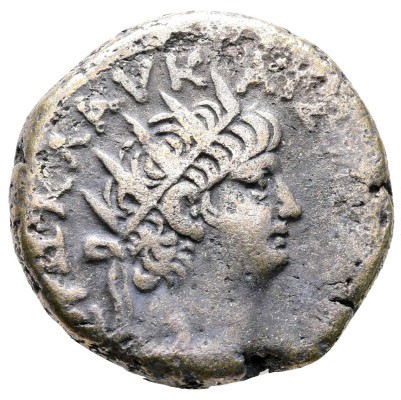
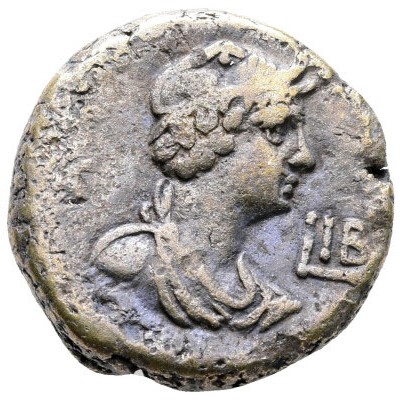
The Nero “Elephant Queen” Tetradrachm (RPC I 5289) is a heavy, evocative silver-alloy coin struck in AD 65–66 in the legendary city of Alexandria. This coin represents the exotic, high-stakes intersection of Roman imperial power and ancient Egyptian tradition. Minted in Nero’s twelfth regnal year (LIB), it dates to the final, increasingly erratic chapter of his reign—a time when the Emperor was more interested in his artistic “tours” of Greece than the mounting tensions in his empire.
At Numiscurio, we often say that an Alexandrian tetradrachm is a “provincial masterpiece”; it speaks the language of the Greeks but breathes the air of the Nile.
1. The Historical Context: The Granary of Rome
Alexandria was the second city of the Empire, the “Gateway to the East,” and the primary source of the grain that kept the Roman mobs fed. Because of its vital importance, the Emperors treated Egypt as a private estate. While the rest of the Empire used the standard Roman Denarius, Egypt maintained its own unique currency system—the Billon Tetradrachm.
This coin was struck during a period of massive logistical effort. Nero was planning “Eastern” expeditions and preparing for the Great Fire’s aftermath in Rome. These coins were the grease in the wheels of the massive Alexandrian bureaucracy, paying the sailors of the grain fleet and the administrators of the Great Library.
3. The Obverse: Nero the Sun-King
The obverse features the radiate bust of Nero, facing right.
- The Radiate Crown: Nero was the first emperor to frequently depict himself with the “crown of rays,” identifying himself with Sol (the Sun God) and the Hellenistic god Helios. It was a bold statement of his divine right to rule and his obsession with his own “radiant” celebrity.
- The Aegis: Look closely at his shoulder; he is wearing the Aegis (the goatskin cloak of Zeus/Jupiter, often decorated with the head of Medusa). This was a symbol of divine protection and terrifying power, signaling that Nero was the earthly representative of the King of the Gods.
- The Legend: ΝΕΡ ΚΛΑΥ ΚΑΙΣ ΣΕΒΑ ΓΕΡ ΑΥΤΟ (Nero Claudius Caesar Augustus Germanicus Imperator).
2. The Reverse: The Spirit of Alexandria
The reverse features a draped bust of Alexandria, facing right, wearing a spectacular elephant-skin headdress.
- The Elephant Skin: This is one of the most iconic images in ancient numismatics. The elephant skin symbolizes the “conquest of the South” and the exotic wealth of Africa. It harks back to the iconography of Alexander the Great and the early Ptolemaic kings, portraying the city itself as a powerful, exotic queen.
- The Date (LIB): To the right of the bust is the Greek numeral LIB (L being the symbol for “Year” and IB being 12). This pins the coin exactly to AD 65–66, just two years before Nero’s suicide.
- The Legend: AYTOKPA (Imperator).
4. Technical Details: The Billon Standard
- The Denomination: The Tetradrachm was roughly equivalent to one Roman Denarius in value within Egypt, despite being much larger.
- The Metal: This is billon—a low-grade silver alloy. Alexandrian coins are famous for their “chunky” feel and their unique, dark-grey surfaces, which often develop a smooth, soapy texture over the centuries.
- The Collector’s “Tell”: Look for the detail in the elephant’s trunk and tusks on the headdress. Finding a specimen where the Medusa head on the Aegis is distinct is a major highlight for any Nero specialist.
