
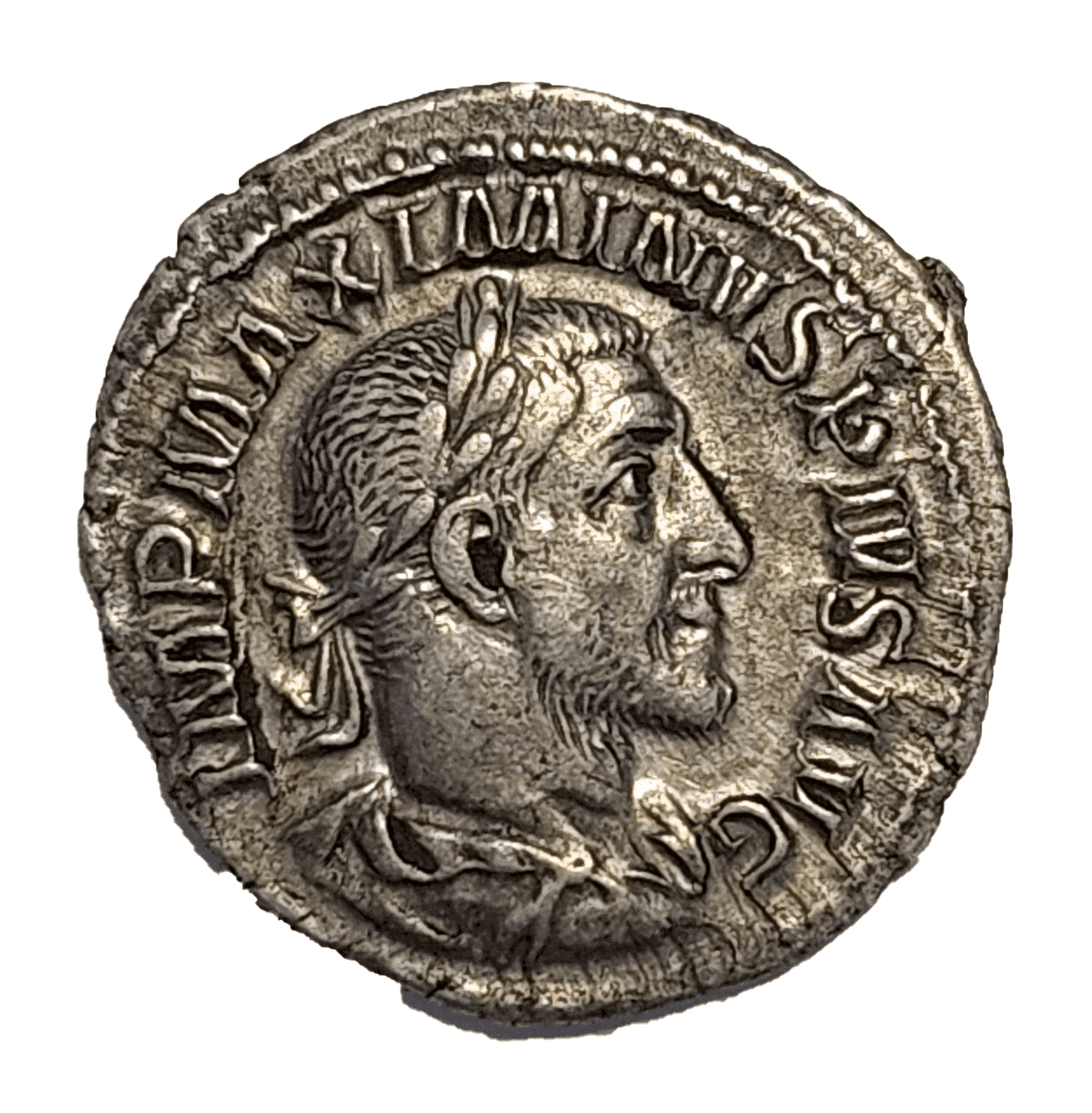
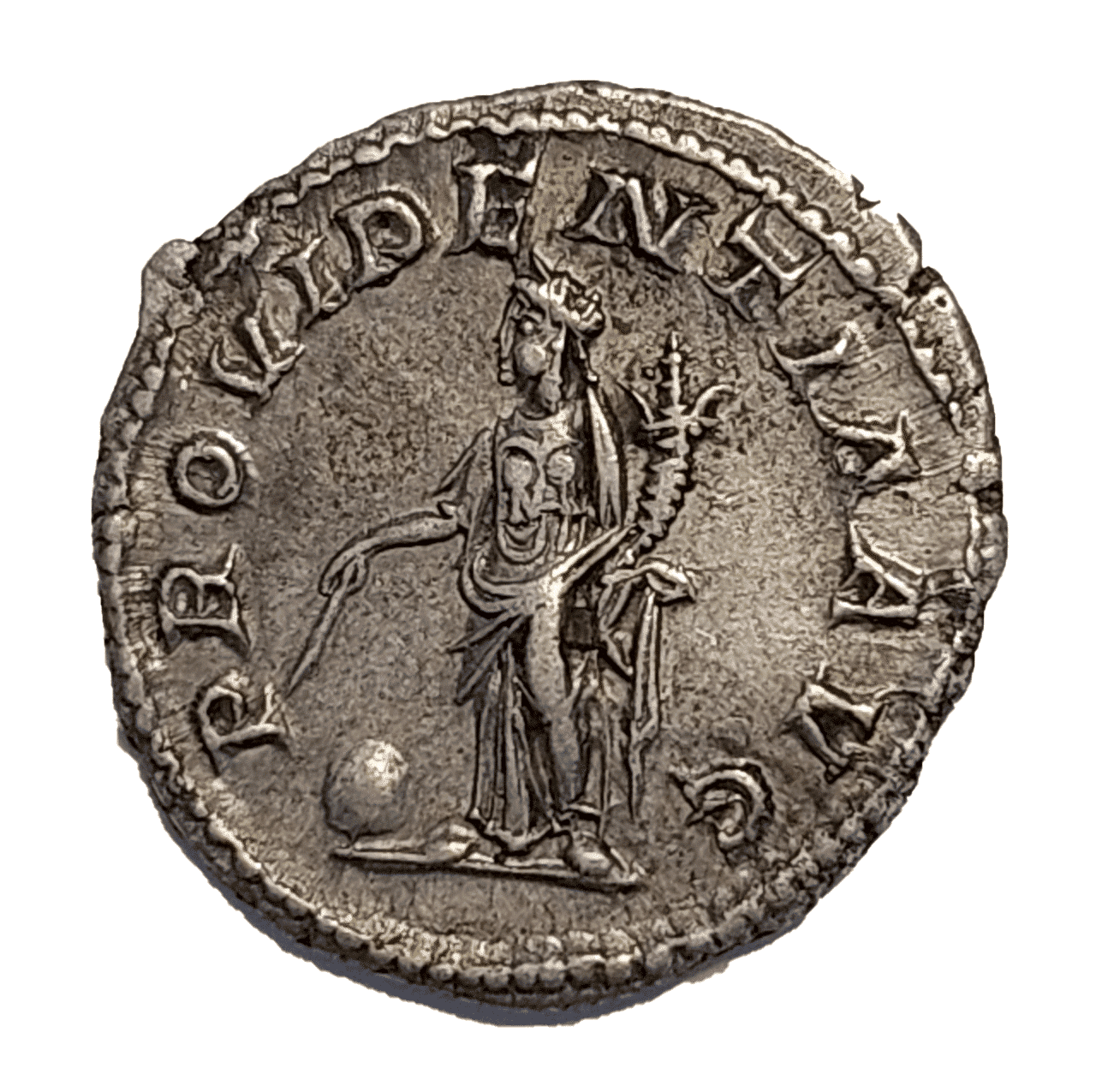
The Maximinus I “Thrax” Providentia Denarius (RIC IV 13) serves as a striking silver window into the dawn of the “Crisis of the Third Century.” Struck between AD 235–236, this piece marks the exact moment the Roman Empire traded the refined, aristocratic rule of the Severans for the raw, muscular power of its first true “Soldier-Emperor.”
1. The Historical Context: The Giant of the Balkans
Maximinus Thrax was a man of legendary proportions. A Thracian peasant who rose through the ranks by sheer physical dominance, he was reportedly over eight feet tall and could pull a fully laden wagon by himself. When his predecessor, Severus Alexander, was murdered by his own troops for being “too soft” on the Germanic tribes, the legions turned to Maximinus—the ultimate personification of Roman military might.
This denarius was minted during his very first year of rule. It was a critical piece of PR: Maximinus never once visited Rome as Emperor, spending his entire reign in a military tent on the Rhine and Danube. This coin was his way of telling the nervous Senate and the Roman elite that, despite his rough origins, he possessed the Providentia (Foresight) necessary to steer the ship of state through the coming barbarian storms.
2. The Reverse: Providentia and the Global Order
The reverse features Providentia, draped and standing left, holding a wand over a globe at her feet and a cornucopia in her left hand.
- The Wand and Globe: This is a powerful symbol of “Cosmic Governance.” By pointing a wand at the globe, Providentia (and by extension, Maximinus) is signaling that the Emperor is the divine architect of world order. It was a reassuring message: The giant in the North has a plan for the whole world.
- The Horn of Plenty: The cornucopia promises that military strength leads to material abundance. For a Roman citizen, it was a reminder that a strong border meant a full market.
- The Legend: PROVIDENTIA AVG. This identifies the goddess as the personal “Providence of the Emperor.”
3. The Obverse: The Face of the Frontier
The obverse features the laureate, draped, and cuirassed bust of Maximinus I, facing right.
- The Brutal Realism: Maximinus’s portraiture is famous for its “Thracian” features—the massive, protruding jaw, the prominent brow, and the rugged, weathered skin. He didn’t want to look like a philosopher; he wanted to look like the man who could crush a Germanic shield-wall with his bare hands.
- The Military Cuirass: Notice the armor (cuirass) visible on the shoulder. This was a “Soldier-Emperor” who was almost always depicted ready for battle, reflecting his life spent in the military camps.
- The Legend: IMP MAXIMINVS PIVS AVG. (Emperor Maximinus, Pious Augustus).
4. Technical Details: The High-Relief Rome Mint
- RIC IV 13: Cataloged in the fourth volume of Roman Imperial Coinage, which covers the transition into the mid-3rd century.
- The Mint: Struck in Rome. Despite Maximinus’s absence from the capital, the central mint produced his coins with exceptional artistic quality. The dies for Maximinus are known for their high relief and deeply engraved features.
- The Silver Standard: This coin represents one of the last periods where the Denarius maintained a high silver purity before the catastrophic debasements of the 250s and 260s. It has a heavy, “honest” feel that reflects the disciplined, if brutal, nature of Maximinus’s short reign.
