
Gemini said
The Maximianus Herculius “Genius of Rome” Follis (RIC VI Serdica 3b) is a heavy, bronze monument to the “Iron Age” of the Roman Tetrarchy. Struck around AD 303–304 in the ancient city of Serdica (modern-day Sofia, Bulgaria), this coin represents the raw, administrative power of a man who rose from the Illyrian peasantry to become the “Hercules” of the Roman world.
At Numiscurio, we often say that a coin’s “soul” is found in the architectural strength of its strike; the Serdica mint was famous for its bold, muscular portraits that mirrored the tough, soldier-emperor who commissioned them.
1. The Historical Context: The Herculean Protector
Maximianus was the loyal “right hand” to Diocletian. While Diocletian was the thinker, Maximianus was the fighter—the Herculius who spent his reign crushing rebellions in Gaul and North Africa. This follis was minted at Serdica, a city that Galerius (the Eastern Caesar) famously wanted to turn into his own “New Rome.”
By AD 303, the Tetrarchy (the Rule of Four) was at its zenith. This coin was the “global currency” of its day, designed to show a unified front. Even in the rugged Balkans, the message was the same: the Empire was stable, the gods were honored, and the “Genius” (the collective spirit) of the Roman people was being protected by the iron will of the Emperors.
2. The Reverse: The Spirit of the People
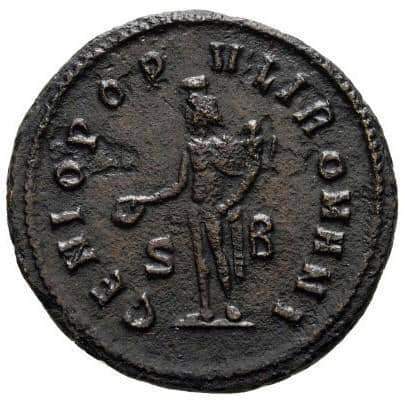
The reverse features the Genius of the Roman People, standing left, wearing a modius (a grain-measuring basket) on his head and a chlamys (cloak) over his left shoulder. He holds a patera (sacrificial bowl) and a cornucopia.
- The Modius of Plenty: The basket on his head symbolizes the grain supply and the prosperity that Diocletian’s reforms aimed to bring to the starving provinces.
- The Patera and Cornucopia: The bowl represents pietas (religious duty), while the horn of plenty represents the material wealth of the state. Together, they promised the Roman citizen that if they remained loyal to the Emperors, the gods would provide.
- The Legend: GENIO POPVLI ROMANI. This was the universal slogan of the Tetrarchy, found on millions of coins from London to Alexandria.
3. The Obverse: The Granite Face of Authority
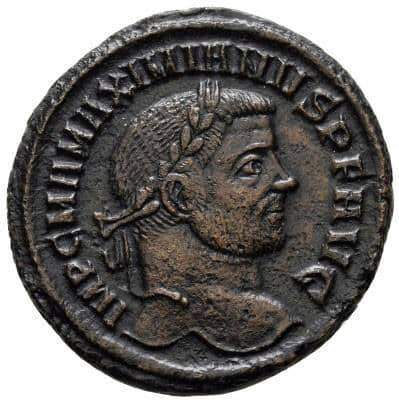
The obverse features the laureate head of Maximianus, facing right.
- The Tetrarchic Style: Notice the thick, bull-like neck and the square, determined jawline. This “blocky” style of portraiture was a deliberate move away from the delicate realism of the past. It was meant to convey an image of indestructible, eternal authority—the Emperor as a literal pillar of the state.
- The Pious and Happy Titles: The legend IMP C MAXIMIANVS P F AVG (Imperator Caesar Maximianus Pius Felix Augustus) sought to project a sense of traditional Roman legitimacy and divine favor (Felix).
- The Legend: IMP C MAXIMIANVS P F AVG.
4. Technical Details: The Serdica Excellence
- RIC VI Serdica 3b: Cataloged in the sixth volume of Roman Imperial Coinage, covering the grand reorganization of the Empire.
- The Mint: Struck in Serdica (look for the •SB•SD• or similar mark in the exergue). Serdica was a short-lived but highly prestigious mint, known for its deep, crisp strikes and its very “masculine” artistic style.
- The Billon Standard: These large folles were originally issued with a thin, bright silver wash. Finding a specimen from Serdica that still retains traces of this original silvering in the recesses of the Genius’s muscles or the Emperor’s laurel wreath is a true prize for any Tetrarchic specialist.
