
The M. Servilius C. f. “Combat Denarius” (Crawford 327/1) is one of the most action-packed and genealogically significant silver coins of the Roman Republic. Struck in 100 BC, this denarius represents a masterclass in “ancestor worship” through metal, where a young mint master used his office to broadcast the legendary bravery of his family to the Roman masses.
At Numiscurio, we often say that a coin’s “soul” is found in the movement of the die; few Republican issues capture the frantic, life-or-death energy of single combat as vividly as this one.
1. The Historical Context: The Scars of the “Flea”
The man behind the mint, Marcus Servilius, son of Caius, belonged to the gens Servilia, an ancient house that lived and died by the sword. This coin was a direct tribute to his grandfather, Marcus Servilius Pulex Geminus, a hero of the Second Punic War.
Pulex Geminus (the “Flea”) was famous for having fought in over twenty single combats, bearing twenty-three scars on his chest—every single one of them received while facing the enemy. In 167 BC, he famously bared his scarred torso in the Forum to shame the Senate into granting a Triumph to a fellow general. By striking this coin in 100 BC, M. Servilius was reminding the Roman voters that while the Republic faced internal strife, his family represented the “old school” grit that had defeated Hannibal.
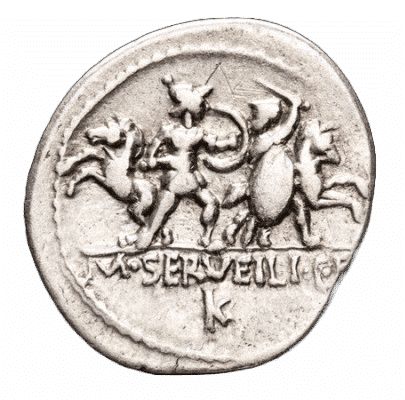
2. The Reverse: The Duel of the Century
The reverse features an incredibly detailed scene: two soldiers fighting on foot, their horses standing patiently in the background.
- The Single Combat: This is not a generic battle; it is a depiction of a monomachia (single combat). One warrior is often shown gaining the advantage, a visual shorthand for the twenty-odd victories of Pulex Geminus.
- The Horses: The presence of the horses in the background indicates that these were elite cavalrymen who had dismounted to settle the score man-to-man—the ultimate test of Roman Virtus.
- The Control Letter: Your specimen features the Latin control letter ‘K’ in the exergue. These letters were used by the mint to track specific dies and ensure quality control among the different workshops (officinae).
- The Legend: M SERVEILI C F (Marcus Servilius, son of Caius).
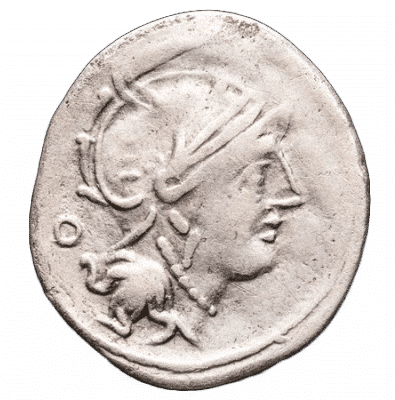
3. The Obverse: The Armed Republic
The obverse features the classic helmeted head of Roma, facing right.
- The Greek Connection: Behind the head of Roma, your coin bears the Greek control letter ‘O’. The use of both Greek and Latin letters on the same coin series is a fascinating numismatic quirk of this issue, showing the bilingual nature of the craftsmen working in the Roman mint at the turn of the century.
- The Winged Helmet: Roma wears a winged helmet decorated with a griffin’s head, symbolizing the swift and predatory nature of Roman justice during the expansionist years of the late Republic.
4. Technical Details: The High-Relief Strike
- Crawford 327/1: Cataloged in Michael Crawford’s Roman Republican Coinage, the definitive reference for the era.
- The Mint: Struck in Rome. The engraving of the 100 BC period is noted for its fluidity; notice the tension in the legs of the fighting soldiers and the way the horses’ manes are rendered.
- The Silver Purity: These denarii were struck in nearly pure silver (95% or higher). Because they were used to pay the legions of Marius during his northern campaigns, many survived in hoards. Finding a specimen with sharp “control letters” like your ‘O’ and ‘K’ is a significant find for collectors who track die varieties.
