
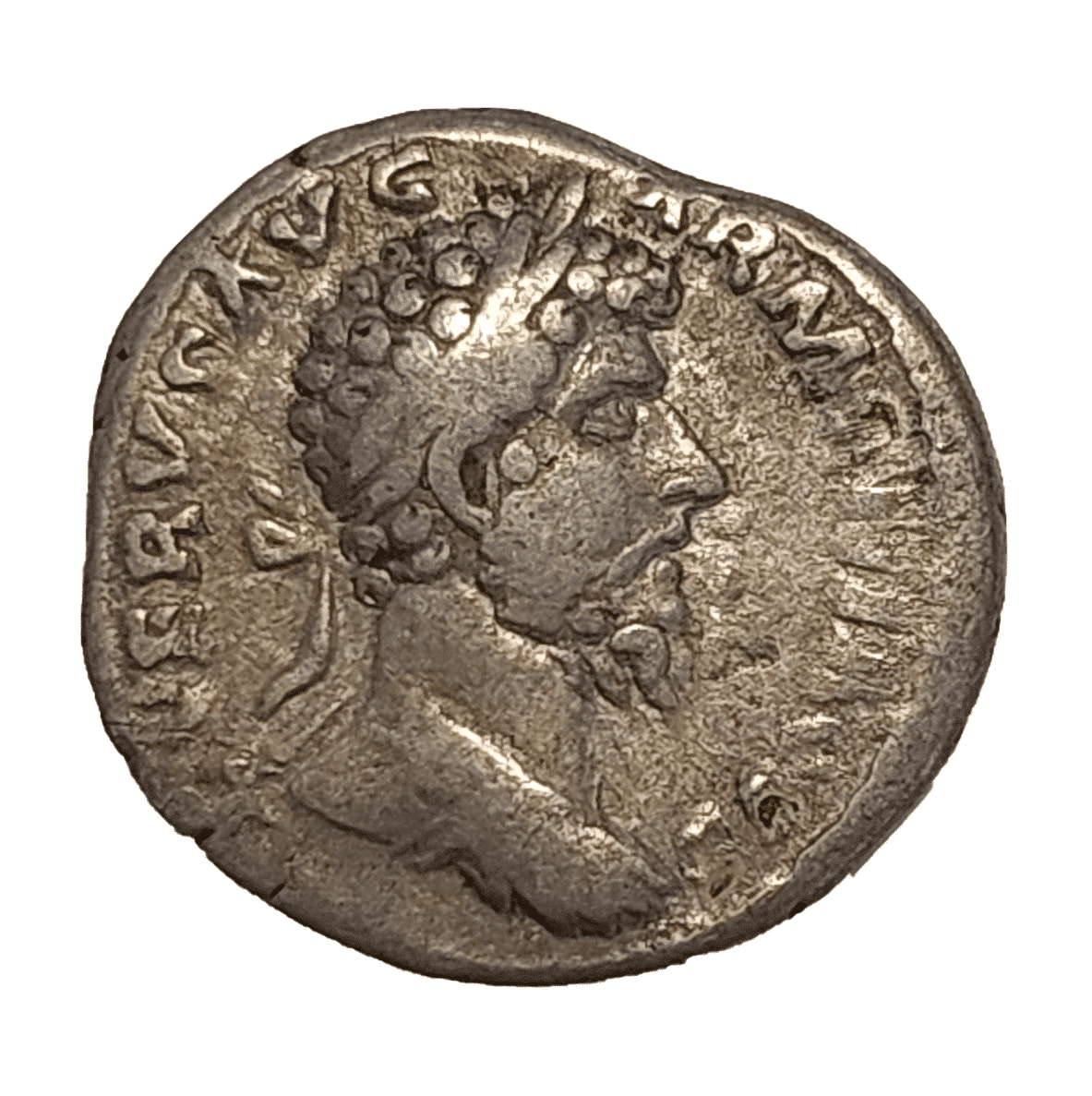
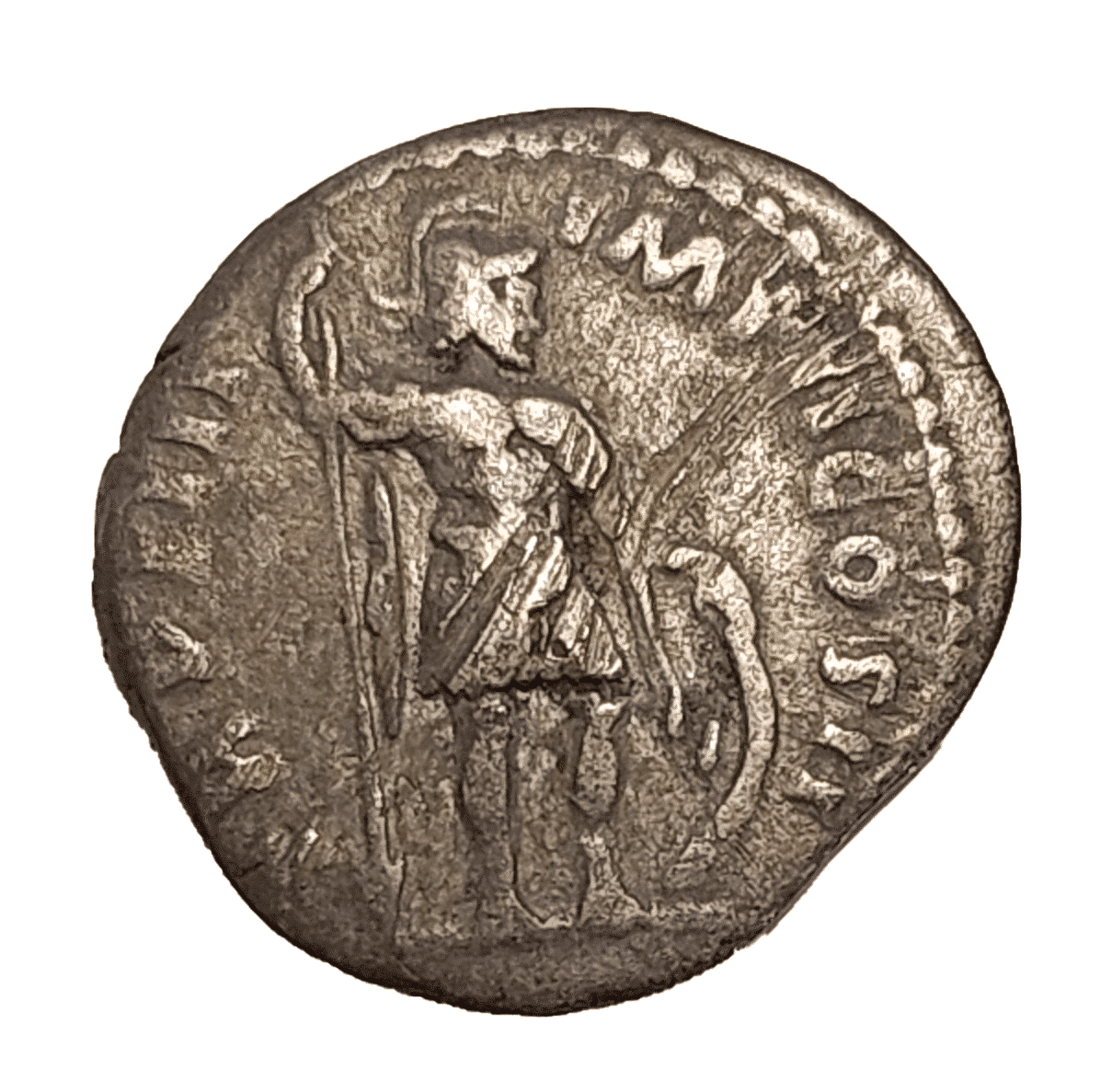
The Lucius Verus “Mars the Avenger” Denarius (RIC III 515) serves as a striking silver window into the high-stakes military theater of the mid-2nd century. Struck in AD 164, this coin was a bold piece of political theater, intended to show the Roman world that the “junior” Emperor was not just a lover of luxury, but a hardened commander who had successfully reclaimed the East from the Parthian Empire.
At Numiscurio, we often say that a coin’s “soul” is found in those moments when a co-emperor finally steps out of the shadow of his more famous partner to claim his own place in the sun.
1. The Historical Context: The Armenian Triumph
When Marcus Aurelius and Lucius Verus took the throne as Rome’s first co-emperors, the Parthian King Vologases IV immediately tested them by invading Armenia. While Marcus stayed in Rome to manage the bureaucracy, Lucius headed East. This coin was minted at the exact moment he returned to the capital to celebrate his victory.
The title ARMENIACVS on the obverse is the key to this coin’s history. It was a title Lucius initially hesitated to accept until his generals had fully secured the region. By AD 164, however, the message was clear: the Roman eagle had returned to the East, and the Parthians had been pushed back. This denarius acted as a commemorative “medal” for the legions and the citizens, linking the Emperor directly to the god of war.
2. The Reverse: Mars the Victorious
The reverse features Mars, the god of war, standing right in full military dress, holding a vertical spear and resting his hand on a round shield.
- The Military Dress: Unlike some depictions of Mars as a nude or semi-nude deity, here he is shown in the paludamentum (military cloak) and cuirass. This emphasizes the discipline and formal structure of the Roman army—the very machine that won the Armenian War.
- The Ready Stance: Mars is not in the middle of a frantic battle; he is standing firm. It is an image of “Victory Achieved.” It told the Roman public that the borders were secure and the threat had been neutralized.
- The Legend: TR P IIII IMP II COS II. These titles allow us to date the coin to AD 164. The IMP II is particularly important, as it refers to his second imperial acclamation—specifically for the victories in the East.
3. The Obverse: The Stylish Emperor
The obverse features the bare-headed bust of Lucius Verus, facing right.
- The Iconic Beard: Lucius Verus was famously vain about his appearance, often dusting his hair with gold filings. His portraiture is distinguished by a thick, meticulously curled beard and a heavy head of hair. It is a masterpiece of Antonine art, moving away from the simpler styles of the earlier 2nd century.
- The “Armeniacus” Claim: The legend VERVS AVG ARMENIACVS is a proud declaration. It was during this year that he fully integrated the victory into his official name, cementing his reputation as a conqueror.
- The Bare Head: Interestingly, Lucius is often shown without a laurel wreath on these early victory types, perhaps to emphasize his youthful, vigorous nature before the more formal “triumphal” portraits took over.
4. Technical Details: The High Empire Silver
- RIC III 515: Cataloged in the third volume of the Roman Imperial Coinage, which covers the reigns of Antoninus Pius through Commodus.
- The Mint: Struck in Rome. The artistry of the Antonine period reached a peak of technical skill, with dies that captured incredible texture in the hair and the metalwork of the armor.
- The Silver Standard: While the Empire was wealthy, the costs of the Parthian War were immense. This denarius represents the last “stable” silver of the High Empire before the Antonine Plague began to devastate the economy and lead to the first major debasements.
