
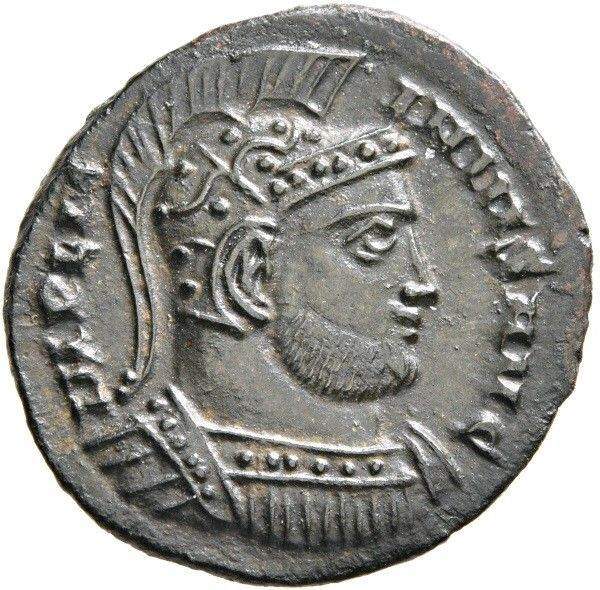
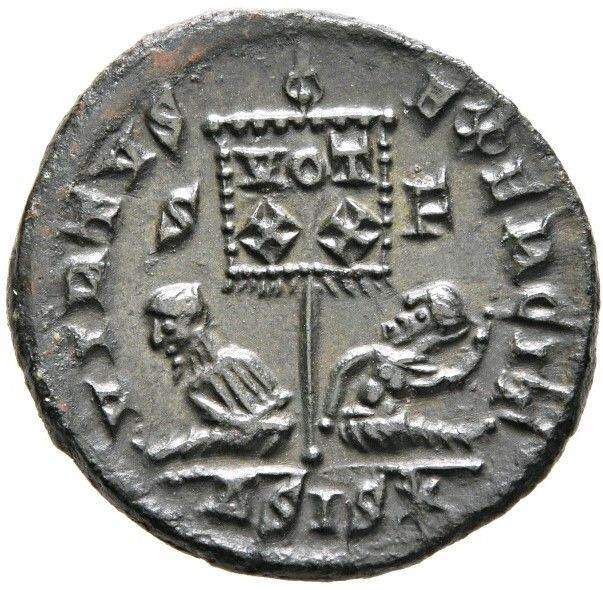
The Licinius I “Vows of the Army” Follis (RIC VII Siscia 110) is a fascinating relic of a world on the brink of civil war. Struck around AD 320 at the vital Balkan mint of Siscia (modern-day Croatia), this coin is a masterclass in military posturing. It captures the final, tense years of the “Dual Emperors,” when Licinius in the East and Constantine in the West were each preparing for the inevitable clash that would leave only one man standing.
1. The Historical Context: The Cold War of the 4th Century
By AD 320, the alliance between Licinius and Constantine was fraying. While Constantine was increasingly leaning toward Christianity, Licinius remained the champion of the traditional Roman military virtues. This coin was issued to celebrate his VOT XX—his vows for twenty years of successful rule.
In the 4th century, a twenty-year anniversary was a monumental achievement. To mark the occasion, Licinius didn’t choose a scene of peace or religious piety; he chose the Vexillum and Captives. It was a blunt message to his rival and his subjects: his power was rooted in the strength of the legions (Virtus Exercit) and the subjugation of Rome’s enemies.
2. The Reverse: The Standard of Victory
The reverse features a Vexillum (a Roman military banner) inscribed with VOT / XX, flanked by two captives sitting on the ground in a state of submission.
- The Vexillum: Unlike the standard signum, the vexillum was the flag of specialized cavalry or veteran units. Placing the anniversary vows on the banner itself tied the Emperor’s longevity directly to the success of the army.
- The Two Captives: Notice their posture—heads bowed, hands likely tied. They represent the Sarmatian or Germanic tribes that Licinius had fought on the Danube. In the high-stakes propaganda of the time, “Happy Times” were only possible if the “Barbarians” were under the Roman boot.
- The Legend: VIRTVS EXERCIT (The Valor of the Army).
3. The Obverse: The Iron Profile
The obverse features the cuirassed bust of Licinius I, facing right.
- The Attic Helmet: This is the standout feature of the coin. Licinius is wearing a crested Attic helmet, a rare and “heroic” depiction. It harks back to the classic Greek and early Roman styles, portraying the Emperor as a legendary warrior-king rather than just a bureaucrat in a diadem.
- The Cuirass: The detailed engraving of the cuirass (breastplate) emphasizes his role as the Imperator.
- The Legend: IMP LICINIVS AVG.
4. Technical Details: The Siscia Workshop
- RIC VII Siscia 110: Cataloged in the seventh volume of Roman Imperial Coinage.
- The Mint Mark: Look in the exergue for ΔSIS✱. The SIS stands for Siscia, and the Greek letter Δ (Delta) identifies the 4th Workshop of the mint. The star (✱) and the letters S / F (Saeculi Felicitas — Prosperity of the Age) in the fields are control marks used to track the quality and quantity of the strike.
- The Strike: Siscia was one of the most productive mints in the Empire, known for its sharp, high-relief portraits and clean legends. Finding a specimen where the individual feathers of the helmet crest or the ties on the captives’ clothing are still visible is a major highlight for any 4th-century collection.
