
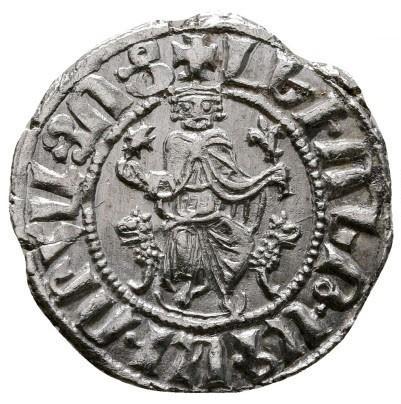
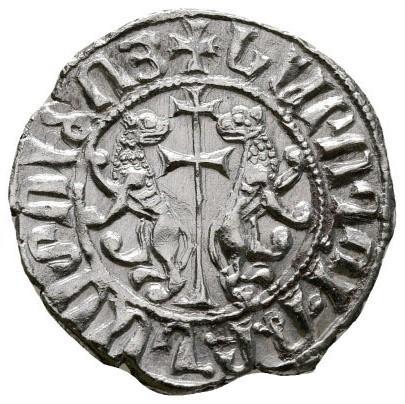
The Levon I Silver Tram (Bedoukian 123) is a magnificent piece of medieval artistry from the Armenian Kingdom of Cilicia. Struck between AD 1198–1219, this coin marks the “Golden Age” of a kingdom that served as a vital Christian bastion and a crossroads for the Crusaders, Byzantines, and the Silk Road.
At Numiscurio, we often say that a Silver Tram is a “bridge between worlds”; it combines the spiritual depth of the East with the heraldic majesty of Western knighthood.
1. The Historical Context: The First Coronation
Levon I (also known as Levon the Magnificent) was the first of the Rubenid dynasty to be crowned King of Cilicia. Before him, the Armenians were “Lords of the Mountains,” but Levon’s political genius earned him recognition from both the Holy Roman Emperor and the Pope.
This coin was struck at Sis (modern-day Turkey), the capital of the kingdom. It was the currency of a cosmopolitan court where Armenian, French, and Greek were spoken. The Silver Tram was so well-regarded for its purity that it became a standard trade coin throughout the Levant, often found in the company of Crusader denars and Venetian ducats.
2. The Obverse: The Lion on the Throne
The obverse features King Levon seated facing on a magnificent throne ornamented with lions. He holds a cross in his right hand and a lis (fleur-de-lis) in his left.
- The Royal Symbols: The cross represents his role as a “Defender of the Faith,” while the fleur-de-lis shows the strong cultural and dynastic ties between the Armenian royalty and the Frankish Crusader states.
- The Lion Throne: This is a direct biblical reference to the Throne of Solomon, signaling that Levon was a wise and divinely sanctioned ruler.
- The Legend: ԼԵԻՈՆ ԹԱԳԱԻՈՐ ՀԱՅՈՑ (Levon Tagavor Hayots — “Levon, King of the Armenians”).
3. The Reverse: The Rampant Guardians
The reverse features a powerful heraldic display: two lions rampant back-to-back, their heads reversed to face one another. Between them stands a long patriarchal cross.
- The Patriarchal Cross: A cross with two horizontal bars, symbolizing the high religious authority of the Armenian Apostolic Church.
- The Rampant Lions: The lion was the heraldic beast of the Rubenid house. By placing two lions guarding the cross, the coin sends a clear message: the Armenian military stands as the protector of the Christian faith.
- The Legend: ԿԱՐՈՂՈՒԹԲՆ ԱՍՏՈԻԾՈՅ (Karoghutyambn Astudsoy — “By the Power of God”). This mirrors the “Dei Gratia” (By the Grace of God) legends found on Western European coins of the same era.
4. Technical Details: The Silver of Sis
- The Denomination: The Tram was a high-quality silver coin, roughly equivalent in weight to the French Gros Tournois.
- The Mint: Sis. Located in the foothills of the Taurus Mountains, Sis was a fortified city of cathedrals and palaces, and its mint was the most productive in the Armenian Highlands.
- The Style: Armenian coins are famous for their elegant, flowing Armenian script (the Erkat’agir or “iron script”), which is often considered some of the most beautiful calligraphy in all of numismatics.
- The Collector’s “Tell”: Look for the detail in the lions’ manes and the crown of the King. Finding a specimen where the pellet at the base of the cross staff is distinct and the legends are not “doubled” is a sign of a premier Cilician collection.
