
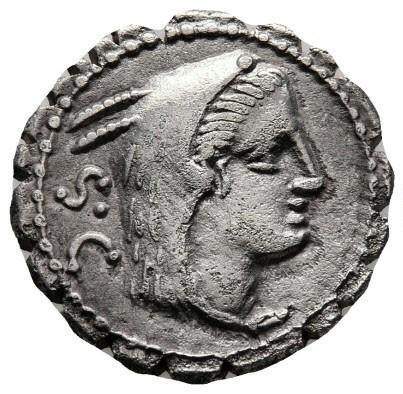
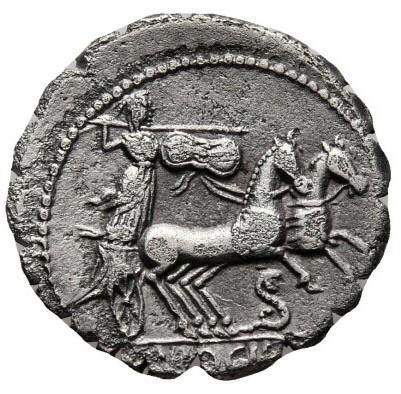
The L. Procilius “Juno Sospita” Denarius (Crawford 379/2) is a high-octane masterpiece of the Roman Republic, struck in 80 BC. This coin is a favorite among specialists for its dynamic energy and its deep connection to the ancient, pre-Roman traditions of Latium. Struck during the dictatorship of Sulla, it represents a moment when the Roman mint was celebrating the “Old Gods” who had supposedly guarded the city through its recent, bloody civil wars.
At Numiscurio, we often say that a coin’s “soul” is found in its motion; the frantic galloping of the horses on this reverse makes it one of the most exciting “action shots” in Republican numismatics.
1. The Historical Context: The Savior of Lanuvium
The moneyer, Lucius Procilius, belonged to a family originally from Lanuvium, an ancient city just south of Rome. Lanuvium was the home of the most famous temple of Juno Sospita (Juno the Savior). Every year, the Roman consuls would travel there to offer sacrifices, acknowledging that Rome’s safety was inextricably linked to this fierce, local goddess.
By placing Juno Sospita on his coinage, Procilius was doing more than just honoring a deity; he was flashing his “pedigree.” In a Rome filled with new arrivals, he was reminding everyone that his family hailed from one of the most sacred and ancient religious centers in Italy.
2. The Obverse: The Guardian in Goat-Skin
The obverse features the head of Juno Sospita, facing right. She is instantly recognizable by her goat-skin headdress, with the horns curving back over her head and the goat’s ears visible.
- The S·C Mark: Behind her head is the legend S·C (Senatus Consulto), indicating that this issue was struck “by decree of the Senate.” This was a standard mark of legitimacy during the Sullan era, showing that the money was being produced under official constitutional authority.
- The Martial Goddess: Unlike the domestic, motherly Juno we often see later, Juno Sospita was a warrior. She was the “Protectress” who physically stood between Rome and its enemies.
3. The Reverse: The Chariot and the Serpent
The reverse is a spectacular scene of divine combat: Juno Sospita is driving a galloping biga (two-horse chariot) to the right. She is mid-strike, hurling a spear and holding a distinctive figure-eight shield. Below the horses, a serpent stands erect.
- The Sacred Snake: This is a direct reference to a famous ritual at Lanuvium. In a cave near Juno’s temple, a sacred serpent was kept. Every year, a young maiden would descend into the cave with food; if the serpent ate, it was a sign of a fertile year. If not, it boded ill for Rome. The erect serpent on your coin signals a favorable omen.
- The Legend: L•PROCILI•F (Lucius Procilius, son of [Lucius]).
- The Detail: Notice the “figure-eight” shield (the ancile). This was an ancient, ritualistic shield type associated with the earliest days of Roman and Latin religion.
4. Technical Details: The High-Relief Strike
- Crawford 379/2: Cataloged in Michael Crawford’s Roman Republican Coinage.
- The Mint: Struck in Rome. The engraving of the 80s BC is noted for its fluidity; look at the horses’ manes and the way Juno’s cloak flutters behind her.
- The Collector’s “Tell”: Because of the high relief and the “busy” reverse, these coins often show wear on the highest points—the horses’ shoulders and Juno’s head. Finding a specimen where the serpent’s coils and the individual reins are still sharp is a hallmark of a premier Republican collection.
