
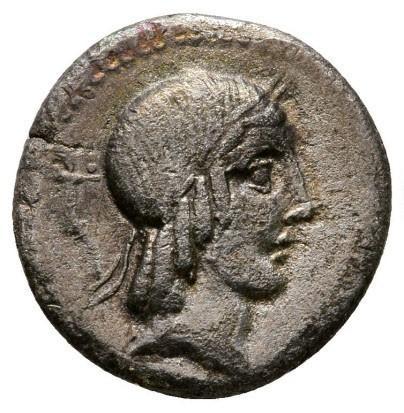
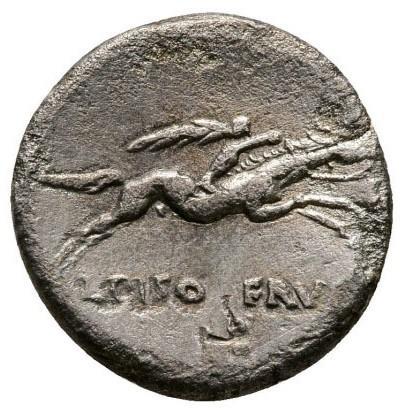
The L. Calpurnius Piso Frugi Denarius (Crawford 340/1) is one of the most iconic and energetic silver issues of the Roman Republic. Struck in 90 BC, this coin is a high-speed relic from a time of existential crisis for Rome—the Social War. While the Republic was fighting for its life against its own Italian allies, the mint in Rome was producing these silver “flyers” by the millions to pay the legions.
At Numiscurio, we often say that a Republican denarius is a “family album” in silver; every symbol on this coin was a carefully chosen piece of political theater meant to honor the moneyer’s ancestors and the gods of the state.
1. The Historical Context: Silver for the Social War
In 90 BC, Rome was embroiled in the Social War (Bellum Sociale), a brutal conflict with its Italian allies who were demanding full Roman citizenship. To fund the massive military mobilization required to save the Republic, the moneyer Lucius Calpurnius Piso Frugi oversaw one of the largest coinages in Roman history.
The “Frugi” in his name—meaning “the Honest” or “the Thrifty”—was a family cognomen won by his ancestor, the historian and consul of 133 BC. This coin was a silver promise to the Roman soldier: it carried the weight of a legendary family’s integrity and the speed of a racing stallion.
2. The Obverse: Apollo the Radiant
The obverse features the Laureate Head of Apollo, facing right.
- The God of the Games: Apollo was the patron of the Ludi Apollinares (the Apollonian Games). These games had been established by the moneyer’s ancestor in 211 BC during the dark days of the Second Punic War. By placing Apollo on the coin, Piso Frugi was reminding everyone of his family’s long history of religious and civic service.
- The Control Marks: Look closely in the fields around Apollo’s head. You might see a tiny symbol, a Greek letter, or a Roman numeral. Because this was such a massive issue, the mint used hundreds of different control marks to keep track of the dies and the silver quality—making this one of the most fun series for a specialist to collect.
3. The Reverse: The Galloping Victor
The reverse features a Horseman galloping right, holding the reins in one hand and a palm frond in the other.
- The Victory Lap: The palm frond is the universal ancient symbol of victory. This isn’t a scene of war, but a scene from the races at the Ludi Apollinares. It celebrates the speed and athleticism that the Piso family had provided for the Roman people for generations.
- The Master of the Horse: The sense of motion on these coins is incredible—the horse’s hooves are often depicted mid-air, capturing a split second of the race.
- The Legend: L PISO FRVGI (or A PISO FRVGI for the Annius or Albinus variants). It is a bold, clear signature of a man who wanted the soldiers to know exactly who was providing their pay.
4. Technical Details: The “Social War” Strike
- Crawford 340/1: Cataloged in Michael Crawford’s Roman Republican Coinage, the definitive guide to the era.
- The Metal: High-purity silver. Despite the pressure of the war, the “Frugi” coins maintained an excellent standard, which helped keep the Roman economy stable while the Italian peninsula was in flames.
- The Variety: There are literally hundreds of die combinations for this issue. Some horsemen carry whips, some carry torches, and some carry spears. Finding a specimen with a sharp palm frond and a clear control mark is a major highlight for any collector of the Republic.
