
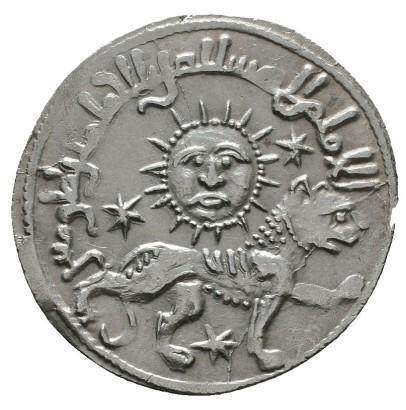
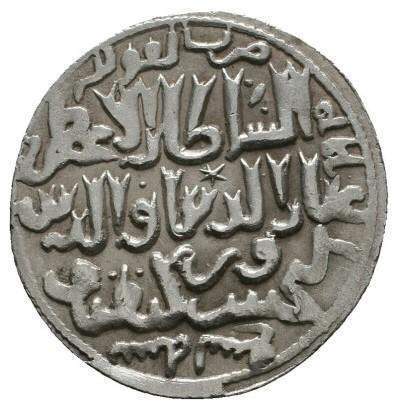
Imagine holding a piece of silver that captured the collision of the Islamic world, the Mongolian storm, and the ancient mysticism of the Silk Road. The Lion and Sun Dirham of the Seljuq Sultan Ghiyath al-Din Kaykhusraw II (minted around AD 1240–1243) is widely considered one of the most beautiful and enigmatic coins of the medieval era.
While most Islamic coinage of the time was strictly calligraphic (avoiding images of living beings), this coin breaks all the rules with a bold, celestial roar.
1. The Sultan and the Sun: A Royal Love Story?
The most famous legend surrounding this coin is one of romance. It is said that Kaykhusraw II was so deeply in love with his wife, a Georgian princess named Tamar (known as Gürcü Hatun), that he wanted to strike her portrait on his coins.
However, his advisors were horrified—depicting a living woman on a coin was a religious taboo they couldn’t ignore. The compromise? A celestial allegory. The lion represented the Sultan’s power, and the sun behind it represented the radiant beauty of his bride. While historians debate if this was the official reason, it has made the “Lion and Sun” one of the most romanticized icons in numismatic history.
2. The Lion of Anatolia vs. The Mongol Storm
Beyond the romance, the coin was a symbol of a crumbling empire trying to look strong. Kaykhusraw II ruled the Sultanate of Rum (modern-day Turkey) at its peak—and its sudden decline.
- The Lion: A classic symbol of Persian and Turkic kingship. It signaled to travelers on the Silk Road that the Sultan’s grip on the trade routes was ironclad. The lion and sun symbol is one of the most famous Persian symbols, dating back to ancient times. It combines the image of a lion, the king of animals, with the sun, the source of light and life. The symbol has many historical and cultural meanings, such as power, royalty, astrology, religion and nationalism. The lion and sun motif was used as an emblem of Iran and appeared on its national flag until the 1979 Iranian Revolution. It is still used by some opposition groups and by people who identify with the pre-revolutionary era. The symbol is also found on many coins from Iran and other countries that were influenced by Persian culture.
- The Stars: The three stars scattered around the lion weren’t just decorative; they invoked the protection of the heavens during a time of immense superstition.
- The Dark Shadow: Even as these coins were being struck, the Mongol Empire was sweeping across Asia. Shortly after this coin was minted, the Seljuqs were crushed by the Mongols at the Battle of Köse Dağ in 1243. The “Lion” was tamed, and the Seljuqs became vassals to the Great Khan.
3. The Caliph’s Blessing: The “Ghost” in the Script
The Arabic inscription surrounding the lion mentions the Abbasid Caliph, al-Mustansir.
- The Spiritual Anchor: By placing the Caliph’s name on the coin, Kaykhusraw II was proving his legitimacy as a “Defender of the Faith.” Even though the Caliph in Baghdad had no real military power, his name on a coin was like a modern “seal of approval” for trade across the entire Muslim world.
4. Technical Artistry: The “Seljuq Style”
These dirhams are famous for their high-relief striking. The lions often have a “cat-like” or “heraldic” quality, and the personified sun frequently has a distinct human face (the “Sun-Face”), which is a direct holdover from ancient Persian astrological traditions.
