
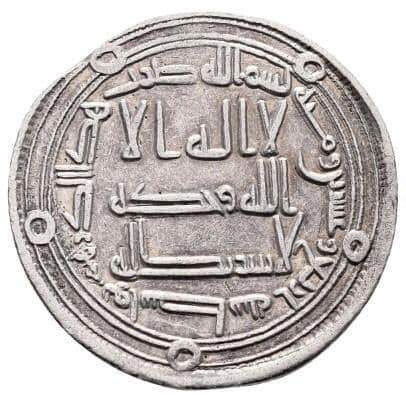
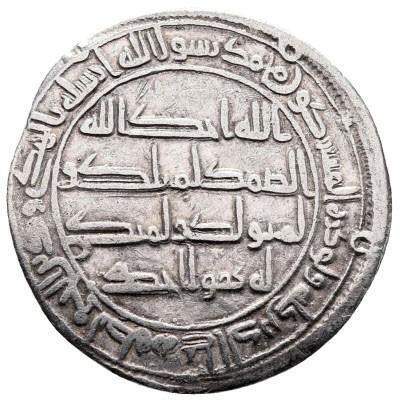
The Hisham ibn Abd al-Malik Umayyad Dirham (AH 105–125 / AD 724–743) is a striking silver witness to the high-water mark of the first great Islamic empire. Struck during the longest reign of any Umayyad Caliph, this coin represents the definitive “Aniconic” (image-free) reform that changed world currency forever.
At Numiscurio, we often say that while Roman coins show us the faces of men, the Umayyad Dirham shows us the power of the Word. To hold this silver is to touch the administrative glue that held together an empire stretching from the borders of China to the shores of the Atlantic.
1. The Historical Context: The Great Reformer
Hisham was the fourth son of Abd al-Malik to reach the throne. He inherited an empire at its territorial peak but facing immense internal and external pressures. Hisham was a legendary administrator; he cut costs, built massive irrigation systems, and stabilized the frontier against the Byzantines and the Khazars.
This dirham is the product of the great currency reform started by his father. Before this, Islamic coins often mimicked Byzantine or Persian designs (complete with crosses or fire altars). By Hisham’s time, the “Post-Reform” Dirham had become a purely epigraphic masterpiece. It wasn’t just money; it was a silver pamphlet of the faith, carrying the message of Islam into every marketplace from Cordoba to Samarkand.
2. The Obverse: The Declaration of Unity
The obverse features the central Kalima (the profession of faith) in a beautiful, angular Kufic script:
لا اله الا الله وحده لا شريك له “There is no god except the one God. He has no equal.”
- The Political Message: In the 8th century, this wasn’t just a prayer; it was a challenge to the Byzantine “Trinity” and the Persian “Dualism.” It asserted that the Caliphate was the sole representative of the one true God on earth.
- The Margin (The Date/Mint): Encircling the center is a legend typically stating: “In the name of Allah, this Dirham was struck at [Mint Name] in the year [Date].”
3. The Reverse: The Eternal Sura
The reverse features the central verses of Sura al-Ikhlas, one of the most significant chapters of the Quran:
الله احد الله الصمد لم يلد و لم يولد و لم يكن له كفوا احد “He is God, the One and Only God, the Eternal and Absolute, who has not begotten, and has not been begotten, and there is none like unto Him.”
- The Rejection of Icons: By replacing the portrait of the King with the words of God, the Umayyads created a “universal” currency. It didn’t matter who the Caliph was; the message of the state remained eternal.
- The Margin (The Prophetic Mission): The outer circle usually contains the Surat al-Tawba (9:33), proclaiming that Muhammad was sent with the religion of truth to make it prevail over all others.
4. Technical Details: The Silver Standard
- The Metal: High-purity silver. The Umayyad Dirham was the “Dollar of the Middle Ages,” prized for its consistent weight (roughly 2.97 grams) and fineness.
- The Mint: Likely struck in Wasit (the primary mint of the East) or Damascus. Hisham’s reign saw a massive output of silver to fund his border defenses and his grand palace projects like Qasr al-Hayr al-Gharbi.
- The Strike: Umayyad coins are known for their incredibly thin, wide flans and sharp, needle-like calligraphy.
- The Collector’s “Tell”: Look for the clarity of the letters in the margins. Because these coins are so thin, they are prone to “clipping” (shaving silver off the edges). Finding a specimen where the entire date and mint name are legible is a major highlight for any specialist of the early Islamic world.
