
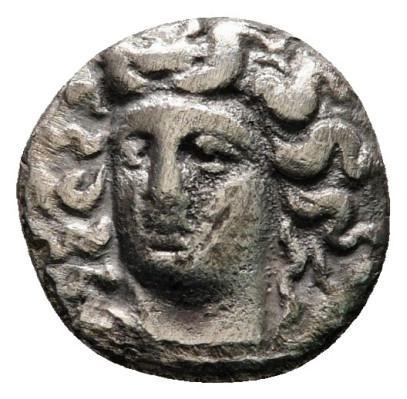
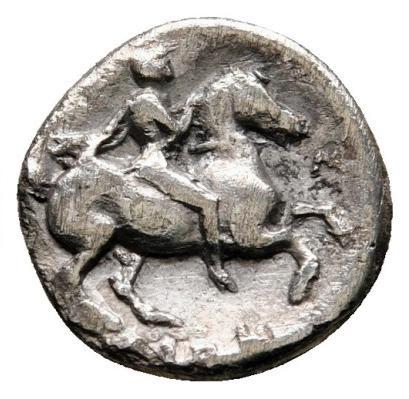
The Larissa Silver Trihemiobol (BCD Thessaly II 341) is a masterpiece of Greek miniature art. Struck between 365–320 BC, this coin represents the high-water mark of the “Fine Style” in Northern Greece. While the famous silver didrachms of Larissa are world-renowned, these smaller fractions—the Trihemiobols (1.5 obols)—often carry a level of delicate, three-quarter-facing detail that is nothing short of breathtaking for such a small silver flan.
1. The Historical Context: The Power of the Aleuadae
Larissa was the most powerful city in Thessaly, ruled for generations by the aristocratic Aleuadae clan. The city was named after the local nymph, the daughter of Pelasgus, who according to legend, drowned in the nearby Peneios River while playing ball.
In the 4th century BC, Larissa was a regional superpower. Its wealth was built on the vast, fertile plains surrounding the city, which produced the grain that fed armies and the horses that revolutionized ancient warfare. This coin was struck during the era of Philip II of Macedon’s rising influence in the region, a time when Thessalian cavalry was considered the finest in the known world.
2. The Obverse: The Facing Nymph
The obverse features the Head of the nymph Larissa, three-quarter facing left.
- The Kimonian Influence: This iconic “facing” style was inspired by the famous “Arethusa” tetradrachms of Syracuse, engraved by the master Kimon. The engravers at Larissa adapted this style with incredible skill, giving the nymph flowing, windswept hair and a serene, ethereal expression.
- The Ampyx: Notice the ampyx (a decorative headband) tucked into her hair. It is a sign of her divine and noble status. The “border of dots” frames her face like a window into the mythical past of the city.
3. The Reverse: The Master of the Horse
The reverse features a Thessalian cavalryman riding right on a prancing horse.
- The Petasos and Chlamys: The rider wears the petasos (a broad-brimmed traveler’s hat) and a flowing chlamys (cloak). This was the signature “uniform” of the Thessalian nobility.
- The Gentle Hand: A fascinating detail of this specific type is that the rider raises his right hand without a whip or goad. This symbolizes the legendary bond between the Thessalians and their horses; they led their mounts through skill and partnership, not through force.
- The Legend: ΛΑΡI-Σ / [AΙΩΝ] (Larisaion) translates to “Of the Larissaeans.” It is a bold stamp of civic identity that traveled throughout the Greek world.
4. Technical Details: The Silver Fraction
- The Denomination: The Trihemiobol was a useful “middle” denomination in the silver currency system. Its small size required extreme precision from the die-engravers to fit the complex facing portrait onto the flan.
- The Mint: Larissa. As the primary mint of Thessaly, it attracted the finest artists of the Hellenistic transition.
- The Toning: These silver fractions often develop a deep, “old cabinet” toning—a dark, iridescent patina that highlights the high relief of the nymph’s hair and the horse’s musculature.
- The Collector’s “Tell”: Look for the detail in the horse’s mane and the individual curls on the nymph’s forehead. Finding a specimen where the face of the nymph is not “flatly struck” (a common issue with facing portraits) is a major highlight for any specialist of Northern Greek silver.
