
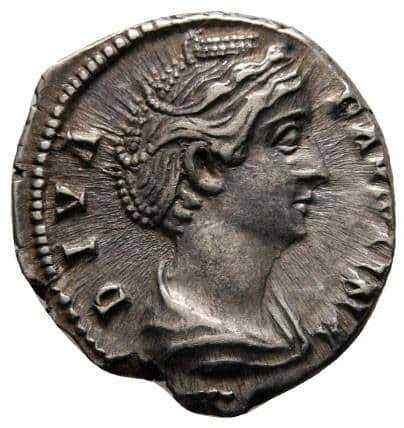
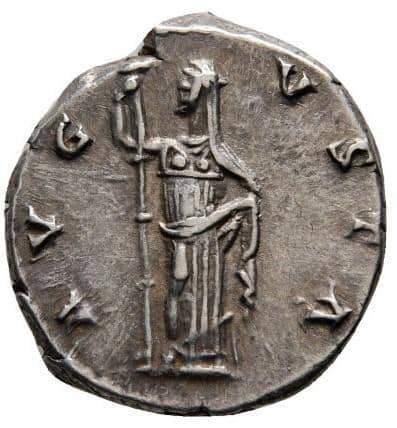
The Diva Faustina I “Ceres” Denarius (RIC III 362) is a poignant silver relic from the “Golden Age” of the Antonines. Struck shortly after AD 141, this coin is part of the massive, decade-long commemorative series issued by Emperor Antoninus Pius following the death of his wife. It is a stunning example of how the Roman Mint used the image of a goddess to immortalize the virtues of a mortal woman.
1. The Historical Context: The Empress Who Became a Goddess
Faustina the Elder was more than just a consort; she was the silent partner in one of Rome’s most stable reigns. When she died in AD 141, Antoninus Pius was devastated. He didn’t just build her a temple (which still stands in the Roman Forum today); he transformed the entire Roman economy into a vehicle for her memory.
For nearly twenty years after her death, the mint continued to strike silver in her name. This coin was a primary tool for spreading her “Cult of Charity.” Faustina was famous for her work with orphaned girls (the Puellae Faustinianae), and by deifying her, Antoninus ensured that her legacy of “Pietas” would be a guiding light for the Empire.
2. The Reverse: Ceres and the Light of Eternity
The reverse features a veiled goddess (traditionally identified as Ceres, though often overlapping with the concept of Aeternitas) standing left, holding a long torch.
- The Torch in the Dark: Ceres, the goddess of the harvest, famously carried a torch into the underworld while searching for her daughter, Proserpina. On this coin, the torch symbolizes the “Light of Faustina” breaking through the darkness of death. It represents hope, fertility, and the eternal cycle of life.
- The Veil of Sanctuarity: The figure is veiled, a sign of high religious status and matronly modesty. It reminds the Roman viewer that Faustina was the “Ideal Matron,” a woman of dignity and divine grace.
- The Legend: AVGVSTA. Notice the missing “A” at the start (it is part of the “DIVA” concept but often abbreviated on these tight silver flans). This title was her highest earthly honor, now preserved in heaven.
3. The Obverse: The Diva’s Serenity
The obverse features the draped bust of Diva Faustina I, facing right.
- The Signature Coiffure: Faustina’s hair is the star of the portrait—elaborately braided and coiled into a high “nest” on top of her head. This look was so iconic that it influenced Roman fashion for generations.
- The “Diva” Legend: The inscription DIVA FAVSTINA is simple and haunting. By omitting her husband’s name and titles, the coin focuses entirely on her personal transition from Empress to Goddess.
- The Engraving Style: The silver denarii of this period are known for their “velvet” finish and high-quality metal. The portrait shows a woman of maturity and peace, radiating the stability that defined the Antonine era.
4. Technical Details: The Silver Standard
- RIC III 362: Cataloged in the third volume of Roman Imperial Coinage, the primary reference for the “Good Emperors.”
- The Mint: Struck in Rome. The Antonine mint was operating at peak efficiency during this period, producing millions of these denarii to fuel the Roman economy and the cult of Faustina.
- The Metal: Struck in high-purity silver. Unlike the debased coins of the 3rd century, this denarius feels “honest” in the hand.
- The Collector’s “Tell”: Look for the detail in the flame of the torch. On early, sharp strikes, you can see the individual “flicks” of the fire. Finding a specimen with a clear, upright torch and a crisp “nest” of hair is the mark of a top-tier Faustina collection.
