
If you are searching for a coin that represents the “Eternal Rebirth” of a struggling Empire, the Constantius II “Phoenix” Follis (RIC VIII 129) is a masterclass in mystical, restorative propaganda. Struck around AD 348–350, this bronze piece marks the 1,100th anniversary of the founding of Rome—a moment when the sons of Constantine desperately needed to prove that the Roman spirit was immortal.
At Numiscurio, we often say that a coin’s “soul” is found in its ability to take a mythological creature and turn it into a promise of national survival.
1. The Historical Context: The 1,100th Anniversary
By AD 348, the Roman Empire was navigating a mid-life crisis. Constantius II, the middle son of Constantine the Great, was embroiled in a never-ending war with the Sassanid Persians in the East. To bolster public morale, he and his brother Constans launched a massive currency reform known as the Fel Temp Reparatio (The Restoration of Happy Times).
This specific coin, RIC 129, was part of that celebration. It was minted exactly 100 years after the Great Secular Games of Philip the Arab. The message was clear: despite the civil wars and the Persian threat, Rome was not dying—it was merely transforming. The Phoenix was the perfect mascot for an Empire that refused to stay down.
Because these coins were part of a major monetary overhaul, they were struck with high-quality bronze and a slight silver wash. Finding a RIC 129 with a clear “radiant” halo around the Phoenix—where you can see the individual feathers of the bird of legend—is a high-point for any Late Roman Bronze collection.
2. The Reverse: The Bird of Fire
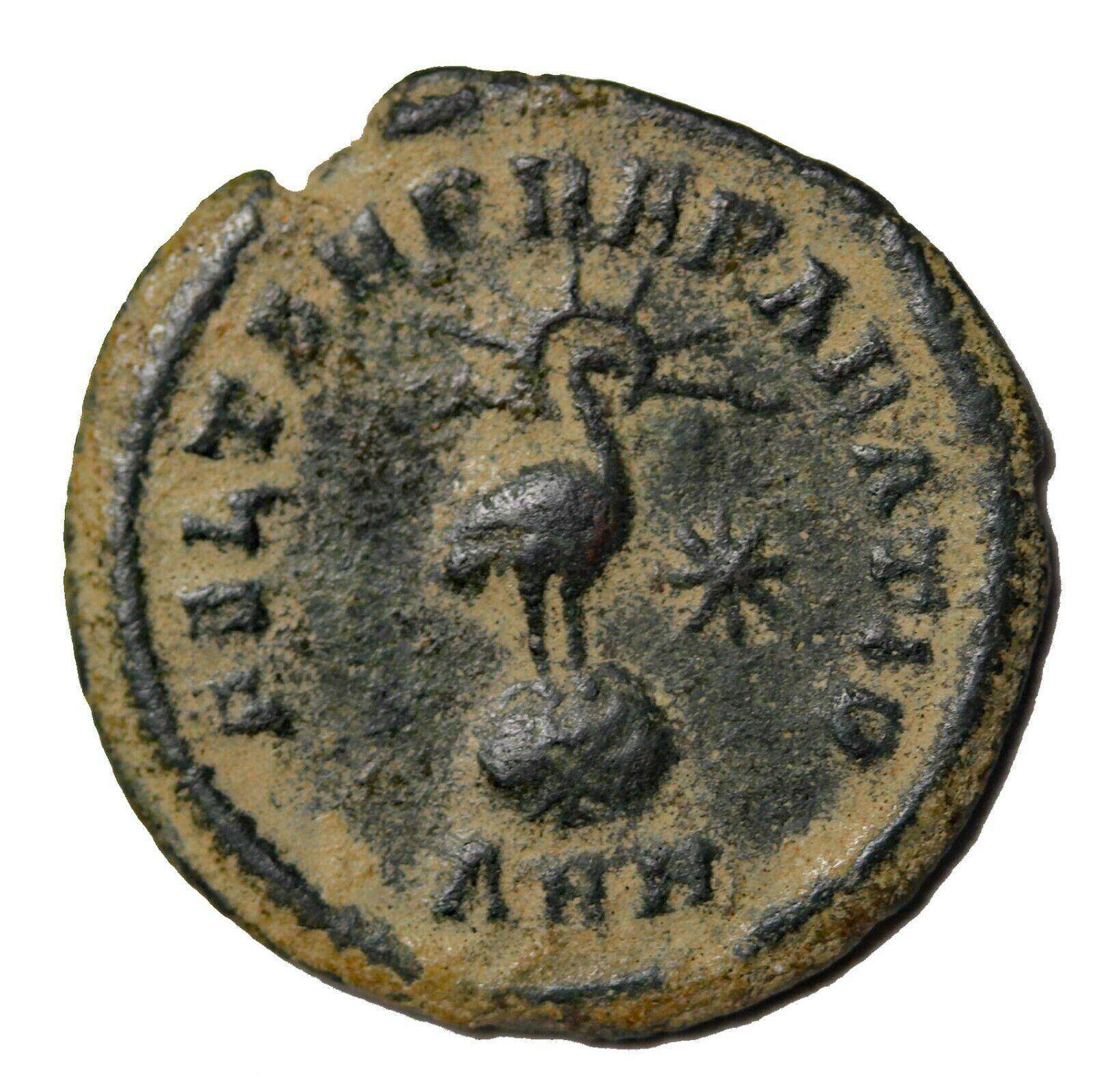
The reverse features a Phoenix, standing right on a rocky mound (sometimes interpreted as a funeral pyre or a globe), with a radiant halo around its head.
- The Symbol of Eternity: In the ancient mind, the Phoenix lived for 500 years before consuming itself in fire and rising from the ashes. By placing it on his coinage, Constantius II was telling his subjects that the Roman State was undergoing a similar divine renewal.
- The Solar Halo: Notice the rays emanating from the bird’s head. This connects the Phoenix to the Sun, symbolizing the “Golden Age” that the Emperor promised was returning.
- The Legend: FEL TEMP REPARATIO. This is perhaps the most famous slogan in Roman numismatics. It translates to “The Return of Happy Times,” a bold marketing campaign for an era defined by heavy taxation and border skirmishes.
3. The Obverse: The Diademed Ruler
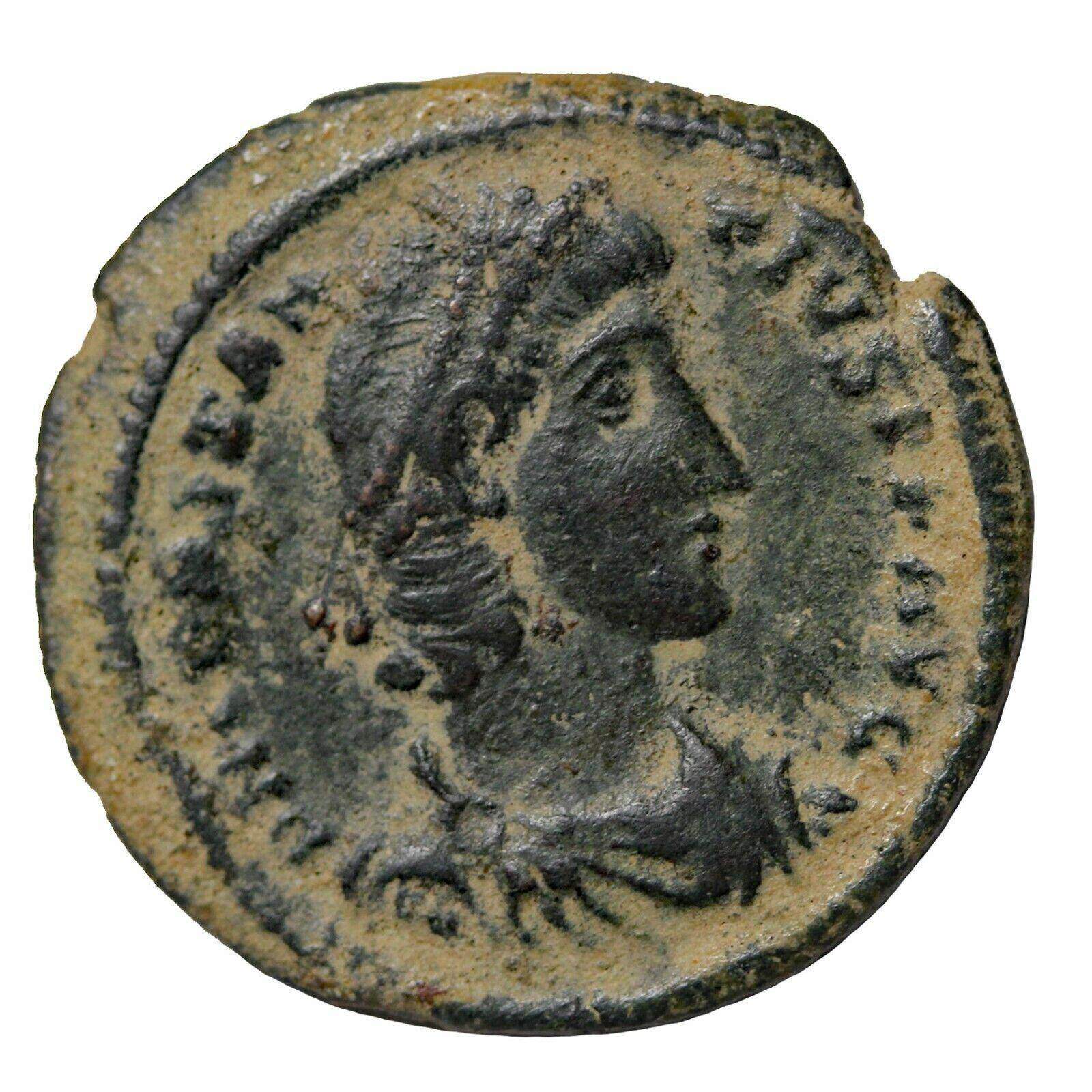
The obverse features the pearl-diademed, draped, and cuirassed bust of Constantius II, facing right.
- The Eyes of the East: By this period, the portraiture had shifted away from the “soldier-general” look toward a more regal, almost “Byzantine” style. Constantius II appears staring slightly upward, reflecting the semi-divine status of the Emperor as the “Vicar of God.”
- The Pearl Diadem: This wasn’t just a crown; it was a symbol of the absolute authority Constantine had established and his sons were fighting to maintain.
- The Legend: DN CONSTAN-TIVS PF AVG. (Our Lord Constantius, Pious Happy Augustus).
4. Technical Details: The Siscia Workshop
- RIC VIII 129: Cataloged in the Roman Imperial Coinage, Volume VIII, the definitive guide to the house of Constantine.
- The Billon Standard: These coins were originally struck with a 2-3% silver coating. If your specimen has a “silvery” sheen in the recessed areas, it’s a sign that the coin was lost early in its circulation life before the silver wore away.
