
The Constantius I “Genius of Rome” Follis (RIC VI Londinium 14a/17a) serves as a heavy, bronze window into the final successful stabilization of Roman Britain. Struck around AD 297–303, this coin was minted in the wake of the “Great Reconquest”—the moment Constantius Chlorus (the “Pale”) crossed the Channel to crush the breakaway British Empire of Allectus and bring the island back into the Roman fold.
At Numiscurio, we often say that a coin’s “soul” is found in its provenance; to hold a piece from the Rauceby Hoard is to touch a literal buried treasure that lay undisturbed in the soil of Lincolnshire for over 1,700 years.
1. The Historical Context: The Return of the Caesar
By AD 296, Britain had been a rebel state for a decade. Constantius I, acting as the Western Caesar of the Tetrarchy, launched a daring naval invasion that liberated London and ended the secession. This follis was among the first issues struck at the Londinium (London) mint after it was reopened under legitimate Roman control.
This specific coin carries the weight of a monumental discovery. Found in July 2017 by metal detectorists in Lincolnshire, the Rauceby Hoard consisted of over 3,000 copper-alloy coins. It is one of the largest hoards ever found in Britain, likely buried as a ritual offering or a “bank account” during a time of extreme political transition. Owning a piece from this hoard means owning a fragment of the actual currency that circulated in Roman Britain during the height of the Tetrarchy.
2. The Reverse: The Spirit of the People
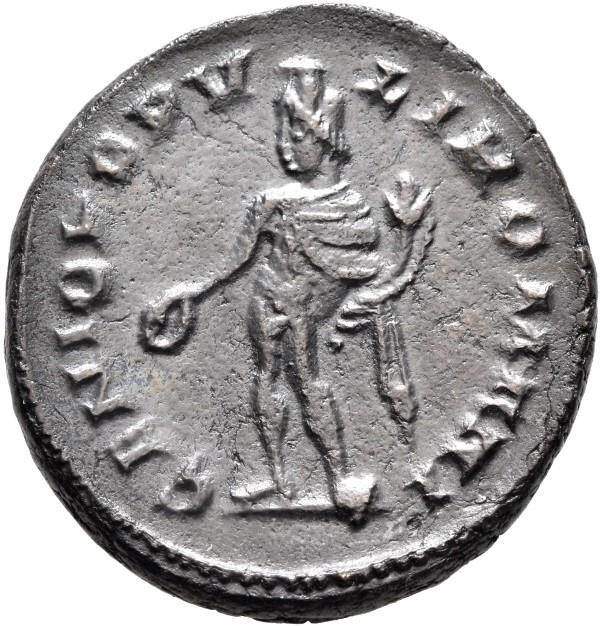
The reverse features the Genius of the Roman People, standing front, head left, holding a patera (sacrificial bowl) and a cornucopia.
- The National Spirit: The Genius was the protective spirit of the entire Roman collective. By featuring this imagery in newly reconquered Britain, Constantius was sending a clear message: “You are no longer rebels; you are once again part of the Roman family.”
- The Patera and Cornucopia: The bowl represents religious duty (piety), while the horn of plenty represents the material wealth that follows legitimate rule. It was a promise of “Peace and Plenty” after years of isolation.
- The Legend: GENIO POPVLI ROMANI. A universal declaration of Roman identity found across all corners of the Empire.
3. The Obverse: The Pale Caesar
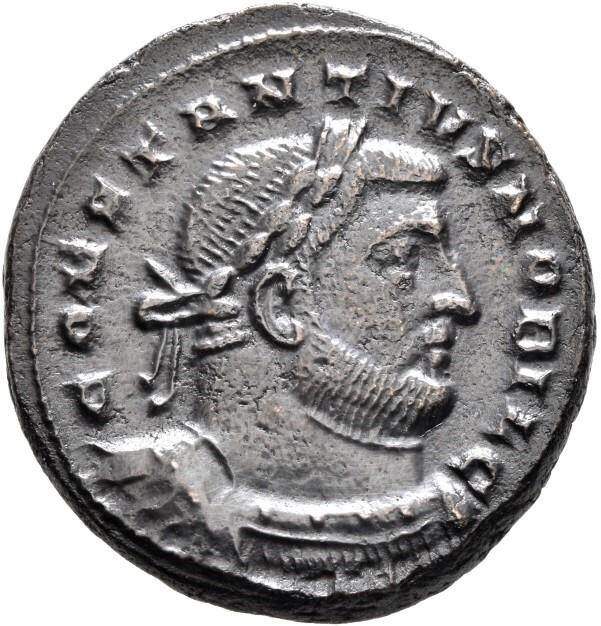
The obverse features the laureate and cuirassed bust of Constantius I, facing right.
- The Military Cuirass: Notice the armor (cuirass) visible on the shoulder. Constantius was a career soldier, and his portraiture reflects the “Tetrarchic” style—rugged, square-jawed, and focused. He was the father of Constantine the Great, and you can see the dynastic resemblance in the strong, determined brow.
- The Noble Caesar: The legend CONSTANTIVS NOBIL C (Constantius Nobilissimus Caesar) identifies him as the “Most Noble Caesar.” At this stage, he was the junior partner to the Augustus Maximian, ruling the West from his headquarters in Gaul.
- The Legend: CONSTANTIVS NOBIL C.
4. Technical Details: The London Mint Style
- RIC VI Londinium: Cataloged in the sixth volume of Roman Imperial Coinage, which covers the reorganization of the Empire under Diocletian.
- The Mint: Struck in Londinium. The London mint of this period is unique because it often omitted a mint mark in the exergue, leaving it blank. Collectors recognize London strikes by their distinctive, slightly “clunky” but charming British style and their often high-purity copper content.
- The Provenance: The Rauceby Hoard coins are often found with a beautiful, stable “find patina.” Because they were buried together in a ceramic vessel, many have survived with incredible detail, showing the fine “silvering” (billon) that originally coated the coin.
