
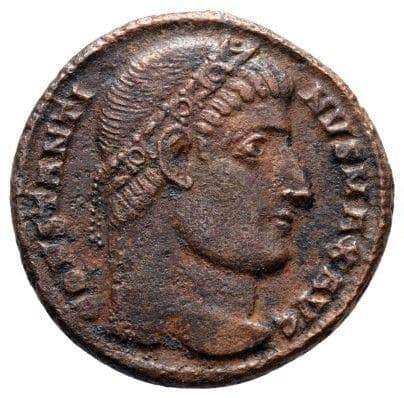
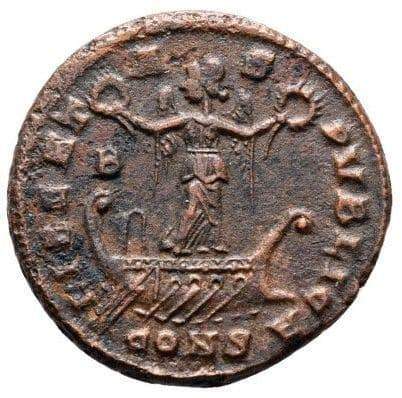
The Constantine the Great “Victory on a Galley” Follis (RIC VII Constantinople 25) is a spectacular maritime monument in bronze, struck between AD 327–328. This coin is more than just currency; it is a commemorative medal celebrating the birth of a new world. Struck at the newly inaugurated mint of Constantinople, it marks the literal and figurative “launch” of the city that would serve as the heart of the Roman Empire for the next thousand years.
At Numiscurio, we often say that a coin’s “soul” is found in its geography; to hold a piece from the first few years of the Constantinople mint is to touch the foundation stones of the Byzantine Era.
1. Historical Context: The Master of the Seas
By AD 327, Constantine had achieved what no man had done in decades: he was the sole ruler of a unified Roman Empire. His final victory over his rival Licinius in AD 324 had been decided not just on land, but in the waters of the Hellespont. His son Crispus had led a daring naval charge that shattered the enemy fleet, clearing the way for Constantine to besiege Byzantium—the site he would soon transform into “New Rome.”
The LIBERTAS PVBLICA (Public Liberty) legend was a powerful political statement. After decades of civil war and “tyranny” (as Constantine labeled his rivals), this coin proclaimed that the seas were open, the Empire was united, and “Liberty” had been restored to the Roman people through naval supremacy.
2. The Reverse: Victory at the Helm
The reverse features Victory, winged and draped, standing on the prow of a galley (a Roman warship). she faces left and holds a wreath in both hands.
- The Galley of State: The ship represents the Roman Navy, the vehicle of Constantine’s final triumph. It also symbolizes the “Ship of State,” now steered by a single, divine hand toward the rising sun in the East.
- The Wreath of Triumph: Victory is not just holding the wreath; she is presenting it to the city and the Emperor.
- The Legend: LIBERTAS PVBLICA. It is a rare and evocative legend for this period, emphasizing that the Emperor’s victory was a win for every Roman citizen.
3. The Obverse: The New Face of the East
The obverse features the head of Constantine I, facing right.
- The Rosette Diadem: This is one of the earliest appearances of the rosette-diadem—a jeweled headband that replaced the traditional military laurel wreath. It signaled a shift from “Soldier-Emperor” to “Sacred Monarch.”
- The Gaze Toward Heaven: Notice the slightly upward tilt of Constantine’s eyes. This “heavenward gaze” became an iconic feature of his later portraits, symbolizing his direct connection to the Divine (the Christian God) and his role as the “Vicar of Christ.”
- The Legend: CONSTANTINVS MAX AVG (Constantinus Maximus Augustus).
4. Technical Details: The Birth of a Mint
- RIC VII Constantinople 25: Cataloged in the seventh volume of Roman Imperial Coinage, representing the inaugural issues of the new capital.
- The Mint Mark: Look in the exergue for the mark CONS. This was the very first time the name of Constantinople appeared on Roman coinage. A Greek letter like A, B, or Γ (Alpha, Beta, or Gamma) follows the name, identifying the specific workshop.
- The Strike: Coins from the early Constantinople mint are noted for their exceptional artistry and high-purity bronze. The detail in the individual oars of the galley and the feathers of Victory’s wings is often much finer than contemporary strikes from Rome or Lyon.
