
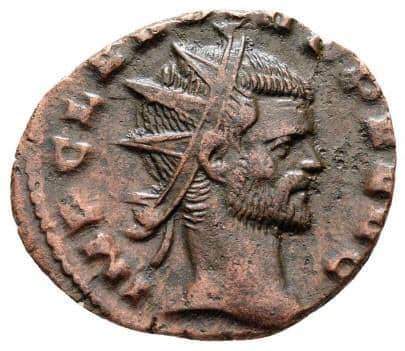
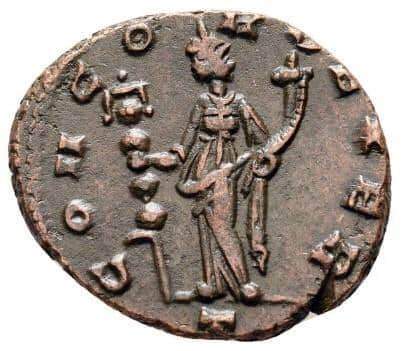
The Claudius II Gothicus “Concord of the Army” Antoninianus (RIC V 145) serves as a gritty silver-washed window into the “Age of the Soldier-Emperors.” Struck around AD 268–270, this coin was minted in Mediolanum (modern Milan) during one of the most critical turning points in Roman history—the moment the Empire began to claw its way back from the brink of total collapse.
At Numiscurio, we often say that a coin’s “soul” is found in the desperate prayers of its legends; when the coins cried for “Concord,” it was because the legions were the only thing keeping the world from falling apart.
1. The Historical Context: The Savior of the Balkans
Claudius II, forever known as “Gothicus,” ascended to the throne in the wake of the assassination of Gallienus. He inherited a nightmare: the Gallic Empire had broken away in the West, Queen Zenobia was eyeing independence in the East, and a massive Gothic invasion was pouring over the Danube.
This coin was minted at the strategic military hub of Mediolanum. It was here that Claudius perfected the elite mobile cavalry units (comitatenses) that would eventually crush the Goths at the Battle of Naissus. This denarius wasn’t just currency; it was a military contract. By invoking CONCOR EXER (The Harmony of the Army), Claudius was pleading for the loyalty of the very soldiers who had just murdered his predecessor.
2. The Reverse: Concordia and the Legionary Standard
The reverse features Concordia, the personification of harmony and agreement, draped and standing left. She holds a military ensign (standard) in her right hand and a cornucopia in her left.
- The Military Ensign: Unlike the civilian versions of Concordia who hold a sacrificial bowl, this “military” version holds a legionary standard. It symbolizes that the Emperor’s power—and the Empire’s survival—rested entirely on the unified spear-tips of the legions.
- The Horn of Plenty: The cornucopia was a promise. It told the soldiers that if they remained in “concord” with the Emperor, the supply lines would stay open, and their pockets would stay full.
- The Legend: CONCOR EXER. A shortened version of Concordia Exercituum. It is a blunt, soldier-friendly abbreviation typical of the fast-paced Milanese mint.
3. The Obverse: The Iron-Jawed General
The obverse features the radiate and draped bust of Claudius Gothicus, facing right.
- The Barracks Realism: Claudius was the first of the great Illyrian soldier-emperors. His portrait reflects this: the short, cropped hair, the rugged jawline, and the intense, forward-looking gaze. This is the face of a man who lived in a tent, not a palace.
- The Pious and Happy Titles: The legend IMP CLAVDIVS P F AVG (Imperator Claudius Pius Felix Augustus) sought to wrap this tough general in the traditional cloak of Roman legitimacy.
- The Legend: IMP CLAVDIVS P F AVG.
4. Technical Details: The Mediolanum Strike
- RIC V 145: Cataloged in the fifth volume of Roman Imperial Coinage, covering the era of the Gallic and Illyrian emperors.
- The Mint: Struck in Mediolanum. The Milanese style under Claudius is distinct—it is often more “energetic” and linear than the products of the Rome mint. You can see it in the sharp, zigzag folds of Concordia’s gown.
- The Billon Reality: By AD 268, the “silver” Antoninianus had very little silver left (often less than 3%). These coins were given a “pickling” bath to draw the copper away and leave a thin, bright silver surface. Finding a Claudius II coin where this fragile silvering is still visible is a major highlight for any 3rd-century specialist.
