
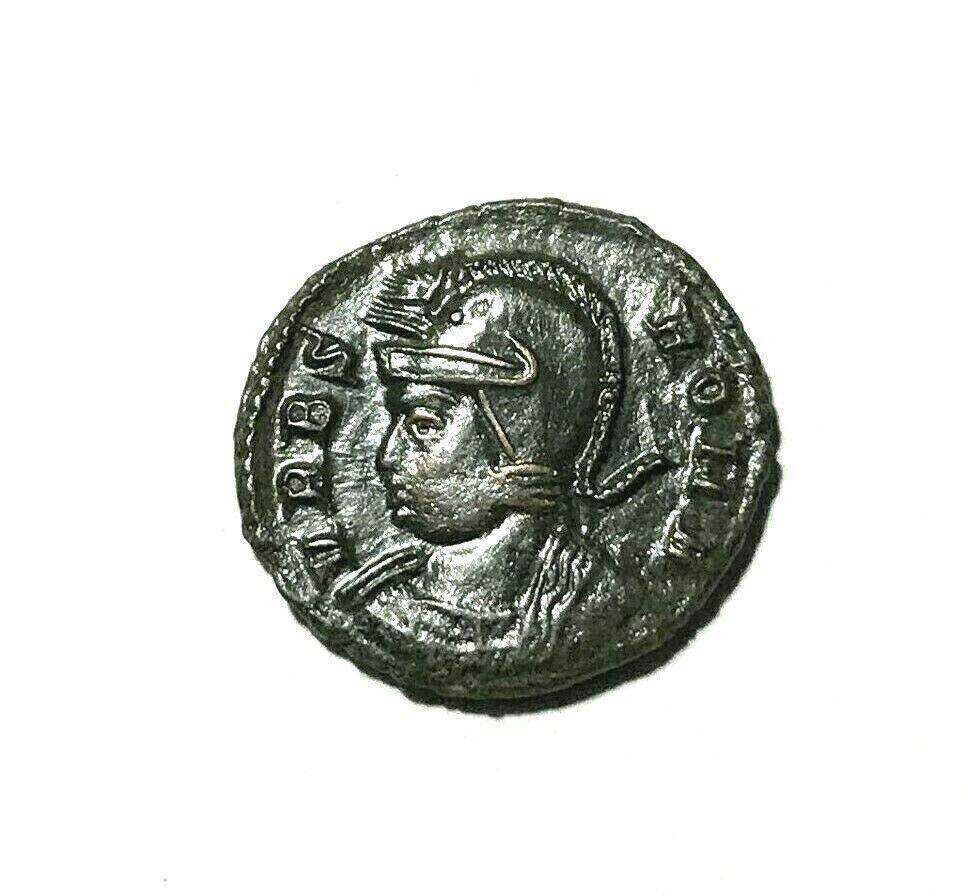
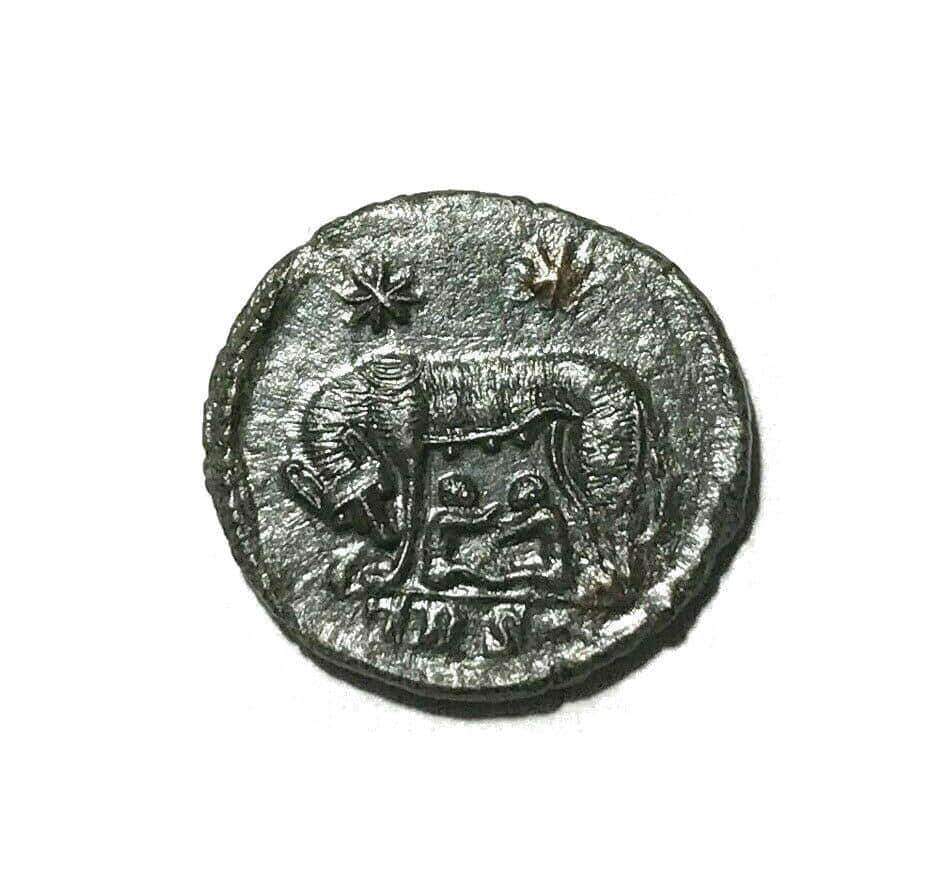
If you are looking for a coin that perfectly captures the “Ancestry and Ambition” of the Roman Empire, the City Commemorative “Urbs Roma” Follis (RIC VII Trier 529) is your piece. Struck around AD 330–331 in the great imperial mint of Trier (Treveri), this bronze coin was part of one of the most successful “rebranding” campaigns in human history.
When you hold this coin, you aren’t just holding a piece of currency; you are holding a ticket to the grand opening of Constantinople.
1. The Historical Context: A Tale of Two Cities
In AD 330, Constantine the Great did something unthinkable: he moved the capital of the Roman Empire from Rome to Byzantium (renamed Constantinople). To prevent the people of Rome from feeling abandoned—and to prove that his new city was the true heir to the old one—Constantine issued a massive series of “City Commemoratives.”
This Urbs Roma type was the “love letter” to the old capital. It was minted in Trier (modern-day Germany), which was Constantine’s primary residence in the West. This coin told the soldiers on the Rhine frontier: “The capital may be moving East, but our roots remain in the soil of the She-Wolf.”
2. The Obverse: The Personification of Rome
The obverse features the Bust of Roma, the goddess-personification of the city.
- The Military Gear: She is depicted in high detail wearing an imperial mantle and a crested helmet.
- The Message: This wasn’t the soft, artistic Rome of the past; this was a warrior-queen. Constantine was reminding the world that the “Soul of Rome” was its military might.
- The Legend:
VRBS ROMA(The City of Rome).
3. The Reverse: The Legend of the Beginning
The reverse is one of the most iconic images in all of numismatics: the She-Wolf (Lupa Romana) standing left, suckling the twins Romulus and Remus.
- The Two Stars: Above the wolf are two eight-pointed stars. These represent Castor and Pollux (the Dioscuri), the divine twins who were said to protect Rome in times of battle.
- The Foundation Myth: By placing this image on a coin in AD 330, Constantine was anchoring his new Christian empire to the 1,000-year-old pagan foundation story. It was a bridge between the mythological past and the imperial future.
4. Technical Details: The Trier Excellence
- RIC VII Trier 529: Cataloged in Roman Imperial Coinage, Volume VII.
- The Mint Mark: Look at the bottom (exergue) for TRP or TRS (Treveri Percussa/Signata). Trier was known for having some of the most skilled die-sinkers in the Empire; the detail in the wolf’s fur and Roma’s helmet on Trier issues is often superior to other mints.
- LRBC 58: This refers to the Late Roman Bronze Coinage handbook, a standard for collectors of this era.
