
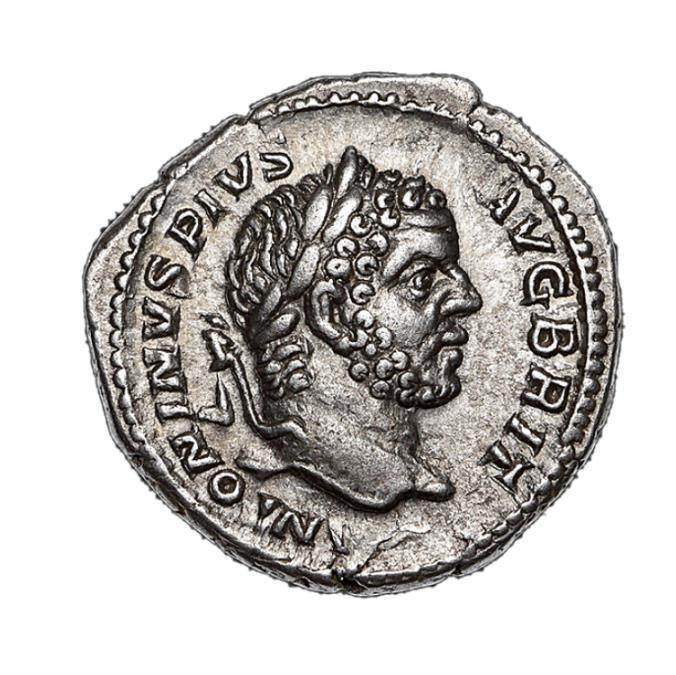
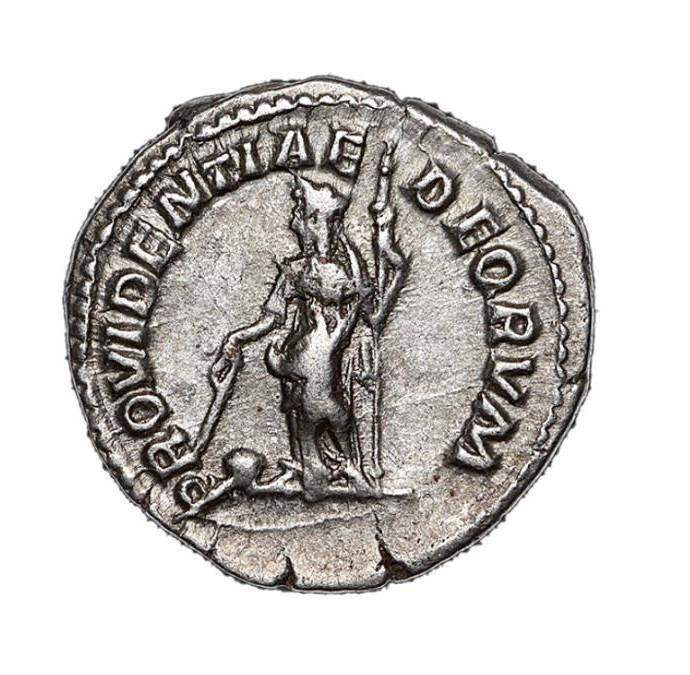
If you are looking for a coin that captures the sheer, paranoid energy of a man who ruled by the sword and slept with one eye open, the Caracalla Denarius (RIC IV 227) is your prize. Struck in AD 213, this silver piece is a fascinating snapshot of an Emperor who had just committed a horrific crime and was desperately looking to the gods—and his spies—for protection.
At Numiscurio, we often talk about the “Soul of the Coin,” and this denarius practically vibrates with the tension of the 3rd-century crisis.
1. The Historical Context: The Year of the Scowl
By AD 213, Caracalla was the sole ruler of Rome, but the throne was stained with blood. Only two years earlier, he had murdered his brother and co-emperor, Geta, in their mother’s arms. He followed this with a brutal purge of 20,000 of Geta’s supporters.
When this coin was struck, Caracalla was no longer the curly-haired boy of the early Severan years. He was on the march in Germania, rebranding himself as a rugged “Soldier-Emperor.” He lived, ate, and marched with his legionaries, famously saying, “No one but I ought to have money, so that I may give it to the soldiers.” This denarius was the very silver used to buy that lethal loyalty.
2. The Reverse: Providentia and the Globe
The reverse features Providentia (Divine Foresight or Providence), standing left, holding a wand over a globe at her feet and a scepter in her left hand.
- The Message: In the wake of his brother’s murder, Caracalla used the image of Providentia Deorum to claim that his rise to sole power wasn’t a bloody coup, but a divinely “foreseen” necessity for the safety of the Empire.
- The Globe: The globe at her feet signaled that the entire world was under the watchful, protective eye of the Emperor. It was a classic bit of political “gaslighting”—telling the public they were safe, even as the Emperor was executing senators.
- The Legend:
PROVIDENTIA AVG.
3. The Obverse: The Face of a Tyrant
This is where RIC 227 truly shines for the collector. The portrait shows the mature, laureate head of Caracalla.
- The “Scowl”: By AD 213, the Rome mint had perfected the “Caracalla Scowl.” Notice the furrowed brow, the short-cropped military beard, and the intense, almost angry gaze. He wanted to look terrifying to his enemies and relatable to his soldiers.
- The Legend:
ANTONINVS PIVS AVG GERM. The “GERM” (Germanicus) was a title he took after his campaigns against the Alamanni—a victory he paid for with coins exactly like this one.
4. Technical Details: The “Severan Silver”
- RIC IV 227: Cataloged in Roman Imperial Coinage, Volume IV, Part I.
- Silver Purity: Under Caracalla, the silver content of the denarius was hovering around 50-55%. To hide this, the mint used a technique to “leach” the copper from the surface, making the coin look like high-quality silver when new.
- The “Antoninianus” Shadow: Only two years after this coin was struck, Caracalla would introduce the “double denarius” (the Antoninianus) to further debase the currency, making these standard denarii the last of their kind.
