
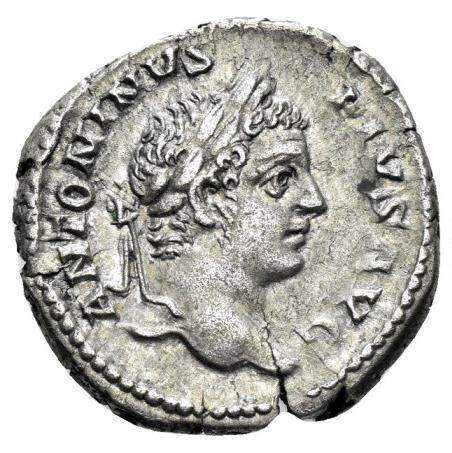
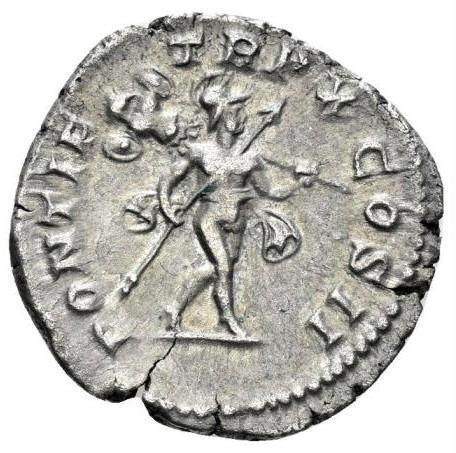
The Caracalla Denarius (RIC 88) is more than just a piece of silver; it is a metallic witness to the transition of the Roman Empire into one of its most brutal and militaristic phases. Struck in AD 207, this coin was minted during a period when the Severan dynasty was consolidating its grip on power through sheer military force.
1. The Emperor: A Man of the Camps
By AD 207, Caracalla (born Septimius Bassianus) had been co-emperor with his father, Septimius Severus, for nearly a decade. However, the tension between Caracalla and his younger brother, Geta, was already simmering.
Caracalla famously despised the trappings of the Roman aristocracy, preferring the company of legionaries. His father’s dying advice to his sons was: “Be harmonious, enrich the soldiers, and scorn all others.” Caracalla took the latter two points very seriously. This denarius, featuring Mars, the God of War, perfectly reflects his self-image as a “Soldier-Emperor.”+1
2. The Reverse: Mars Propugnator
The reverse of RIC 88 depicts Mars Propugnator (Mars the Defender/Advancer). He is shown in a dynamic pose, hurrying left, holding a spear and a trophy (tropaeum).
- The Message: In AD 207, the Severan family was preparing for the Caledonian campaigns in Northern Britain (modern-day Scotland).
- The Trophy: The trophy Mars carries represents victory over “barbarians.” This was a piece of propaganda designed to reassure the Roman public—and more importantly, the troops—that the Emperor was the hand of Mars on earth, leading them to certain conquest.
- Military Pay: During this period, the silver denarius was the primary means of paying the legions. Coins like RIC 88 were minted in massive quantities to fund the military’s loyalty, which was the only thing keeping Caracalla on the throne.
3. The Obverse: The Maturing Tyrant
On the obverse, you see the laureate head of Caracalla with the legend: ANTONINVS PIVS AVG.
- “Antoninus”: Caracalla’s official name was Marcus Aurelius Antoninus, an attempt to link the Severan dynasty to the “Golden Age” of the Antonines (like Marcus Aurelius).
- The Portrait: By AD 207, his portrait begins to lose the youthful, curly-haired look of his childhood and takes on a more stern, militaristic expression—though not yet the “scowling” look of his later sole-reign coins.
4. Technical Numismatic Context
- RIC 88: This refers to the Roman Imperial Coinage catalog, Volume IV, Part I.
- Silver Purity: The denarii of Caracalla’s early reign still maintained a respectable silver fineness (around 50-55%), but the weight and purity were beginning to decline as the costs of the military grew.
- Mint: Struck at the Rome mint.
