
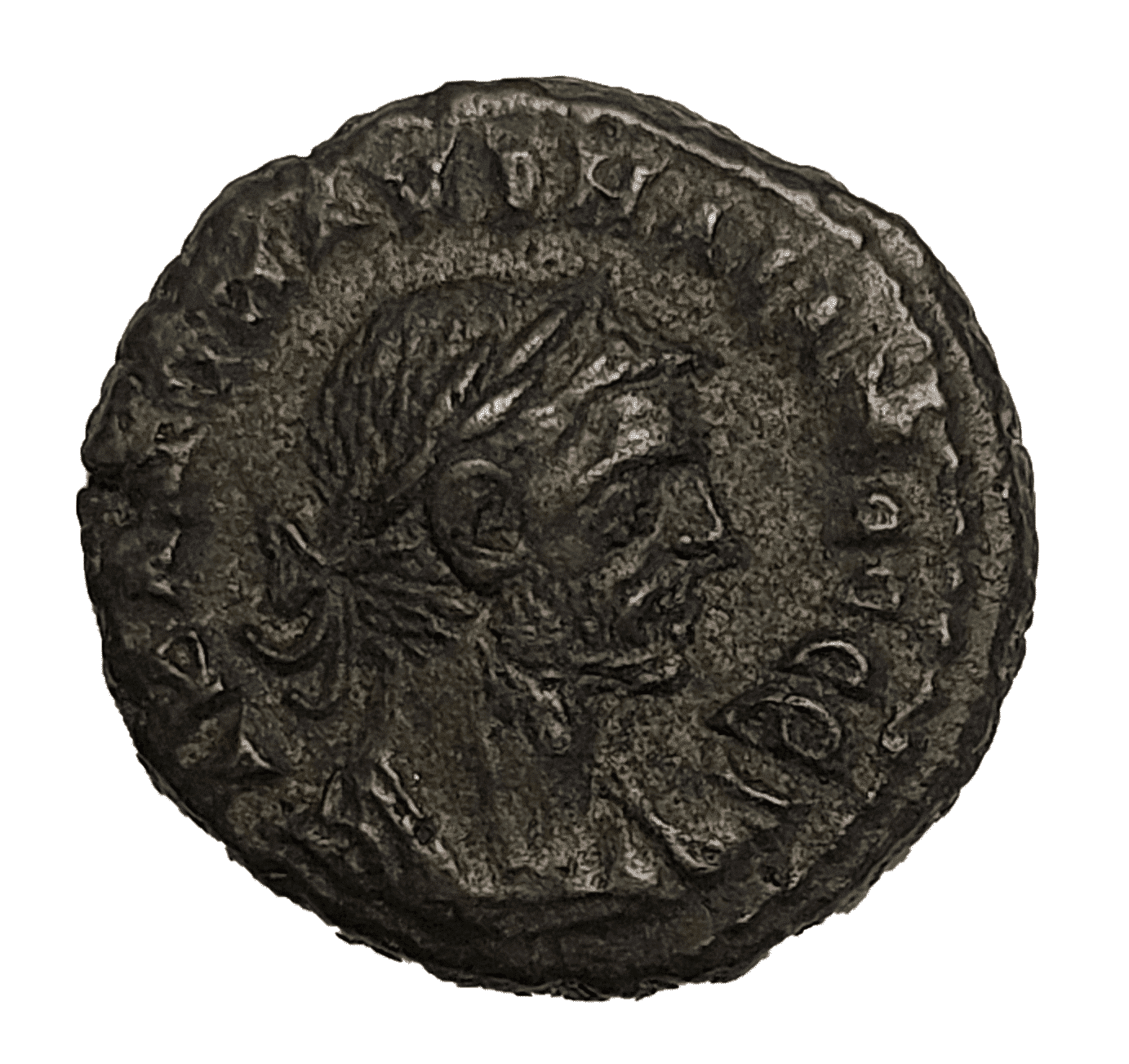
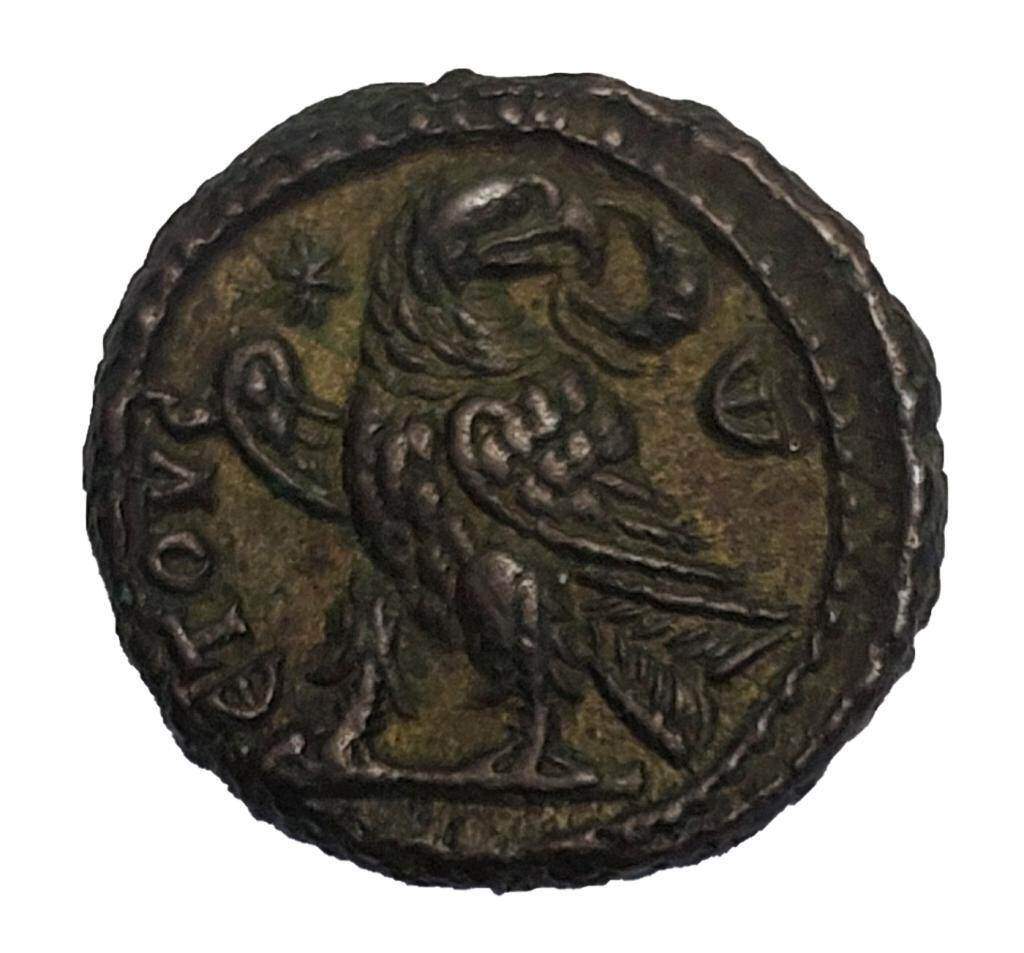
This specific coin, a billon tetradrachm from the Alexandria mint, is a fascinating artifact from one of the most tumultuous and transformative periods in Roman history.
Produced during the reign of Emperor Aurelian (AD 270–275), it represents the “Restorer of the World” ( Restitutor Orbis) at the height of his power, following his reunification of a fractured empire.
1. The Historical Context: Reuniting an Empire
When Aurelian came to power in 270, the Roman Empire was in a state of near-collapse, split into three competing parts: the Gallic Empire in the West, the Palmyrene Empire in the East (which included Egypt), and the central Roman core.
- The Reconquest of Egypt: Egypt was the “breadbasket” of Rome. In AD 272, Aurelian’s forces reclaimed Egypt from Queen Zenobia of Palmyra.
- The Year 5 Significance: The coin is dated to Year 5 of Aurelian’s reign (indicated by the Greek letters L E or ETOVC E on the reverse). This corresponds to AD 273/274. This was a pivotal year: Aurelian had just celebrated his massive Triumph in Rome, having successfully defeated both the Palmyrenes and the Gallic usurper Tetricus.+2
2. The Monetary System: The “Closed” Economy of Egypt
Unlike the rest of the Roman Empire, which used the Denarius and later the Antoninianus, Egypt maintained a unique, “closed” monetary system inherited from the Ptolemaic kings.
- The Tetradrachm: This was the standard silver-ish coin of Roman Egypt. However, by Aurelian’s time, the silver content had plummeted.
- Billon/Potin: The coin is made of “billon” (a low-grade silver alloy). By Year 5, these coins were essentially bronze with a very thin silver wash (which often wore off quickly), reflecting the hyperinflation of the 3rd-century crisis.
3. Symbolism: The Eagle (Aquila)
The reverse of your coin features the Eagle standing left, head turned right, with a victory wreath in its beak.
- The Eagle: In the Alexandria mint, the eagle was the most iconic and frequent reverse type. It served a dual purpose: it was the sacred bird of Zeus/Jupiter (the king of the gods) and the primary standard of the Roman Legions.
- The Wreath: The wreath in the eagle’s beak is a direct reference to Nike/Victoria. On an Aurelian coin, this is not just decoration; it is propaganda celebrating his “invincible” military record and the peace he brought back to the Nile.
4. Technical Details & References
- Obverse: Typically features the laureate and cuirassed (military) bust of Aurelian, with the Greek legend A K L DOM AVPHLIANOC CEB (Autokrator Kaisar Lucius Domitius Aurelianus Augustus).
- References: * Köln 3087 / Dattari 5490: These refer to the major catalogs of the University of Cologne and the world-famous Dattari collection, which was the largest private collection of Alexandrian coins ever assembled.
- Emmett 3924: This is the standard modern “handbook” reference for Roman Egyptian coinage.
