
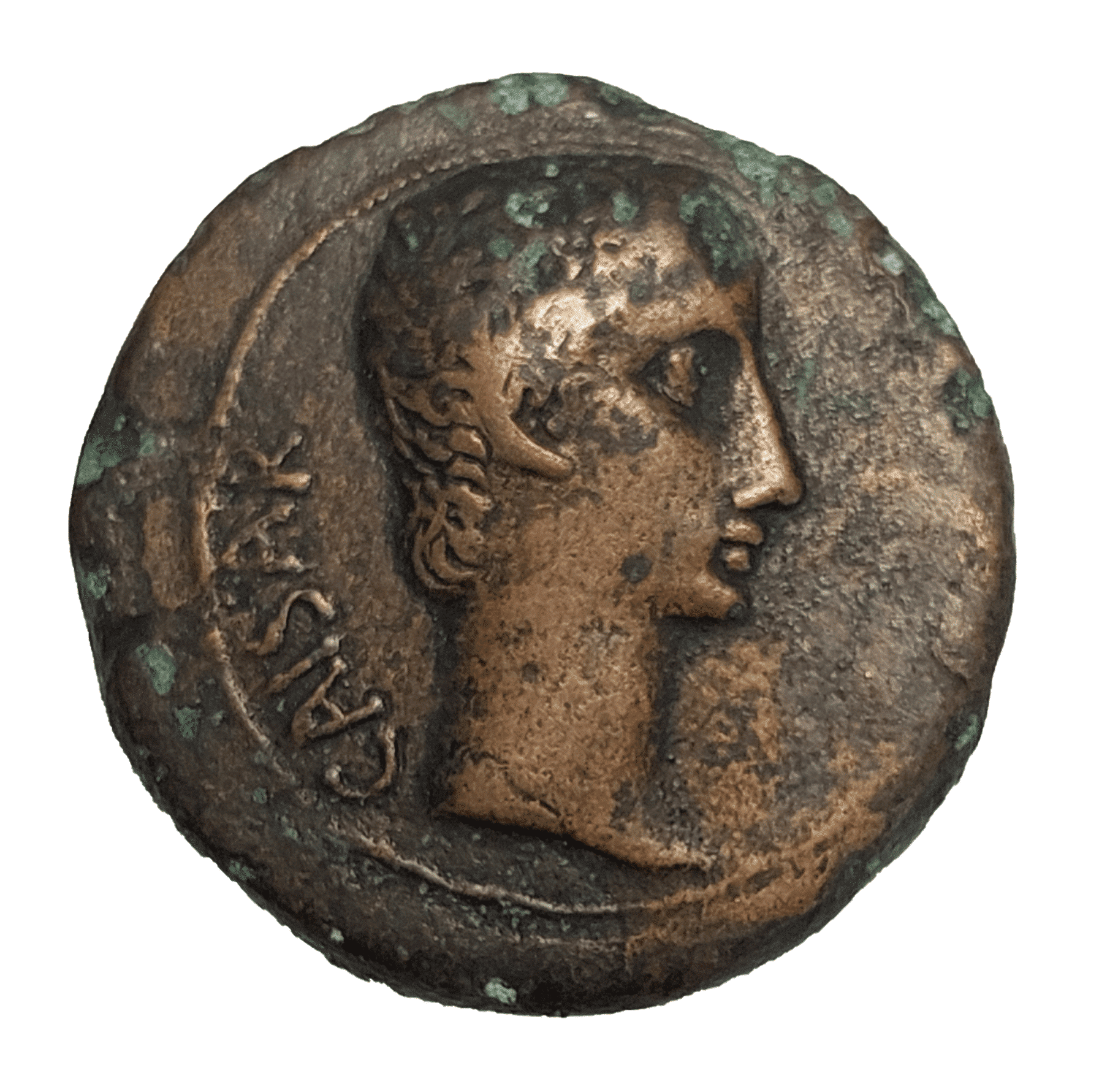
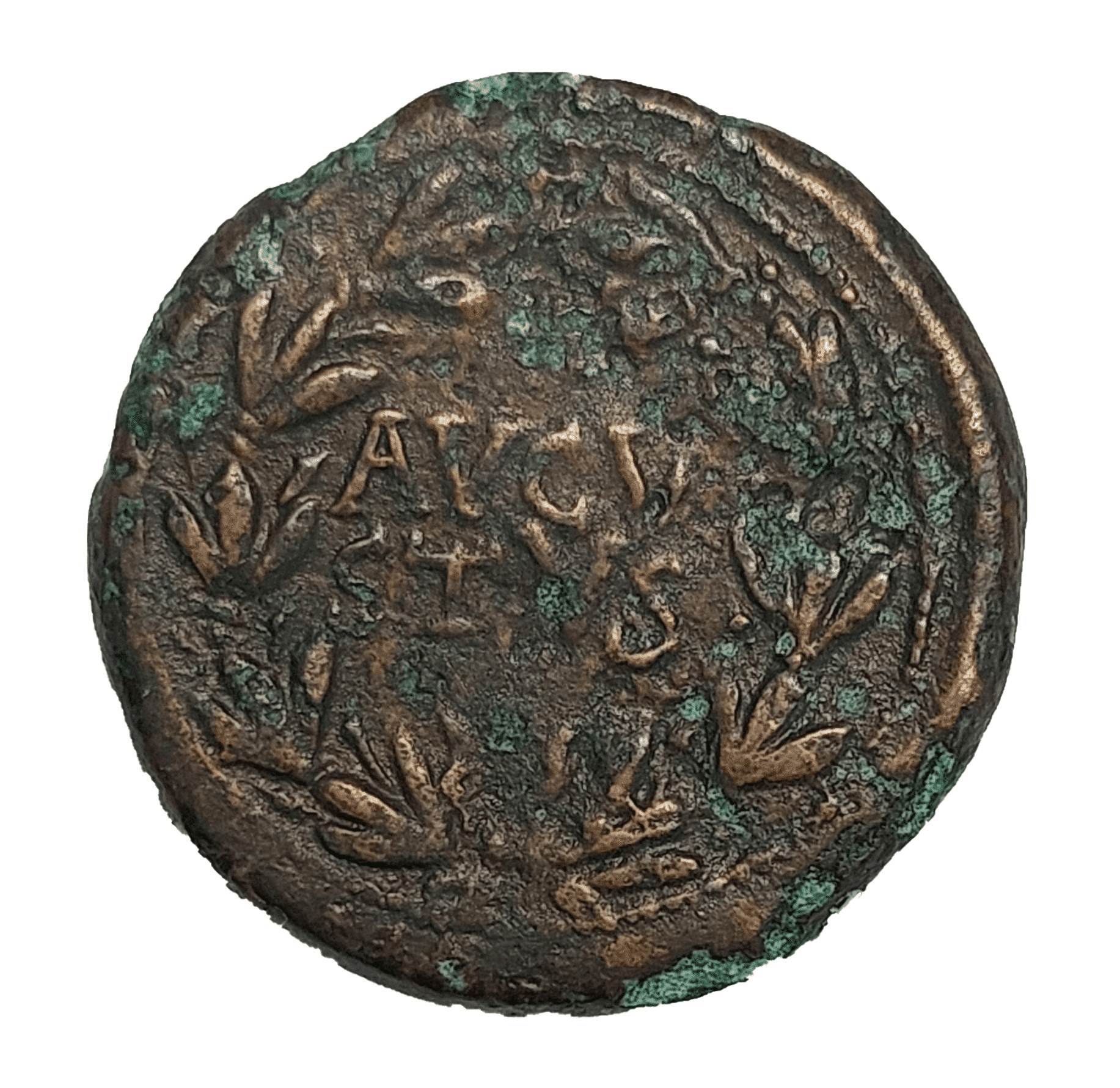
The Augustus As (RIC I 486 / RPC I 2235) is a remarkable example of “transitional” coinage. Struck around 25 BC, it dates to the very infancy of the Roman Empire, just two years after Octavian was granted the title “Augustus” by the Senate.
Unlike the standard Roman Imperial “As” minted in the city of Rome, this specific coin was struck in Ephesus (modern-day Selçuk, Turkey), the capital of the Roman province of Asia.
1. The Historical Context: The Birth of a New Era
In 25 BC, the Mediterranean was still exhaling after a century of civil war. Augustus was in the process of dismantling the chaotic provincial currency systems and replacing them with a unified Roman standard.
This coin was part of the “Asia Minor” series, intended to circulate among the Greek-speaking East. It served as a bridge between the old Greek traditions and the new Roman reality. By placing his portrait on the local currency, Augustus was visually claiming the East as his own, replacing the memory of Mark Antony and Cleopatra with his own “restored” order.
2. The Obverse: The Unadorned Princeps
The obverse features the bare head of Augustus facing right, with the simple legend CAESAR.
- The Minimalism: At this early stage, Augustus was careful not to look like a monarch. By using only “Caesar” and appearing without a crown or laurel wreath, he emphasized his role as a humble citizen-leader, even though he held absolute power.
- The Portrait Style: The artistry reflects the “Eastern” style of the Ephesus mint—often slightly more idealized or “Hellenistic” than the grittier, more realistic portraits being produced in Rome at the time.
3. The Reverse: The Sacred Wreath
The reverse is strikingly simple: the name AVGVSTVS in a single line, centered within a large laurel wreath.
- The Title: In 27 BC, the name “Augustus” (the Revered One) was a new and potent political brand. Placing it alone inside a wreath made it the focal point of the coin’s message.
- The Laurel Wreath: This represents the corona civica, the highest military honor, awarded to Augustus for “saving the citizens” by ending the civil wars.
- Lack of “S C”: Noticeably, this coin lacks the “S C” (Senatus Consulto) typically found on bronze coins from the Rome mint. This indicates it was a direct military or provincial issue under the Emperor’s personal authority, rather than the Senate’s.
4. Technical Details
- Mint: Ephesus, Ionia (Asia Minor).
- Reference: RPC I 2235 (Roman Provincial Coinage) and RIC I 486 (Roman Imperial Coinage).
- Composition: Bronze (unlike the pure copper Asses minted in Rome later in his reign).
- Weight/Size: These pieces are often quite heavy and “chunky,” with weights varying significantly (roughly 5g to 13g), reflecting the less standardized provincial production.
