
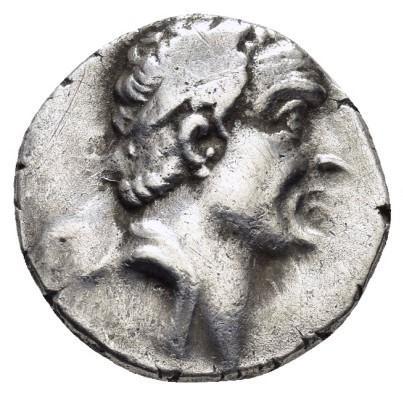
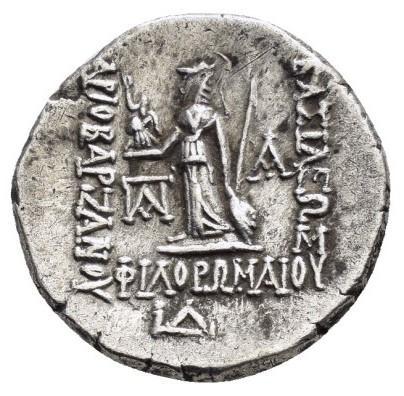
The Ariobarzanes I Philoromaios Silver Drachm (Simonetta 45a) is a high-stakes political document struck in silver. Minted between 96–63 BC at Eusebeia (modern-day Kayseri, Turkey), this coin tells the story of a man who held a throne not by divine right or military conquest, but through the sheer, grinding power of Roman diplomacy.
1. The Historical Context: The Puppet King of the East
Ariobarzanes I was elected King of Cappadocia by the local nobility, a choice immediately ratified by the Roman Senate. This made him a permanent target for the “Poison King,” Mithridates VI of Pontos. During his 33-year reign, Ariobarzanes was driven from his kingdom by Mithridates and his allies no fewer than six times.
Each time, the Roman legions—led by legends like Sulla, Lucullus, and finally Pompey the Great—marched East to put him back on his throne. This drachm was the currency of a “Buffer State,” used to pay the mercenaries and rebuild the cities shattered by the Mithridatic Wars.
2. The Obverse: The Stoic Profile
The obverse features the Diademed Head of Ariobarzanes, facing right.
- The Hellenistic Style: Notice the realism in the portrait. Unlike the idealized gods of earlier Greek coinage, Ariobarzanes is often depicted with a strong, fleshy nose and a determined set to his jaw. He looks like a man who has spent decades in exile and on the battlefield.
- The Royal Diadem: The simple ribbon tied around his head is the ancient Greek symbol of kingship, a tradition stretching back to the successors of Alexander the Great.
3. The Reverse: Athena and the Roman Alliance
The reverse features Athena Nikephoros standing left, holding a tiny Nike (Victory) in her outstretched hand.
- Athena the Protector: Athena, the goddess of wisdom and strategic war, stands with her left hand resting on a shield and a spear propped behind her. She represents the defensive nature of the Cappadocian kingdom.
- The Legend: ΒΑΣΙΛΕΩΣ ΑΡΙΟΒΑΡΖΑΝΟΥ ΦΙΛΟΡΩΜΑΙΩΝ. This translates to “Of King Ariobarzanes, Friend of the Romans.”
- The Political Message: By placing “Philoromaios” directly in the legend, Ariobarzanes was telling his subjects (and his enemies) exactly who his protectors were. It was a silver warning: To attack this King is to attack Rome.
4. Technical Details: The Eusebeia Strike
- Simonetta 45a: Cataloged in B. Simonetta’s The Coins of the Cappadocian Kings, the definitive work for this series.
- The Mint: Eusebeia (Mazaca). Located at the foot of Mount Argaeus, this was the royal capital and one of the most productive mints in Asia Minor.
- The Regnal Year: Look in the exergue (the space below Athena). There is often a Greek numeral representing the year of his reign. For example, Λ (Lambda) would be Year 30.
- The Collector’s “Tell”: Look for the detail in the feathers of Nike’s wings and the individual locks of hair escaping from under the diadem. Finding a specimen where the entire legend is present on the flan is a major highlight, as these were often struck on slightly small silver blanks.
