
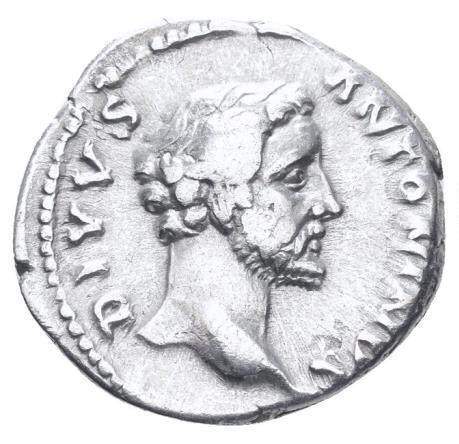
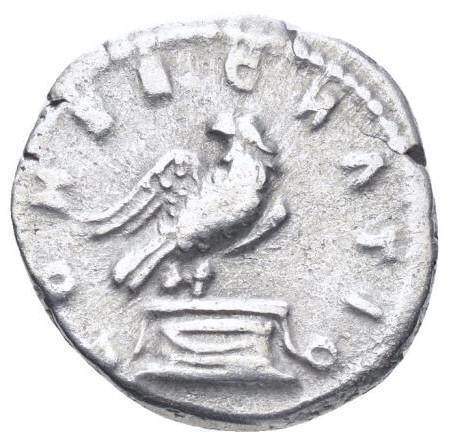
If you are looking for the “Soul of a Coin,” look no further than the Antoninus Pius Denarius (RIC 430-1). This silver piece wasn’t struck during the Emperor’s life, but in the immediate, somber wake of his death in AD 161. It is a “Consecratio” issue, a funeral coin designed to announce to the Roman world that their beloved leader had officially become a God.
Holding this coin is like holding a ticket to the most grand and solemn ceremony in ancient Rome: the imperial apotheosis.
1. The Historical Context: The End of the Long Peace
Antoninus Pius was the “Good Shepherd” of the Roman Empire. His 23-year reign was so peaceful that history almost forgot him—there were no great wars, no bloody purges, and no mad scandals. He was the calm before the storm.
When he died at age 74, the grief in Rome was genuine. His successors, Marcus Aurelius and Lucius Verus, immediately petitioned the Senate to deify him. This coin was the public declaration of that act. It was minted to be distributed at his funeral games, serving as a lasting memento of a man who represented the absolute peak of the Pax Romana.
2. The Reverse: The Eagle and the Altar
The reverse of RIC 430 features a powerful, symbolic scene: a large Eagle (Aquila) standing on a lighted altar, its head turned back to the right.
- The Soul’s Flight: In Roman funeral rites, at the moment the Emperor’s funeral pyre was lit, a live eagle was released from the flames. To the watching crowds, this bird represented the animus (soul) of the Emperor flying upward to join the gods in the heavens.
- The Altar: The altar below the eagle signifies the Pietas (religious devotion) that Antoninus was famous for. It tells the viewer: “He served the gods in life, and now he sits among them.”
- The Legend:
CONSECRATIO(Consecration/Deification). This single word changed the status of the coin’s subject from “Former Emperor” to “Divus” (Divine).
3. The Obverse: The Deified Portrait
The obverse features the bare head of Antoninus Pius, looking remarkably serene.
- The Legend:
DIVVS ANTONINVS. - The Detail: Unlike his lifetime issues, which listed his many titles (Pius, Hadrianus, etc.), the posthumous coins are stripped back to the essentials. He is simply “The Divine Antoninus.”
- The Artistry: Even in AD 161, the Rome mint was producing some of its finest work. Look at the deep curls of his beard and the calm, steady gaze—this was the face of a man who had left the Empire in the best shape it would ever see.
4. Technical Details & The “Silver Standard”
- RIC 430-1: Cataloged in Roman Imperial Coinage, Volume III.
- Silver Purity: The denarii of Antoninus Pius were still of high silver quality (about 75-80%), maintaining the stability he fought so hard to preserve.
- Variety: There are versions where the eagle sits on a globe or a base, but the Eagle on Altar (RIC 430) is the most iconic representation of his funeral pyre.
