
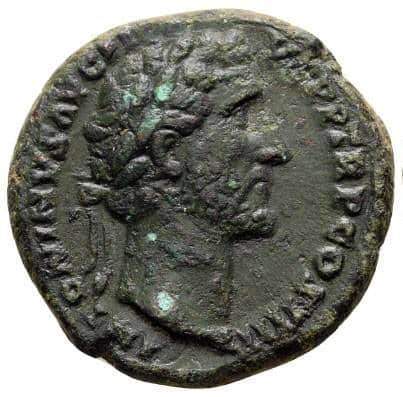
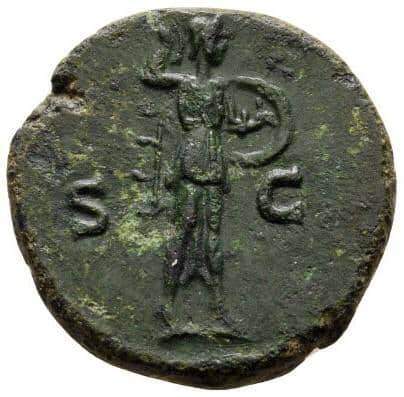
The Antoninus Pius “Minerva the Defender” As (RIC III 826) is a beautiful bronze testament to the Pax Romana at its absolute peak. Struck between AD 145–147, this coin represents the middle of a reign so peaceful and stable that historians often struggle to find “dramatic” events to write about. However, for a collector, the “drama” is found in the exquisite artistic restraint of the Rome mint during this golden age.
1. The Historical Context: The Duty of the Pious
Antoninus Pius was the adopted son of Hadrian and the mentor to Marcus Aurelius. His reign was defined by the Latin concept of Pietas—a deep sense of duty to the gods, the state, and the family. Unlike the “traveling Emperor” Hadrian, Antoninus almost never left Italy, ruling his vast empire through a steady stream of letters and judicial reforms.
This coin was minted during his fourth consulship (COS IIII). The choice of Minerva—the goddess of defensive war and strategic wisdom—was a deliberate “quiet” message. It told the Roman world that while the Emperor was a man of peace, the shields were polished and the javelins were sharp. It was “Peace through Preparedness.”
2. The Reverse: Minerva the Vigilant
The reverse features Minerva, standing right in a dynamic, martial pose. She is seen brandishing a javelin in her right hand and holding a round shield in her left.
- The Protective Stance: Notice that Minerva is moving to the right, stepping forward. This is the “Promachos” style—the defender who stands at the front of the line.
- The Owl and the Spear: While earlier types often show her with her owl (wisdom), this mid-reign type emphasizes her role as a guardian of the borders.
- The S C Mark: The large S C (Senatus Consulto) is prominently placed in the field. Antoninus was famous for his respectful relationship with the Senate, and these bronze issues were a constant reminder of that constitutional harmony.
3. The Obverse: The Stoic Portrait
The obverse features the laureate head of Antoninus Pius, facing right.
- The “Father of the Fatherland”: The legend ANTONINVS AVG PIVS P P includes the title Pater Patriae (Father of the Country). His portraits are iconic for their curly, deeply engraved hair and a beard that became the standard for the “Good Emperors.”
- The High Relief: The Rome mint during the Antonine period was at its technical zenith. The portraits on these middle bronzes (Asses and Dupondii) often possess a sculptural quality that rivals the much larger sestertii.
- The Legend: ANTONINVS AVG PIVS P P TR P COS IIII.
4. Technical Details: The Mid-Reign Bronze
- RIC III 826: Cataloged in the third volume of Roman Imperial Coinage, representing the high-water mark of the 2nd-century bronze strike.
- The Denomination: This is an As, the primary copper unit of the Roman monetary system. While it lacked the golden luster of the brass sestertius, the pure copper of the As often takes on a stunning, deep red or “mahogany” patina over the centuries.
- The Strike: Look for the detail in the crested helmet of Minerva. On well-preserved specimens, you can see the individual horsehair textures of the crest, a sign of a fresh die and a careful strike in the heart of Rome.
