
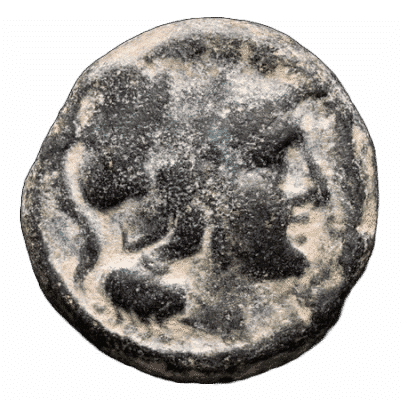
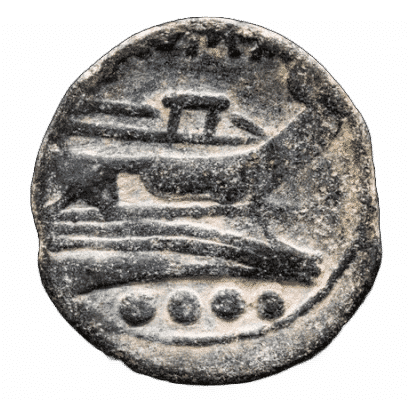
The Anonymous Roman Republic Triens (Crawford 56/4) is a heavy, tactile relic from the era when Rome was transforming from a local Italian power into a Mediterranean superpower. Struck during the Second Punic War (c. 211–206 BC), this bronze coin was the literal “pocket change” of the legions that stood against Hannibal.
At Numiscurio, we often say that a coin’s “soul” is found in its weight; to hold a Triens is to feel the industrial might of a Republic that refused to surrender, even with the enemy at the gates of Rome.
1. The Historical Context: Currency of the Punic Wars
The Triens was a fractional denomination of the Aes Grave (Heavy Bronze) system. When this coin was cast and struck, Rome was locked in a life-or-death struggle with Carthage. To fund the massive fleets and armies required to defeat Hannibal, the Roman mint had to move fast, transitioning from massive, cast bronze bricks to more manageable, struck coinage.
The value of the Triens was 1/3 of an As (hence the name triens, meaning “a third”). In a world where a legionary’s pay and a citizen’s daily bread were measured in bronze, this coin was the backbone of the Roman economy.
2. The Obverse: Minerva and the Four Pellets
The obverse features the helmeted head of Minerva, the goddess of wisdom and strategic warfare, facing right.
- The Goddess of Strategy: Unlike Mars, who represented the fury of battle, Minerva represented the calculated, disciplined warfare that allowed Rome to endure. It was a fitting choice for a city that was slowly out-thinking and out-lasting the Carthaginian geniuses.
- The Mark of Value: Above Minerva’s head are four pellets (°°°°). In the Roman uncial system, one pellet represented one uncia (ounce). Since there were 12 unciae in one As, four pellets clearly marked this coin as a four-uncia piece, or one-third of an As.
3. The Reverse: The Prow of Rome
The reverse features the iconic Prow of a Galley, facing right.
- The Naval Revolution: Before the Punic Wars, Rome was a land power with almost no navy. To defeat Carthage, they had to build a massive fleet from scratch. The “Prow” series of coins was a proud celebration of this new naval identity. It reminded every Roman that their reach now extended across the seas.
- The ROMA Legend: Above the prow, the name ROMA is boldly inscribed. This was a statement of sovereignty; wherever this coin traveled, it carried the name of the city that would not break.
- The Value Repeat: Below the prow, the four pellets (°°°°) appear again, ensuring there was no confusion about the coin’s worth in the marketplace.
4. Technical Details: The Transition to Struck Bronze
- Crawford 56/4: Cataloged in Michael Crawford’s Roman Republican Coinage, the definitive guide for collectors of the era.
- The Mint: Struck in Rome (though some varieties were minted at traveling military mints).
- The Patina: Bronze coins of this age often develop a deep, chocolate-brown or “Tiber-green” patina. Because these were high-circulation coins, finding a specimen where the individual pellets and the “ram” of the prow are still sharp is a significant achievement for a Republican bronze specialist.
