
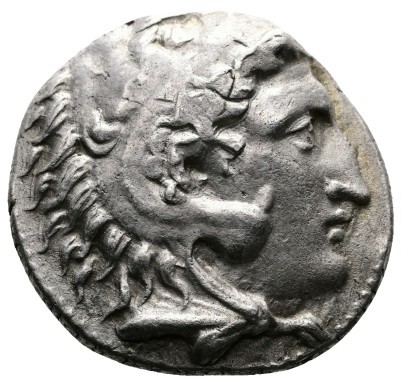
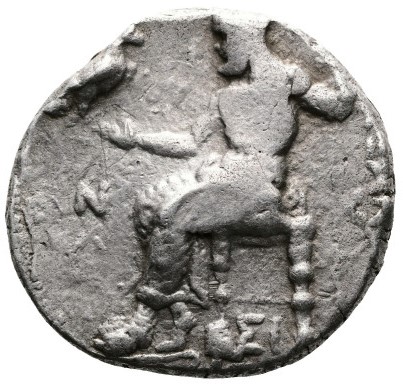
To any collector of the ancient world, the lifetime and early posthumous tetradrachms of Alexander III of Macedon represent the single most successful branding campaign in human history. When you hold a silver tetradrachm, specifically the variety cataloged as Price 3501, you are holding the “international dollar” of the 4th century BC. Struck at the prolific mint of Babylon around 325–323 BC, this coin was minted during the final years of Alexander’s life or immediately following his death. It was the silver that paid for the greatest military expedition in antiquity, bridging the gap between the rugged hills of Macedonia and the exotic wealth of the Persian Empire.
But look closer at Price 3501 (minted in Babylon). This coin was likely struck while Alexander was physically in the city, planning his next invasion, or in the immediate, chaotic months following his mysterious death in June 323 BC.
1. The Historical Context: The Center of the World
By 325 BC, Alexander had toppled the Persian Empire and was sitting in the ancient palaces of Babylon. He intended to make the city the capital of his new, unified world.
To pay his restless veterans and fund his upcoming Arabian campaign, the Babylon mint worked at a feverish pace. Price 3501 is a “Lifetime” or “Early Posthumous” issue—meaning it was either touched by the men who served under Alexander or was used to pay the generals who would soon tear his empire apart.
2. The Obverse: The Lion-Skin of Herakles
The obverse features the head of Herakles (Hercules), the greatest hero of Greek myth, wearing the skin of the Nemean Lion.
- The Divine Ancestry: Alexander claimed to be a direct descendant of Herakles. By putting the hero on the coin, he was subtly telling the world: “I am not just a king; I am a living myth.”
- The “Alexander” Portrait: While the face is technically Herakles, most historians agree that over time, the features began to resemble Alexander himself—the deep-set eyes, the flowing hair, and the strong, youthful jaw. It was the birth of the “personality cult” in numismatics.
3. The Reverse: Zeus and the “Babylonian” Style
The reverse depicts Zeus Aëtophoros (the Eagle-Bearer) enthroned, holding a scepter.
- The Legend:
ALEXANDROU(Of Alexander). - The Babylon Mint Marks: Specifically for Price 3501, you will find a monogram (like a combined M and Y) and a bee or a symbol in the left field. These were the “secret signatures” of the Babylonian mint masters.
- The Symbolism: Zeus was the “King of the Gods,” mirroring Alexander’s role as the “King of Kings.” For the conquered Persians, Zeus looked enough like their own god, Ahura Mazda, that the coin was accepted without question—a brilliant piece of multicultural marketing.
4. Technical Details: The “Price” Reference
- Price 3501: This refers to Martin Price’s monumental work, The Coinage in the Name of Alexander the Great and Philip Arrhidaeus. Price identified over 4,000 variants; 3501 is prized for its high-relief, powerful “Babylonian Style” engraving.
- The High Purity: These tetradrachms were struck in nearly pure silver (around 17.2 grams). They were so trusted that they continued to be minted for 250 years after Alexander died.
